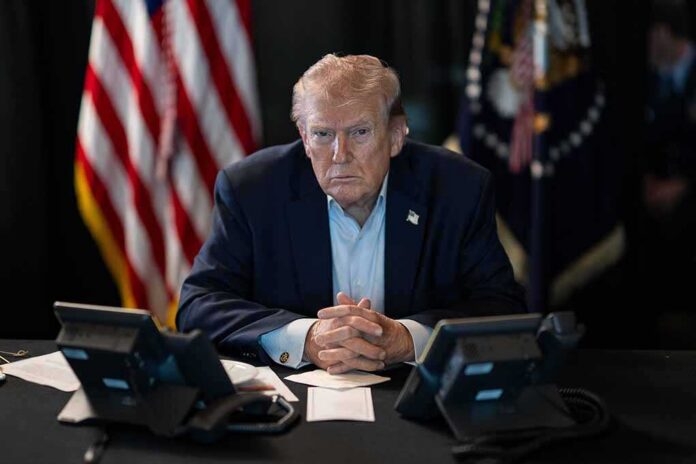
A sitting Republican congresswoman told President Trump his immigration push “went too far,” on television, weeks before the midterms.
Story Snapshot
- Rep. María Elvira Salazar aired an ad breaking with Trump on immigration enforcement.
- She warned Hispanic voters who backed Trump in 2024 now “feel betrayed”.
- National outlets called it a rare public split inside the party.
- The move targets swing voters in a tight South Florida race.
Aired on South Florida TV, and aimed at voters who decide close races
Rep. María Elvira Salazar’s campaign put a clear message on Miami television and online on September 17, 2026. She said, “Mr. President, some of your immigration enforcement efforts have gone too far,” and tied that to Hispanic voter anger. She added that the same Hispanics who helped elect Trump in 2024 “feel betrayed today.” Reporters confirmed the ad aired in the Miami market, not just on social media. That placement shows a general-election audience focus, not an inside-baseball fight.
Reuters described Salazar as a Latina Republican in a competitive reelection race. That fact helps explain the timing and tone. Miami’s voters are diverse and pragmatic. Many want tight borders and humane enforcement at the same time. Salazar argued for both at once. The script drew a line: secure the border, yes; break up families or use heavy-handed tactics, no. That straddle tries to keep core conservatives while meeting suburban and Hispanic concerns.
Newsrooms framed it as a rare, public rebuke inside the GOP
Major outlets did not miss the breach. The New York Times called it “a rare and remarkable break” by a Republican with the president. CNN used similar language, noting that it came in the home stretch to Election Day. Those labels matter because they set expectations for whether more Republicans might follow. When a move is called “rare,” it signals risk. It also signals that the candidate believes the local math demands daylight from Trump.
Politico and others emphasized that the ad ran on television in South Florida. That detail confirms this was not a wink to elites or a trial balloon. It was a voter-facing message in a key media market. Campaigns do not spend on broadcast unless a message polls well enough to justify the cost. The decision points to a district where Trump’s brand on immigration could now undercut a GOP incumbent unless she marks a limit line.
Why distance now: coalition pressure and midterm incentives
General-election strategy rewards candidates who trim partisan edges in purple areas. Republicans in swing seats often adjust after primaries. They keep core themes like law and order, tax restraint, and a strong border. They shift tone on enforcement, health care, or foreign policy where local voters demand balance. Reporters across the cycle described selective “brand separation,” including softening Trump references and issue-specific disagreement to win independents without losing the base entirely.
Trump appears to be expecting a midterms bloodbath for Republicans. In a social media post, he preemptively blamed his party in the likelihood that they lose the House and Senate in November; refusing to take responsibility if Democrats sweep the election.
He's certainly not…
— Eric Jay (@EricinAmericaX) September 29, 2026
Salazar’s script named the pressure point: Hispanics who helped elect Trump in 2024 felt alienated by recent tactics. That claim lays out a simple test. If enforcement looks careless with families and long-settled workers, Miami’s coalition balks. If enforcement targets criminals, smugglers, and new unlawful crossings while honoring legal paths, the coalition holds. That is a classic conservative balance: strong borders, due process, and respect for work and family.
Risk and reward: What this signals for Republicans beyond Miami
Public splits invite blowback. Trump’s allies often punish dissent, and campaigns know it. Yet a narrow district forces choices. Salazar bet that clear daylight on process, not on principle, would shore up moderates without burning the right flank. That is plausible in South Florida’s media market. It may not translate to safe red seats, where a break would look like disloyalty, not prudence. The power of local context still rules American politics.
National coverage cited similar moves in other competitive races during the final weeks, with candidates toning down Trump branding or parting on select issues like Iran, the economy, or immigration. The common thread is survival math: hold conservatives, win independents, and avoid flashing headlines that invite a presidential counterpunch. Salazar’s ad showed how to draw that line on enforcement while restating border-first goals. The message was not soft on security; it was firm on method.
The bottom line for voters and campaigns
Voters heard a simple offer: keep strong borders, but stop tactics that feel unfair. That is not a retreat from enforcement. It is a demand for discipline and priorities. Conservatives can agree that rules matter most when government power is used with care. Salazar translated that into a television buy at the moment it counts. If more Republicans in swing turf echo that framing, it will be because their voters, not cable chatter, forced the change.
The move’s success will be measured in votes, not headlines. If Miami independents and Hispanic families accept a tough-but-fair stance, Salazar’s risk pays off. If core Republicans see any daylight as betrayal, the cost will show fast. For now, the facts are set: a Republican incumbent looked at her district and told the president to pull back on how, not whether, to enforce the law. That is a real split, and a revealing one.
Sources:
theguardian.com, washingtonpost.com, cnn.com, nytimes.com, reuters.com
© ournationnews.com 2026. All rights reserved.