

A sitting congresswoman now fights three federal counts and a due date at the same time.
Story Snapshot
- Rep. LaMonica McIver was indicted for impeding federal officers at Newark’s Delaney Hall.
- A federal appeals court said the case can proceed and denied immunity claims.
- Prosecutors say she interfered during the attempted arrest of Newark’s mayor.
- McIver denies wrongdoing, calls it political, and has pleaded not guilty.
What Prosecutors Say Happened Outside Delaney Hall
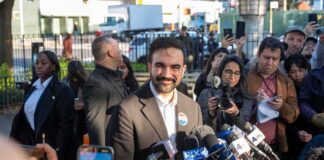
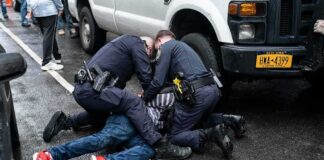
Federal prosecutors charged Rep. LaMonica McIver with three counts for impeding and interfering with federal officers during a May 9, 2025 clash outside Delaney Hall in Newark. The indictment stems from a tense scene during a congressional visit to the immigration detention center. Prosecutors say McIver’s actions crossed the line from oversight into physical obstruction. They place the contact squarely in the moment when officers moved to arrest Newark Mayor Ras Baraka during the visit.
The charging documents cite federal law that bars assaulting, resisting, or impeding officers. That statute gives prosecutors a clear lane if they can prove physical interference. The Department of Justice announcement framed the case in narrow, factual terms: officers were doing their job, and a lawmaker got in the way. That framing matters, because juries often track simple stories that line up with common sense about rules, roles, and clear lines of duty.
McIver’s Defense: Oversight, Not Obstruction
McIver says she did her job and nothing more. She has pleaded not guilty and rejected a plea deal, saying prosecutors wanted an admission to something she did not do. She calls the case “purely political,” and argues it is meant to chill oversight of a federal facility. She also says there is no video of her “body slamming anyone” and that officers sparked the clash by arresting the mayor during the visit. Her allies echo that Congress must be free to inspect detention sites without fear of criminal charges.
Her legal team pressed the Constitution’s Speech or Debate Clause. That clause protects legislative acts from prosecution. The question is whether brief physical contact in a chaotic moment can be a legislative act. The court drew a hard line. It held that inspecting a facility fits the clause, but pushing or blocking officers does not. That means the case moves to trial on conduct the panel deemed outside protected activity. For any lawmaker, that is a bright signal: words and oversight are protected; hands-on scuffles are not.
The Appeals Court Ruling Sets the Battlefield
A three-judge panel allowed the charges to proceed, rejecting McIver’s bid to dismiss on immunity grounds. The opinion stressed that the clause shields debate, votes, and formal inquiries, but not physical interference with arrests. That divide is familiar in American law: defend speech and duty; punish force. From a conservative rule-of-law lens, that reads as a sensible boundary. Voters expect Congress to check agencies. They also expect everyone, even lawmakers, to respect a lawful arrest scene with clear commands.
The ruling also narrows what the jury must decide. Jurors will not weigh big constitutional theory. They will judge concrete acts at the curb: did McIver’s contact with officers amount to impeding? One analysis reported that videos show contact with at least two agents but could not pin down force or intent. That leaves room for reasonable doubt, but it does not erase the contact itself. Trials often turn on intent. The government must show more than a brush in a crowd. McIver must show her movements were incidental to the chaos.
Politics, Pregnancy, and Public Perception
McIver recently announced she is pregnant, even as talk shows and opponents highlight a maximum sentence that could spike into the double digits. She faces headlines, hearings, and doctor visits at once. That mix will draw sympathy and scorn. Some will see a mother targeted for asking hard questions. Others will say the timing does not change the rule: do not lay hands on officers during an arrest. Courts will not grade on a curve for personal circumstances; juries sometimes do, even if they deny it.
The stakes stretch beyond one case. If lawmakers can claim oversight as a shield for physical clashes, agency scenes could spin out more often. If prosecutors swing too hard, future oversight visits could chill. The appeals court tried to mark a middle path: inspect all you want; do not interfere with arrests. That sounds like common sense. The hard part is messy sidewalks, tight seconds, and split judgments. Juries live in that mess. Soon, they will decide where duty ended and a crime began.
Sources:
twitchy.com, pbs.org, www2.ca3.uscourts.gov, abc7ny.com, politico.com, caselaw.findlaw.com, fox5atlanta.com, theguardian.com
© ournationnews.com 2026. All rights reserved.