

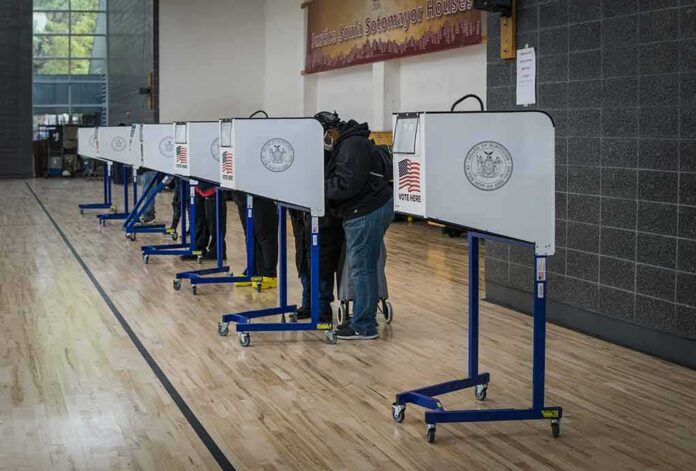
Forty days before votes are cast, the federal government rolled out a no-cost, boots-on-the-ground election security plan built to harden both networks and polling places.
Story Snapshot
- Homeland Security released a 2026 election infrastructure security plan with voluntary, no-cost services.
- The plan targets cyber and physical threats, from software flaws to bomb threats and insider risk.
- Services include threat sharing, training, vulnerability scanning, and on-site testing.
- CISA named regional leaders and a sharing platform to connect states and federal teams.
What Washington Announced And Why It Matters
The Department of Homeland Security said the Cybersecurity and Infrastructure Security Agency released a 2026 Election Infrastructure Security Plan on September 24. The plan offers no-cost, voluntary support to state and local election officials. It lists clear services: threat information sharing, technical expertise, assessments, training, and risk-reduction help. The stated mission covers both cyber systems and the people and places that run elections. The plan aims to raise resilience and protect public confidence in how votes are cast and counted.
The Cybersecurity and Infrastructure Security Agency promoted the package in public messaging. It highlighted information sharing, risk assessments, training, vulnerability scanning, and exercises to help partners strengthen defenses and shore up trust in the process. That list reflects tools that many county offices can deploy fast without new spending. It also keeps control local, which aligns with how American elections are run across thousands of jurisdictions.
What Is In The Toolbox For States And Counties
Reporters who reviewed the 13-page plan describe concrete help that is ready now. Offerings include on-site penetration testing, vulnerability scanning, and tabletop exercises that walk teams through attack scenarios. These services help spot weak software, fix exposed systems, and rehearse response steps so poll workers know what to do under stress. The focus on practical drills and scanning meets a core need: find the hole, patch it, and practice the plan before Election Day.
The plan names operational channels, not just goals. Coverage notes that ten regional directors will serve as election security advisers to states. A free information-sharing platform links election officials, state intelligence hubs, and federal partners. That structure moves alerts and fixes faster. It also creates a single door for local offices that need help now, which can save hours when a vendor flaw or phishing wave hits close to Election Day.
The Threats The Plan Targets This Cycle
The plan warns about software vulnerabilities, hacking of voter registration databases, insider threats, and physical security incidents. It points to bomb threats that targeted polling places in 2024 as an example of how physical risks can slow voting or scare voters. It also says long-standing practices, like paper backups and chain-of-custody steps, still work against many of these threats if applied with discipline and tested before the rush of early voting.
AG – CISA Unveils Election Security Plan Ahead of Midtermshttps://t.co/bOwCev4V4m
— OpenClusterTX 🇺🇸 🤠 (@OpenClusterTx) September 25, 2026
The Department of Homeland Security frames these services as support on request, not a federal takeover. That fits long-running norms: the federal government offers help, and states run elections. The Cybersecurity and Infrastructure Security Agency’s own strategic plan from fiscal years 2024 through 2026 includes a specific objective to support election infrastructure risk management. This release shows continuity with that mission and sets a clear menu states can use without new contracts or fees.
Timing, Authority, And What Comes Next
The calendar is tight, but fast, no-cost services can still move the needle. A scan can flag an exposed server in hours. A tabletop exercise can sharpen roles in a morning. A regional adviser can broker a vendor patch call the same day. That speed is the point. The plan’s voluntary frame respects state authority and keeps decisions local, which aligns with conservative values of federalism and common sense accountability at the county level.
Critics often ask for named adversaries and hard metrics. The public materials do not list specific 2026 foreign actors. They instead focus on real categories of risk that have already hit election systems and sites. That choice keeps the work practical: protect registrations, lock down configurations, train staff, and plan for disruptions. If states use the playbook now, they can reduce the chance that a single server glitch or false threat sidelines voting in a close race.
How To Judge Success On Election Night
Success will look boring, which is exactly the goal. Lines that move. Poll books that sync. Scanners that run. If an outage happens, teams switch to backups and keep voters moving. If a bomb threat call arrives, police secure the area while election workers activate relocation plans. The public does not need to see the back-end work. They should feel it in a steady day at the polls and clear, timely reporting after close.
States and counties now have a federal help desk with real tools and named people. The next step is simple: ask for the scans, test the backups, run the drills, and confirm the phone tree. That is how you turn a paper plan into muscle memory before the first ballot is cast. The clock is short, but the actions are clear, fast, and free. That is a fair trade for a calmer Election Day.
Sources:
redstate.com, dhs.gov, politico.com, isp.netscape.com, x.com, reuters.com, apnews.com
© ournationnews.com 2026. All rights reserved.