

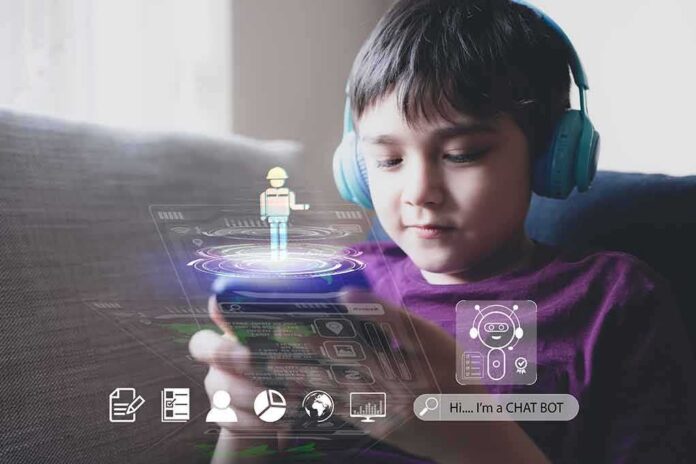
Kids as young as sixth grade are turning to AI for comfort, not just homework help.
Story Snapshot
- Surveys show many students use AI for companionship, support, and escape.
- Nearly one in five teens report romantic ties to AI, signaling deeper attachment.
- Middle schoolers are among those most likely to use AI when lonely or stressed.
- Schools now discuss AI companions alongside phones and social media rules.
What the data says about kids and AI “friends”
Center for Democracy and Technology survey coverage reports that 42% of students said they or someone they know used AI for companionship, 42% for mental health support, and 42% to escape reality. Coverage also highlights that almost one in five students reported romantic relationships with AI, pointing to emotional attachment beyond casual chat. Common Sense Media’s national teen survey adds scale: almost three in four teens have used AI companions at least once, with regular use common.
The Jed Foundation reports that middle school students are among the most likely to use AI when they feel sad, stressed, or lonely. That aligns with what parents and teachers see in hallways and on bus rides: the phone becomes a quiet place to vent, role-play, or ask for advice when face-to-face feels hard. One caveat in some reporting is that “or someone they know” broadens the measure, but the overall pattern of emotional use is consistent across studies.
How schools and parents are responding
School leaders now place AI companions in the same bucket as social media and smartphone habits. A Singapore American School middle school forum listed AI companions as a topic for parent discussion, right next to phone rules and online well-being. The change signals a shift from thinking of AI as a homework tool to treating it as a social environment students carry in their pockets. That practical framing meets families where the real behavior happens: late-night chats, not just essay outlines.
Common Sense Media’s research provides a clear map for parents: many teens use AI companions for company, advice, or to talk about serious issues. The organization cautions that these tools can feel like friends while lacking the judgment, accountability, and boundaries that real friends and adults provide. Parents can take a page from screen-time playbooks that worked: set clear rules, set charging stations outside bedrooms, and keep dinner-table eye contact sacred.
Why middle school is the pressure point
Middle school is the age when identity, status, and belonging feel like a storm. The Jed Foundation’s findings that middle schoolers use AI when lonely or stressed fit what coaches and counselors see every season: big feelings, thin armor, and constant comparison. An always-on chatbot offers instant attention and zero risk of rejection. That is seductive. But it also means fewer reps at real conversation, conflict repair, and patience, which kids need to build grit.
Common Sense Media’s numbers among teens show the pipeline that younger students may enter: large first-time use, frequent check-ins, and a meaningful share seeking relationship-like chats. If seventh graders start leaning on bots for soothing, by ninth grade that habit can become the default. Conservative common sense favors building real-world skills early: family chores, team sports, youth groups, and part-time service that stretch kids beyond screens and into community.
What works: practical steps that respect kids and reality
Families can draw bright lines without panic. Start with “no secrets with machines.” Require that AI chats happen in shared spaces, not behind closed doors. Use phone settings to limit companion apps at night. Coach kids to name their mood before they chat. If they want comfort, teach them to try a human first: a parent, coach, pastor, or trusted adult. These steps treat AI like a tool, not a therapist or a best friend.
⚠️ Middle-schoolers are turning to AI chatbots for companionship instead of classmates, and a new study finds they feel lonelier—not less. Instant, never-rejecting bots make real human friendship easier to skip. The old fear was a predatory stranger; the new one is a machine… pic.twitter.com/AH8DPqyN0Z
— End Time Headlines (@EndTimeHeadline) September 26, 2026
Schools can mirror that approach. Put AI companions in digital citizenship lessons. Train counselors to ask about chatbot use when kids report loneliness. Update device policies to flag romantic role-play with bots as a sign to check in, not just a rule to punish. Invite parents to forums that show real examples and scripts. When adults lead with calm and clarity, kids follow. When we outsource friendship to code, kids pay with weaker social muscles later.
Sources:
feedpress.me, npr.org, voxatl.org, citizen.org, yahoo.com
© ournationnews.com 2026. All rights reserved.