A New Jersey Democratic lawmaker said she stopped going to church because Republicans were there, and it sparked a familiar fight over faith and politics.
Story Snapshot
- A state Democrat said she left church due to Republican presence.
- GOP lawmakers used the remark to press free speech and faith themes.
- The clash sits inside the long-running “God gap” in U.S. politics.
- Safety and politics already shape worship in New Jersey congregations.
What Was Said And Why It Hit A Nerve
A New Jersey Democratic lawmaker told audiences she stopped attending church because Republicans were in the pews. The remark moved fast in state political circles. Republican lawmakers seized on it as a symbol of growing intolerance toward conservatives in civic life. One GOP member, an ordained deacon, linked the moment to a wider pushback on what he called “hate speech,” clarifying his view that free speech must protect debate but not threats or abuse. The spark landed on dry tinder.
New Jersey churches already live in the crosswinds of politics and safety. After attacks on houses of worship nationwide, a bipartisan group in Trenton backed a plan to let trained congregants carry firearms to protect services, arguing police cannot be everywhere at once. In that climate, a claim of leaving church over partisan neighbors does more than rile Twitter. It brushes against a real question: can people of different views share a sanctuary without turning it into a campaign rally?
The New Jersey Backdrop That Makes This Different
Parties in the state often rally through faith spaces, even when leaders stress civic unity. Republican and Democratic figures have both worked with clergy on violence, security, and outreach. Cross-party cooperation on faith issues has a track record, including work to curb religiously driven violence years before today’s fights. Yet those efforts now sit beside hard-edged moments, viral headlines, and a political calendar that pulls every dispute into the spotlight as soon as it happens. The result is strain at the local level.
Republicans cite the remark as proof that many institutions lean left and shame dissent. That argument fits a common conservative view: public life should welcome vigorous debate and protect conscience, not sort people by party at the church door. On the facts we have, their critique tracks with basic American values. Free association, free worship, and pluralism do not require liking your neighbor’s vote. They do require sharing space without making politics the first and last word.
The Bigger Pattern: America’s “God Gap” Meets The Local Pew
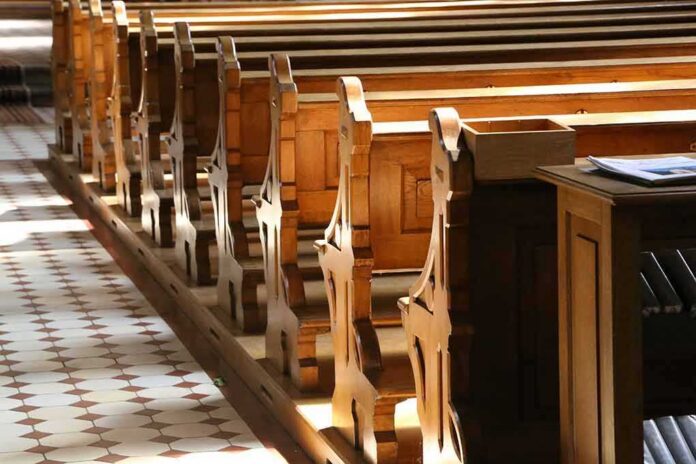
Decades of research show a clear pattern. People who attend religious services weekly are more likely to identify as Republican, while those who attend rarely lean more Democratic. This “God gap” does not explain every church fight, but it sets the stage for many. When attendance lines up with partisanship, congregations become more uniform. Comments about who is “in the pews” can then feel like coded political shots, not personal testimony. That is how a single remark becomes a statewide scuffle.
Most people do not leave church over politics, according to research. But even a small number doing so can change the tone in a room, and give activists fodder to raise money and fire up voters. The safer civic path is simple, and hard: keep worship about worship. Let political speech stand on open debate, not on who sits where on Sunday. When leaders model that discipline, congregations breathe easier, and lawmaking gets sharper lines.
What To Watch Next In Trenton And The Pews
Expect Republicans to keep pressing cultural competence and viewpoint diversity in public bodies, while highlighting safety at worship as a basic right, not a privilege. Expect Democrats to frame the episode as one person’s experience, while stressing inclusion and denouncing threatening rhetoric, especially when aimed at minorities or clergy. Both parties claim the mantle of tolerance. The test is whether they defend space for people they strongly disagree with to worship, speak, and serve side by side.
Sources:
townhall.com, observer.com, politico.com, njgop.org
© ournationnews.com 2026. All rights reserved.