
The quiet sound of the Rosary in a seaside Irish church was shattered when a man walked up the aisle and drove a knife into a woman praying near the altar.
Story Snapshot
- A woman in her 50s was stabbed inside Holy Cross Church in Tramore during Tuesday morning Mass.
- A 36-year-old local Irish man was arrested shortly after at a nearby home; police seized a knife for examination.
- The victim was rushed to University Hospital Waterford with serious but not life-threatening injuries.
A seaside town jolted by violence at the altar
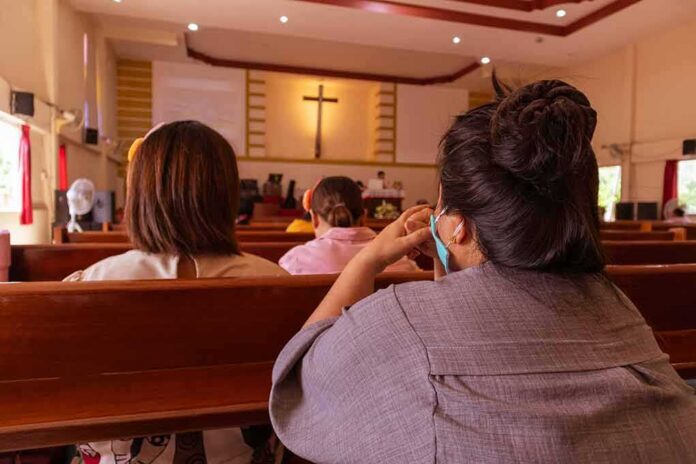
Holy Cross Church sits in Tramore, a calm seaside town in County Waterford where weekday morning Mass is usually the least dramatic part of anyone’s day. Shortly before 10 a.m., that normal rhythm broke. Parishioners gathered, many older locals, some praying the Rosary near the altar before Mass began. A man walked in, spoke briefly with a church employee, then headed straight up the aisle toward the women praying in front.
Witness accounts and police reports line up on the core facts. The man moved toward one woman in particular. She tried to step away. He followed, chased her, and then stabbed her in the torso near the altar. The shock inside that church is easy to imagine. People come to Mass for peace, not panic. Yet suddenly those present had to make split-second choices: help the victim, get out, or freeze in place.
Shocking: Woman (50s) seriously injured in stabbing at Tramore church during morning Mass
A woman in her 50s was seriously injured after she was stabbed inside Holy Cross Church in Tramore during the recitation of the rosary before 10am Mass on Tuesday morning.
The incident… pic.twitter.com/8b8Pq0JIkx
— SnDMedia (@SnDMediaNews) July 21, 2026
Arrest, hospital, and early facts from Gardaí
Emergency services arrived quickly. Paramedics treated the woman, who is in her 50s and from the local area, before taking her to University Hospital Waterford. Police described her injuries as serious but not life-threatening, and local radio reports say she suffered what appears to be a single stab wound. That difference matters. Serious injury is bad enough, but “not life-threatening” is the phrase that lets a rattled community breathe again, at least a little.
Officers from An Garda Síochána, Ireland’s national police force, moved fast beyond the church, too. They arrested a 36-year-old man at a nearby domestic residence within a short time of the attack and detained him under Section 4 of the Criminal Justice Act 1984. Police seized a knife and sent it for technical examination. That kind of detail work may sound dry, but it is how investigators lock down what happened and build a case that can stand up in court.
Mental health, motive, and media narratives
Police sources describe the suspect as a local Irish man with a history of mental illness, yet Gardaí have not publicly stated any motive for the attack. That gap between “history of mental illness” and “no motive confirmed” is where social media and speculation love to run wild. For conservatives who value clear cause and effect, this kind of vague middle ground is frustrating. People want to know why. Was there a personal dispute, a delusion, or something else?
Right now, the honest answer is simple: investigators have not said. That matters. Too often, attacks in churches or mosques are instantly framed online as part of some grand sectarian war or terror campaign. The data says most incidents at places of worship are isolated crimes, not organized plots. Common sense says we should wait for facts, not memes. Smearing whole groups based on one man’s actions helps no victim, and it makes already tense debates even more toxic.
Church attacks are rare, but they cut deep
This Tramore stabbing feels huge locally precisely because violence inside churches is still rare in Ireland. Global research shows that attacks on houses of worship are uncommon but often deadly when they do happen. That mix—low odds, high impact—means each case hits nerves about safety, faith, and social breakdown. People ask if they can trust that their church is a safe space, or if the world outside has finally crashed through the doors.
A woman in her 50s has been seriously injured after being stabbed inside Holy Cross Church in Tramore, Co. Waterford, this morning.
Gardaí say the attack happened at around 9:45am and the victim was taken to hospital.
A man in his 30s has been arrested, and a knife has been… pic.twitter.com/3fYFBaQlfp
— Kiera Diss (@KieraDiss) July 21, 2026
In Northern Ireland, more than 400 attacks on places of worship were recorded in just three years. Most were property damage, not stabbings at the altar, but they still changed how people saw their churches. In the wider Irish debate, recent riots in Dublin after a school stabbing, and previous knife and arson incidents tied to immigration or ideology, have primed many citizens to see every violent story as another sign of deep social trouble. A single knife in Tramore now lands in that larger, anxious context.
What comes next for Tramore and Ireland
For now, Holy Cross Church has become both a crime scene and a symbol. Gardaí have appealed for witnesses who were near Summerhill in Tramore between 9:15 and 10:15 a.m., asking anyone with camera footage to share it. That call tells you one thing clearly: this case is still being built. There will be interviews, forensic reports, and mental health assessments. The courts will eventually sort legal guilt and punishment.
The moral questions move faster than the legal ones. Should churches lock doors during services? Should authorities be more open when mental illness and violence cross? Should media and activists be held to higher standards before they push hot takes about “what this really means”? From a conservative, common-sense view, three basics stand out: protect the innocent, tell the truth without spin, and hold individuals responsible for what they do. In Tramore, the woman at the altar deserved quiet prayer. Instead, she got a knife. The system’s job now is to make sure that kind of “surprise” does not become normal.
Sources:
lifesitenews.com, irishtimes.com, rte.ie, psni.police.uk, gript.ie, opsdesk.substack.com, en.wikipedia.org
© ournationnews.com 2026. All rights reserved.