
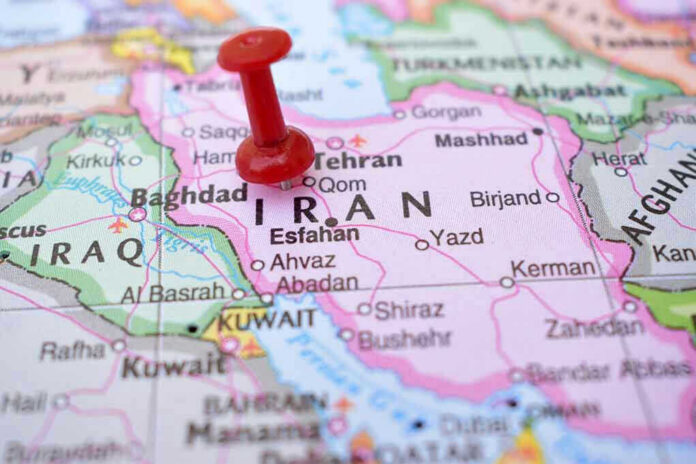
A New York City commissioner booked a sit-down with Iran’s United Nations ambassador, and Washington killed it before it began.
Story Snapshot
- A calendar invite shows a July 7, 2026 meeting set with Iran’s envoy in New York.
- Two other senior city officials were listed to attend, signaling broader buy-in.
- The U.S. State Department learned of it and moved to halt the engagement.
- City Hall denied it would happen; the meeting was canceled.
What Was Scheduled, Who Knew, and Why It Collapsed
Commissioner Ana María Archila, who leads New York City’s Office for International Affairs, scheduled a formal meeting with Iran’s United Nations Ambassador Amir-Saeid Iravani at 2 United Nations Plaza for July 7, 2026, at 11 a.m., according to a calendar invite reviewed by City Journal and corroborating sources. The invite named two other senior city officials as participants, suggesting this was not a solo detour. A U.S. State Department official confirmed awareness of the planned engagement before it was shut down.
Top Official in Marxist NYC Mayor Zohran Mamdani’s Administration Secretly Scheduled Meeting with Iran’s UN Ambassador – Trump State Department Forced to Shut It Down | Jim Hᴏft, The Gateway Pundit
A senior official in Communist New York City Mayor Zohran Mamdani’s… pic.twitter.com/SW3JtPSLAj
— Owen Gregorian (@OwenGregorian) July 10, 2026
Mayor Zohran Mamdani’s team later said, “This meeting did not and will not take place,” and the event was canceled after the State Department intervened to clarify acceptable conduct. A source familiar with the commissioner’s office said Archila was reprimanded and told to cancel. The chain of events points to a real, planned interaction that crossed a federal red line. The dispute now centers on authorization, not existence.
Federal Red Lines Were Bright and Recently Redrawn
The federal context made this meeting radioactive. President Donald Trump had declared a recent interim understanding with Iran “over,” while using harsh language for Iran’s leaders at a press event, signaling a hard stop on normalization efforts outside strict federal control. U.S. Central Command had launched strikes after attacks near the Strait of Hormuz, adding urgency to a containment-first approach and turning ad hoc city outreach into a liability, not a courtesy call. The State Department’s quick shutdown fits this backdrop.
New York City may host the United Nations, but the federal government sets foreign policy. The United Nations welcomes city leaders through protocol channels. Mayor Mamdani has met with United Nations Secretary-General António Guterres at headquarters, which shows how legitimate engagement looks when done on the rails. Contact with the Islamic Republic of Iran’s representatives demands even tighter discipline, given security, sanctions, and ongoing confrontations.
City Diplomacy Has Lanes; This Veered Out of Them
Local leaders can and do practice “city diplomacy” on issues like climate, health, and migration. The law and common sense draw a boundary when contacts touch sanctions, security, or active hostilities. The U.S. Department of Justice has long described the Logan Act as a bar on unauthorized negotiations with foreign governments, capturing the principle that private or unsanctioned diplomacy risks undermining national policy. While the act is seldom charged, its spirit shapes norms. The State Department’s move here reflects that guardrail more than raw politics.
🚨 BREAKING: State Department SHUTS DOWN secret NYC-Iran meeting!
A top official in the NYC Mayor’s Office for International Affairs tried to meet with the Iranian Ambassador to the UN — WITHOUT telling Mayor Adams or anyone else.
When the State Department found out, they… pic.twitter.com/1cm113yEnt
— Reverend Jordan Wells (@WellsJorda89710) July 10, 2026
Commissioner-led outreach to Iran’s ambassador, absent clear federal coordination, was bound to be flagged, especially after the president’s reset on Iran dealings. The presence of two more senior city officials on the invite suggests internal confidence, but it does not trump federal primacy. City Hall’s denial that the meeting would happen, plus the reprimand report, shows rapid course correction, not proof that the plan was a myth. Conservative instincts call this what it is: a failure to respect the chain of command.
Politics, Perception, and the Cost of Mixed Signals
Media and political critics framed the attempt as “secret” and “boneheaded,” which hardens public suspicion. Yet the public record shows documentation, outside awareness, and fast federal action, not a rumor mill. The more important question is risk. Iran’s diplomats operate under U.S. restrictions for a reason. Uncoordinated meetings can be exploited for propaganda, create legal exposure, or muddy sanctions messaging. These are avoidable risks, especially for a city that already has trusted United Nations channels.
Mayor Mamdani’s broader posture on Iran has drawn fire before, including from former Israeli Ambassador Gilad Erdan, which adds heat to any Iran-related move by City Hall. But the best reading here is procedural, not partisan. Federal authorities had set a hard boundary. The city’s international affairs arm stepped over it. Washington pushed them back. That was the right call under the conditions at the time, and it protected both the city and the country.
What Should Happen Next
City Hall should publish a clear protocol for any contact with sanctioned or hostile-state envoys. Require written pre-clearance from the State Department and the Mayor for any meeting that involves security, sanctions, or conflict matters. Archive the paperwork. Train staff. Sunlight saves careers. If the calendar invite and related emails are released, they will either show a paperwork miss or a judgment miss. Either way, the fix is the same: respect the lanes and keep the country’s position clear.
Sources:
thegatewaypundit.com, politico.com, instagram.com, facebook.com, pbs.org, tml.org
© ournationnews.com 2026. All rights reserved.



![🇺🇸 First Lady Melania Trump Unveils New Fostering the Future & IndyCar Scholarships [LIVE]](https://ournationnews.com/wp-content/uploads/sites/26/2026/08/maxresdefault-43-218x150.jpg "Melania Speaks Out Amid Trump Aide Rumors")












![🇺🇸 First Lady Melania Trump Unveils New Fostering the Future & IndyCar Scholarships [LIVE]](https://ournationnews.com/wp-content/uploads/sites/26/2026/08/maxresdefault-43-324x160.jpg "Melania Speaks Out Amid Trump Aide Rumors")