
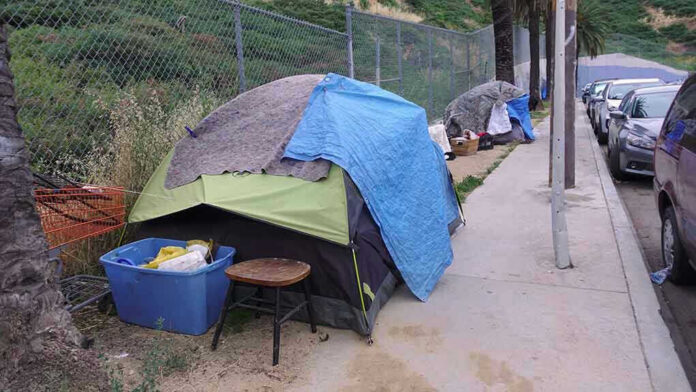
Hours before the World Cup spotlight hits downtown Atlanta, city workers quietly tossed tents, IDs, and medication from a homeless camp that officials say they have spent months trying to clear and rehouse.
Story Snapshot
- Atlanta cleared a major homeless encampment near the stadium as part of a World Cup prep push.
- Officials say the effort is tied to a housing-first plan that has moved hundreds into shelter or permanent homes.
- Advocates warn that throwing away belongings and sweeping camps echoes past mega-event crackdowns on the poor.
- The clash raises a core question: can a city be both “world-class” and truly humane toward its most vulnerable?
City clears tents near stadium under Downtown Rising plan
City crews moved in on a large homeless encampment near Grady Hospital, just over a mile from Mercedes-Benz Stadium, in the run-up to the FIFA World Cup. The camp sat under the Bell Street bridge, close enough to be in the path of fans, vendors, and broadcast crews. Over two days, workers dismantled tents and removed makeshift structures as part of a broader downtown cleanup linked to Atlanta’s “Downtown Rising” initiative. That program is designed to end encampments and street sleeping in the core tourist zone before the first match kicks off.
Officials framed the sweep as one piece of a housing push, not just a cosmetic cleanup. Partners for Home, the group running the city’s homelessness strategy, has tracked about eight people who regularly stayed under that bridge. Six are now in permanent housing, with a couple awaiting placement. City leaders say the goal is to move at least 400 unhoused people into shelter and housing ahead of the tournament, using outreach, caseworkers, and support services rather than jail cells.
Belongings tossed, safety cited as the justification
On social media, outraged users shared images and comments that claimed city staff threw away tents, prescription medicines, and identification documents during the Bell Street cleanup. Those claims fit a wider pattern seen in many “encampment sweeps,” where crews discard property that looks like trash but may be essential to survival or medical care. The city has not publicly highlighted the loss of belongings, focusing instead on the idea that the clearance was needed to protect both camp residents and nearby workers, patients, and visitors.
Cathryn Vassell, chief executive of Partners for Home, told local reporters the operation was “less about optics” and “more about the safety of the people and all the folks that live in and around that area.” She argued that months of outreach preceded the move and that most regular residents had already accepted housing offers. That claim matters for conservatives who value order and responsibility: if people receive real options and many take them, a cleanup that removes remaining tents looks more like enforcing standards than punishing poverty. But when medicines and documents end up in dumpsters, it undercuts the safety message and raises common-sense doubts about how carefully the city balanced compassion with control.
Atlanta’s effort to avoid repeating its 1996 Olympic record
The World Cup push unfolds under a long shadow. During the 1996 Summer Olympics, Atlanta police were accused of arresting homeless people by the thousands and sending many to a special detention center built for the games. Reports say around 9,000 homeless people were removed, with some given one-way bus tickets out of town. That history now hangs over every conversation about homelessness and big events in the city. Mayor Andre Dickens has stressed a different approach, backing a $60 million program to address homelessness and promoting housing-first strategies instead of mass arrests.
National advocates note that mega-events almost always pressure host cities to “clean up” visible poverty, whether in Atlanta, Phoenix, or Tokyo. They warn that heavy enforcement, repeated relocation, and property seizures can harm people’s health and push them farther from services. In that context, Atlanta’s Downtown Rising plan is pitched as a model where a city can raise its image while still offering real pathways off the street. Housing nearly 500 people through World Cup-related investments is no small feat. For many readers with conservative leanings, this combination—clear rules, cleaner streets, and actual help—sounds like what policy should aim for. The test is whether actions on the ground match the promise.
Debate over World Cup policing and future sweeps
Atlanta City Council members have already raised concerns that the World Cup might trigger broader law enforcement crackdowns on homeless people. They worry about increased arrests for trespassing, camping, or panhandling near fan zones. Advocacy groups share that fear, warning that the early encampment clearance could be a sign of more aggressive policing as games begin. Supporters of firm rules argue that large international events require tight security and orderly public spaces, especially near hospitals and transit hubs. Opponents counter that if policing relies too much on moving or jailing the unhoused, it hides the problem instead of fixing it.
Atlanta officials throw away tents and medication belonging to homeless people near World Cup spot: report https://t.co/0L5yXzthZc
— The Right News, Right Now. (@BradPorcellato) July 13, 2026
American conservative values often rest on two pillars that collide in this story: respect for public order and respect for individual dignity. Cleaning up unsafe camps near critical infrastructure fits a common-sense desire for safety. Yet throwing away someone’s medication and identification strips them of tools they need to work, get treatment, or claim housing, which clashes with the idea of personal responsibility. The strongest path forward blends the city’s housing-first plan with stricter rules on how crews handle property, clearer notice before sweeps, and transparency so residents can see whether Atlanta truly learned from 1996—or just found a smoother way to push its poorest neighbors out of sight.
Sources:
independent.co.uk, ajc.com, atlantaciviccircle.org, reuters.com, facebook.com, instagram.com, reutersconnect.com, pbs.org, ncbi.nlm.nih.gov
© ournationnews.com 2026. All rights reserved.