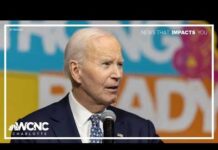


One blunt question on Sunday television exposed the most dangerous truth about Trump’s Iran war: no one in power can say, in plain English, how it really ends.
Story Snapshot
- ABC’s Jonathan Karl pressed Energy Secretary Chris Wright to explain the endgame after two U.S. troops were killed in Jordan.
- Wright offered a hopeful “few weeks” timeline, but no written exit plan, roadmap, or public strategy document.
- The administration has clear “endpoints” it wants from Iran, but admits it does not know the route to get there.
- This gap between big goals and real plans fits a long pattern in American wars that drag on far longer than the sales pitch.
Karl’s Simple Question Collides With A Complicated War
Jonathan Karl did what good reporters are supposed to do: he refused to let a tidy talking point slide past a hard fact. Two American service members had just been killed by Iranian strikes in Jordan, even as the White House kept promising the Iran war would be short and controlled. Karl’s question to Energy Secretary Chris Wright was not academic. He asked, in effect: if our people are dying and Iran keeps firing, how does this end, and when?
That question matters more than any slogan about “standing strong.” Voters were told this conflict would be a fast, focused operation. Yet there is no public White House strategy memo, Pentagon endgame plan, or State Department exit framework that shows how we get from today’s blood and spending to tomorrow’s peace and withdrawal. The administration has talked about four-to-six-week timelines on television. It has not put those promises into a detailed, accountable plan anyone outside the inner circle can inspect.
What Wright Says The End Looks Like
Wright has not been vague about what he wants the finish line to be. On national shows, he has said the United States knows “where this is going to end.” He lists two big goals: free flow of traffic through the Strait of Hormuz and an end to Iran’s nuclear program, including the ability to build a weapon that can threaten the United States or Israel. Those are serious, concrete objectives. They echo years of American policy: protect shipping lanes, stop a hostile regime from getting the bomb.
He also claims the first round of military goals is already met. Wright says the administration set early objectives and told the world it would take four to six weeks, and “it took about five weeks to achieve.” In his telling, the United States has broken Iran’s chokehold on the Strait and pushed oil flows “back towards normal without any cooperation at all from Iran.” For Americans watching gas prices, that sounds like good news. From a narrow energy viewpoint, the mission looks on track.
The Route Nobody Can Or Will Put On Paper
Here is where Karl’s challenge bites. In the same breath that Wright talks up a clear endpoint, he admits, “We don’t know the route to there.” That one line is the crack in the story. An “end state” with no route is not a strategy. It is a wish list. Ending Iran’s nuclear program is not a weekend raid. Wright concedes that part “is a different matter” and “still needs to be achieved.” Yet he still tells viewers the conflict will “certainly” end in the next few weeks. That is like promising you will be debt-free by Christmas while your mortgage, car loan, and credit cards are all still open.
From a conservative, common-sense view, this should set off alarms. You do not send troops into harm’s way based on vibes. You define the mission, the red lines, the off-ramp, and the price tag. Then you level with the public. Here, we have vague war goals that keep shifting, a verbal “few weeks” promise that keeps getting repeated, and still no released plan for how to convert bombs and sanctions into a stable peace on terms that favor the United States. That is exactly the “end-state fallacy” many defense analysts warn about: big, noble goals with no realistic roadmap.
Why Karl’s Critique Hits A Nerve
Karl’s argument has a weakness, and viewers deserve to see it. He builds his case on the absence of evidence. He cannot point to an internal memo where Trump’s team admits, “We have no exit plan.” He points instead to the fact that no such document has been shared and that officials dodge when pressed. That is not proof that nothing exists. It is proof that the public, and even Congress, are being asked to trust without being allowed to verify.
But the administration’s own words make his concern far more reasonable than the spin suggests. Wright’s comments show a team that knows what victory would look like in theory, but openly concedes it does not know how to get there in practice. Meanwhile, the killing of American troops, the continued risk to shipping, and the constant resetting of timelines all point to a conflict that could easily become another open-ended commitment. Americans over forty have seen this movie before in Iraq and Afghanistan. It always starts with “weeks,” and it rarely ends that way.
Sources:
mediaite.com, facebook.com, youtube.com
© ournationnews.com 2026. All rights reserved.