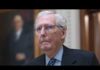
Jay Clayton walked into his Senate hearing hoping to become America’s top spy chief and walked out branded, by both left and right, as the man who said Joe Biden was “fairly and duly elected” while refusing to say the five simple words Democrats demanded: “Joe Biden won the election.”
Story Snapshot
- Clayton confirmed Biden was certified president and “fairly and duly elected under our process.”
- Democrats pushed him for a blunt “Joe Biden won,” which he repeatedly refused to say.
- He declared he is “not an election denier,” trying to walk a tightrope between truth and Trump.
- Conservatives blasted him as “caving,” while Democrats called his answers theater and humiliating.
Clayton affirms Biden’s election but dodges the simple winner question
Jay Clayton, President Donald Trump’s nominee for Director of National Intelligence, faced a Senate Intelligence Committee eager to pin him down on the 2020 election. Under questioning, Clayton stated that Joe Biden “was certified as the president of the United States” and “received the most electoral votes,” adding, “So, he won the election” in that formal sense. He later went further, saying Biden was “fairly and duly elected under our process,” a phrase that set off alarm bells among many Trump supporters.
Senator Mark Warner pressed Clayton directly on whether he accepted Biden’s victory and whether he considered himself an “election denier.” Clayton answered, “I’m not an election denier” and repeated that Biden was certified as president, trying to anchor his answer in the official process rather than partisan spin. From a common-sense conservative view, this is simple recognition of legal reality: the states certified, the Electoral College voted, and Congress counted those votes. Certification is how our system makes a winner official.
Ossoff’s grilling turns the hearing into political theater
The sharpest clash came when Georgia Senator Jon Ossoff tried to force Clayton to say, without legal qualifiers, who won the 2020 presidential election. Ossoff repeated the question again and again: “Who won the 2020 election?” Clayton pointed back to his earlier answers about certification and electoral votes, insisting, “I have answered the question.” When Ossoff kept pushing, Clayton finally refused to play along and called the exchange “theater,” saying he would not take part in a scripted political fight.
Ossoff fired back that Clayton’s refusal to utter the simple phrase “Joe Biden won” was “humiliating” and showed deference to Trump’s “delusions” about a stolen election. This framing drove much of the media coverage: Democrats cast Clayton as another Trump nominee trapped between facts and loyalty, trying to thread a needle so narrow it almost looks silly. Yet from a conservative angle, there is a fair question here. Should a nominee for intelligence chief be forced to perform political slogans on cue, or should he stick to verifiable facts and the legal record, as Clayton tried to do?
Election integrity, voter fraud, and the tightrope of Republican loyalty
Clayton’s answers on voter fraud showed the same careful balance. When Senator Angus King asked if there had been voter fraud in the 2020 election, Clayton replied, “I don’t think we can say definitively.” That answer irritated Democrats because it avoided a clear denial. Yet the broader record is clear: multiple investigations and court cases have found no evidence of widespread voter fraud that would change the outcome. Saying Biden was “fairly and duly elected under our process” matches those findings, even if Claytons language stayed technical.
Analysts noted that nominees like Clayton face real pressure inside the Republican Party. Trump continues to claim he won in 2020, and many of his supporters insist the election was stolen. Saying openly “Biden won” risks alienating that base and potentially jeopardizing a nomination. At the same time, the Director of National Intelligence must rely on facts and law, not political feelings. Clayton’s strategy—lean hard on certification, court rulings, and the official count—shows a man trying to satisfy both camps and pleasing neither.
How the confirmation system encourages scripted clashes and half-answers
This fight over the 2020 election did not happen in a vacuum. Senate confirmation hearings have become long, charged, and deeply political, especially for positions tied to law enforcement and intelligence. Committees now routinely use big symbolic questions—about elections, “denial,” or loyalty to Trump—to test whether nominees will follow the law or bow to partisan pressure. The process pushes nominees to deliver rehearsed phrases that protect their careers instead of straight talk that gives voters clarity.
The establishment is scrambling because the truth is finally taking center stage
At yesterday's Senate Intelligence hearing, DNI nominee Jay Clayton refused to play the media’s narrative games, repeatedly stating that Joe Biden was "certified" but pointing directly to the…
— Unite4Freedom (@Unite4Freedom) July 16, 2026
Conservative outlets such as The Gateway Pundit blasted Clayton as “cowering to Democrats” for calling Biden “fairly elected.” Many social media posts demanded Trump “get rid of him” and branded him a “Biden guy” for accepting the certified result. On the other side, Democrats and mainstream reporters portrayed him as evasive and politically timid for dodging the plain-language “Biden won” demand. Put together, Clayton’s hearing shows the modern dilemma for any Republican nominee: speak in the simple terms most Americans use, and you anger a chunk of the base; speak in legal terms about certification and process, and you look like you are hiding something.
Sources:
thegatewaypundit.com, youtube.com, theepochtimes.com, rollcall.com, pbs.org, c-span.org, cnn.com, washingtonpost.com, washingtontimes.com, campaignlegal.org, democracydocket.com, heritage.org, presidentialtransition.org, regulatorystudies.columbian.gwu.edu
© ournationnews.com 2026. All rights reserved.