
A hot cup of coffee on a crowded jet bridge now sits at the center of a federal assault claim and a political firestorm.
Story Snapshot
- Immigration officers say a targeted arrest at Seattle-Tacoma Airport led to a scuffle and hot coffee thrown at agents.
- Officials identified a visa overstay as the original cause and alleged a second overstay after the confrontation.
- Washington leaders condemned the masked officers and disruption on the jet bridge.
- Airport authorities said they had no advance notice and began reviews of procedures.
What ICE Says Happened On The Jet Bridge
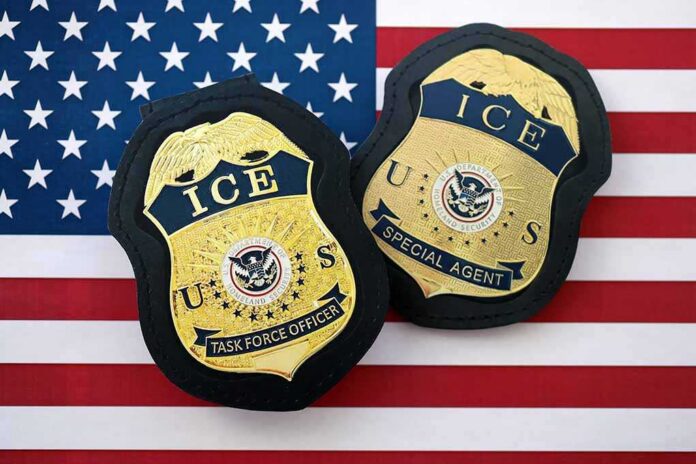
U.S. Immigration and Customs Enforcement said officers launched a planned, targeted enforcement operation at Seattle-Tacoma International Airport to arrest Ricardo Larrondo Mendoza for overstaying a visa. The agency said the arrest drew interference from nearby travelers, who obstructed officers during the boarding process. ICE stated that another passenger, identified as Sofia Hernandez Mejia, hurled hot coffee at agents and could face a charge for assaulting a federal officer. The agency also said Hernandez Mejia was in the country unlawfully after overstaying a visa.
Reuters and the Associated Press reported the same core details from ICE: the targeted arrest, a physical struggle, and the hot-coffee allegation tied to Hernandez Mejia. That consistent account matters because it anchors the timeline and identities while emotions run high. The reports did not provide underlying immigration records or a criminal complaint at the time of publication. The agency’s narrative remains the most specific version publicly available for the jet bridge itself.
What Leaders And Airport Officials Condemned
Washington Governor Bob Ferguson blasted the scene. He said masked agents dragged people off a jet bridge without clear identification and called the tactics un-American. He urged airlines to push federal agents out of airport spaces they control. That kind of rhetorical strike aims at policy, not just this case, and it landed because the video images were raw and close to travelers. The Port of Seattle said it had no advance notice and opened reviews of whether airport protocols were followed.
Policy critics focused on masks and unmarked gear. They argued the look erodes public trust during chaotic moments. That critique taps a broader fight about transparency in federal law enforcement. On one side is officer safety and operational security. On the other side is public confidence when force happens inches from families and flight crews. That framing explains why this arrest spilled from an immigration debate into a question about basic airport order and passenger safety.
The Evidence Gaps And Why They Matter
News reports did not publish Mendoza’s visa class, his admission record, any administrative warrant, or a judicial warrant number. The coffee allegation appeared in ICE’s statement but did not come paired with a filed criminal charge in the public record cited by reporters. The video that circulated did not settle intent, which is key to any assault case. These gaps do not erase the agency’s claims, but they leave room for questions that only documents and full footage can answer.
American conservative values stress both the rule of law and due process. Visa overstay enforcement fits the first value; clear documentation and proportionate force fit the second. The prudent view is simple: if ICE planned a targeted pickup, it should be able to show the paper and the video that justify actions taken in a tight public space. If a passenger threw hot coffee on officers, a straightforward criminal filing will say so and will cite evidence. That is not anti-enforcement; that is common sense accountability.
Airports As The New Front Line
Airports have become a more frequent arena for immigration enforcement, aided by information sharing inside the Department of Homeland Security. That trend brings unique risks. A jet bridge is confined, loud, and tense. One misstep can snarl a flight and spread panic fast. Federal officers do have arrest authority in public and semi-public areas, but agencies also publish use-of-force guidance and after-action review rules. Meeting both standards is the best way to keep travelers safe and uphold the mission.
**Masked federal agents dragged two visa overstays off a Sea-Tac jet bridge during boarding on November 21, prompting Washington’s Democratic governor to label the operation “chilling” and demand ICE leave the state’s airports.**[[1]](https://t.co/scYAB677m3)
[Take 7/15 · D-2]…
— GrumpyNews, emotionally clean news. (@GrumpyNews_) November 22, 2026
The Sea-Tac clash shows how presentation can decide the public verdict long before a courtroom weighs anything. Masks, shouting, and spilled drinks make for strong visuals that shape opinion in minutes. The solution is not to stop enforcing the law; it is to enforce it with planning that fits the space. That means clear coordination with airport authorities when possible, arrests away from chokepoints, and fast, public release of basic facts once the cuffs click.
Sources:
facebook.com, apnews.com, rmb.reuters.com, the-independent.com, congress.gov, uk.news.yahoo.com
© ournationnews.com 2026. All rights reserved.