
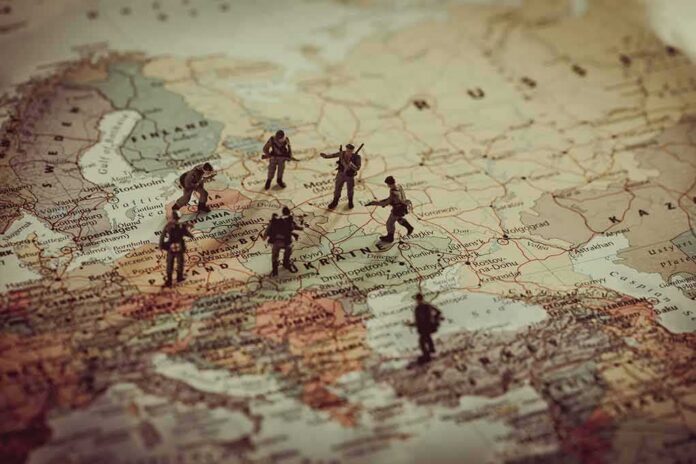
Nearly 3,000 soldiers from 11 European countries just rehearsed, in Poland, what it might look like to send troops into Ukraine after the shooting stops.
Quick Take
- A two-week exercise started November 9 near Nowa Deba, Poland, testing a possible postwar Ukraine mission.
- France and the United Kingdom led the drill, which falls outside NATO under the Coalition of the Willing.
- Reports put the force at roughly 2,800 troops from countries including Belgium, Germany, Spain and Sweden.
- Commanders say any real deployment waits on a ceasefire and Ukraine’s approval.
What Actually Happened In Poland
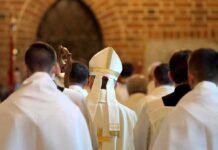
Soldiers from across Europe gathered in southeastern Poland starting November 9 for a two-week training exercise. The drill, held near the town of Nowa Deba, checked whether a coalition of European nations could actually move troops and equipment into Ukraine once a war ends. It marked the first hands-on test of an idea that has mostly lived in political speeches until now.
Reporting from the Associated Press, carried by outlets including ITV, says about 2,800 personnel took part. Countries involved included Belgium, Estonia, France, Germany, Lithuania, the Netherlands, Spain, Sweden and the United Kingdom. Poland handled logistics on home soil, while Turkey joined remotely from Istanbul. The United States was notably absent from the field exercise.
France And Britain Lead A Force Outside NATO
France and the United Kingdom ran the show, not NATO headquarters. The exercise operated under the banner of the Coalition of the Willing, a grouping built specifically to plan for Ukraine’s security after the fighting stops. That structure matters. It lets European nations move faster on Ukraine without needing agreement from all 32 NATO members, some of whom remain wary of provoking Russia.
The drill tested basic building blocks any real mission would need. That includes command and control between different national militaries, moving troops and gear across borders, and getting countries with different languages and equipment to work as one unit. The Kyiv Independent reported these were the specific skills organizers wanted to measure during the two-week window.
What A Postwar Force Would Actually Do
Lieutenant General Tom Bateman, identified as commander of the multinational force for Ukraine, laid out three jobs for troops if they eventually deploy. They would help rebuild Ukraine’s armed forces, support safer skies for reopening Ukrainian airspace, and assist with clearing mines from the Black Sea. Those are concrete, trainable tasks, not vague diplomatic promises.
None of this happens without conditions being met first. Reporting is clear that any deployment depends on two things: an actual ceasefire taking hold, and Ukraine formally requesting or approving the foreign troops on its soil. That keeps the mission conditional, not a done deal already in motion.
Numbers Still Don’t Fully Match Across Reports
Coverage of the exercise shows some gaps worth noting. Most outlets cite around 2,800 troops and 11 countries, while at least one report describes nearly 5,000 servicemen involved, and another counts only 10 nations. Those differences likely reflect how outlets counted support staff, remote participants like Turkey, or command personnel differently, rather than any dispute over the exercise itself.
A Pattern Years In The Making
This exercise did not spring up overnight. European leaders have been building toward a troop-backed security guarantee for Ukraine since early 2025, moving the conversation from political pledges toward actual military planning. Analysts have long noted the force could range from several thousand troops to a much larger commitment, depending on what final mandate countries agree to.
Conservative voters watching this unfold should see it clearly: Europe is finally being asked to carry more of the weight for its own continent’s security, rather than leaning on American taxpayers and troops by default. A French-British-led coalition, operating outside NATO’s full structure, suggests European nations are willing to commit real resources rather than just issue statements. Whether that follow-through continues once a ceasefire actually arrives remains the real test ahead.
EUROPE REHEARSES POSTWAR UKRAINE MISSION — 2,800 troops from 11 nations drilled in Poland for a force to rebuild Ukraine's army after a ceasefire. Problem: no guarantees yet. Fix: Berlin backs the plan, drill wraps Sunday. EE-0011 #traphabits #aitosi
— trap habits llc (@traphabits101) November 20, 2026
For now, the Nowa Deba exercise stands as the first practical rehearsal of a plan that previously existed mostly on paper. It proved European militaries can move personnel, coordinate command structures, and run a joint exercise under a non-NATO banner. What it has not yet proven is whether that same coalition can execute a real deployment inside Ukraine once the guns actually fall silent.
Sources:
military.com, fakti.bg, usnews.com, chosun.com, razumkov.org.ua
© ournationnews.com 2026. All rights reserved.