
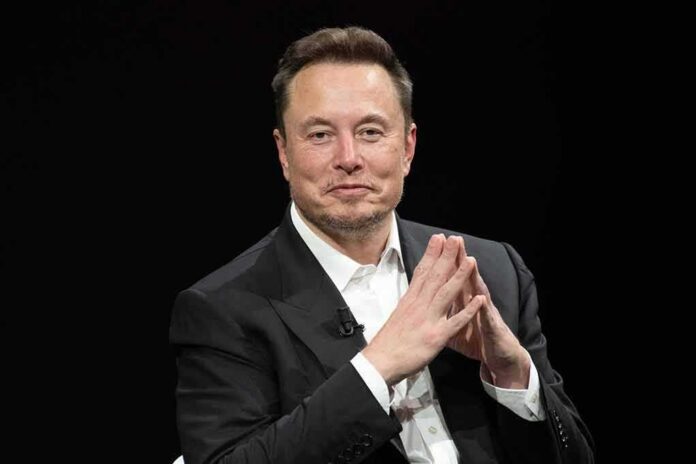
South Africa’s president publicly asked Elon Musk to “remember his country” and give back, tying the plea to the hard math of apartheid-era education.
Story Snapshot
- President Cyril Ramaphosa urged Elon Musk to contribute to South Africa’s development during a Silicon Valley forum.
- Ramaphosa linked the request to unequal apartheid school funding and Musk’s South African schooling.
- Musk fired back on X, calling today’s South Africa “super racist against Whites and Asians”.
- The clash overlaps with Starlink’s stalled entry into South Africa under local-ownership rules.
What Ramaphosa Asked For, And Why It Hit A Nerve
President Cyril Ramaphosa used a high-profile Silicon Valley stage to make a direct ask of Elon Musk. He said Musk should “remember his country” and help South Africa’s development. He framed it as loyalty to one’s roots, not a political tithe. He also tied it to the legacy of apartheid schooling, arguing the system spent far more on white students than on Black students, and that Musk may not grasp the full damage that caused.
Ramaphosa’s message had two parts. First, he pointed to Musk’s life story: born in Pretoria in 1971, schooled in South Africa, and then leaving at 17 for Canada and later the United States. Second, he argued that public resources during apartheid created a tilted field. He used a rand-to-rand contrast to make the point. The government write-up does not supply the detailed budget trail. But the broader pattern of large per-pupil gaps in that era is well documented by education scholars.
The Numbers, And The Gap Between Morals And Mechanisms
One report cites ratios that varied by decade. An academic account places late-1960s spending for white learners vastly higher than for Black learners. A later year shows a still-wide but smaller gap by the time Musk finished school in 1988. These figures echo the general record that white schools received many times the funding of Black schools during peak apartheid years. The core claim is strong on history. It is weaker on assigning a precise, personal bill to one graduate of that system.
Ramaphosa did not set an amount, program, or deadline. He did not name a legal duty. He pitched a moral case anchored in national development. That keeps the appeal broad but leaves room for critics to call it vague. The cleanest fix would be a written plan with audited projects, clear governance, and tax treatment. A tight scope would turn a moral call into a measurable partnership. That would also lower the noise around politics and deal-making.
Musk’s Rebuttal And The Policy Collision Everyone Saw Coming
Musk answered with a one-line grenade on X: “South Africa is now super racist against Whites and Asians.” He also has said the country should repeal more than a hundred laws he views as explicitly racist and has labeled current policy “Apartheid version 2”. He and his supporters point to rules that require at least 30 percent local ownership by historically disadvantaged groups to win key telecom licenses. They argue these rules block investment and punish merit.
Ramaphosa Asks Elon Musk To Contribute To South Africa https://t.co/hYhhRNpNrH via @YouTube
— Nelly Redgrave (@nellyredgrave) November 18, 2026
That is not a side skirmish. It crashes into the Starlink saga, where licensing has dragged for years while the government emphasizes compliance with national rules. Reporting ties Ramaphosa’s Silicon Valley charm offensive to this stalled file, which makes any ask of Musk look like leverage to some observers, fair or not. The optics get worse online, where a single hot post can drown a nuanced policy discussion in minutes.
What A Common-Sense Path Would Look Like
Both sides can test their claims with actions, not slogans. The Presidency can publish a short list of shovel-ready school connectivity projects with independent audits and no political steering. Musk can meet that with a time-limited pilot for rural schools or technical colleges, measured on cost per classroom, uptime, and skills taught. If ownership rules are the choke point, the regulator can disclose the full correspondence and a lawful path that fits national policy and lets service start.
Americans value fairness and accountability. They also respect charity that works and investment that scales. History supports Ramaphosa’s case on unequal education. His ask gains strength when it moves from a microphone line to a posted plan. Musk’s efficiency pitch and free-speech impulse are real strengths. They gain credibility when paired with on-the-ground delivery. If both sides want results, they can trade jabs less and publish terms more. That would serve students better than any viral clip.
Sources:
twitchy.com, news24.com, africa.businessinsider.com, briefly.co.za, thesun.ng, starlink.com, scielo.org.za, academic.oup.com
© ournationnews.com 2026. All rights reserved.