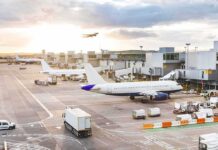


One overloaded router buried inside a remote FAA facility triggered the longest nationwide flight grounding since September 11, 2001.
Quick Take
- Transportation Secretary Sean Duffy says a router malfunction during a routine copper-to-fiber upgrade caused the outage.
- The faulty device sent over 1,000 connection attempts every few seconds, flooding other routers across the network.
- 17 of the FAA’s 22 en route air traffic control centers felt the disruption before flights resumed.
- Officials say there is no current sign of a cyberattack, though contractor error has not been ruled out.
A Single Router Sparked A Nationwide Shutdown
Transportation Secretary Sean Duffy told reporters the chaos began while contractor L3Harris Technologies performed routine maintenance at a remote FAA site. Crews were swapping old copper telecommunications lines for modern fiber optic cable. During that work, a router started misbehaving, setting off a chain reaction that rippled across the country’s air traffic control system almost instantly.
Duffy described the failure in specific terms. The malfunctioning router generated more than 1,000 connection attempts every four to five seconds. That flood of signals overwhelmed neighboring routers, scrambling communications with aircraft and disrupting some radar feeds used by controllers to track planes safely.
FAA Administrator Bryan Bedford said 17 of the agency’s 22 en route air traffic control centers felt the impact. The disruption did not stop there. It spread into low-altitude radar facilities and terminal radar approach control rooms, the stations that guide planes near busy airports during takeoff and landing.
Why Controllers Grounded Planes Without Full Blackouts
Bedford made a notable point during his briefing. None of the en route centers actually went completely dark. Screens stayed on and systems kept running in some form. Still, officials ordered a nationwide ground stop because the communications and radar data flowing through those systems could no longer be trusted as reliable or complete.
That decision reflects a basic safety principle in aviation. Controllers cannot safely separate aircraft using radar feeds or radio links that might be feeding them bad information. Grounding flights until the network stabilized was the cautious choice, even though the underlying hardware never fully shut down.
How Officials Fixed It And What Remains Unsettled
Technicians isolated the problem by disabling or working around the malfunctioning network function. Once that happened, FAA facilities and control centers began coming back online, and the nationwide ground stop lifted after more than four hours, the longest such stoppage since the September 11 attacks.
Duffy and FAA officials say they have seen no current sign this was a cyberattack. That said, they have not finished determining whether the root cause was a defective router or a mistake made during installation, leaving contractor accountability as an open question officials are still working through.
An Aging System That Makes Small Failures Spread Fast
This episode fits a pattern government watchdogs have flagged for years. The Government Accountability Office has repeatedly warned that FAA modernization efforts move too slowly, with weak contractor oversight and systems that outlive their useful life. A 2024 assessment found dozens of air traffic control systems already classified as unsustainable, with dozens more at risk.
None of that proves systemic neglect caused this specific outage. But it explains why a single router during a planned upgrade could ripple across seventeen facilities in minutes. Tightly connected, aging networks do not fail quietly in one corner. They fail loudly, everywhere, all at once, which is exactly what travelers experienced this week.
Accountability Still Owed To Stranded Travelers
Thousands of canceled flights and tens of thousands of disrupted trips demand real answers, not just a preliminary briefing. Duffy has already criticized L3Harris publicly and vowed to hold responsible parties accountable, a stance that matches basic conservative expectations of contractor performance and taxpayer protection.
Modernizing air traffic control cannot mean tolerating sloppy installation work or unreliable hardware on systems millions of Americans trust with their safety every single day. A full accounting of the router failure, the contractor’s role, and the FAA’s oversight gaps is the least the flying public deserves after a shutdown this disruptive.
🚨 FAA OUTAGE: ONE ROUTER FAILURE JUST DISRUPTED 20,000+ FLIGHTS ACROSS THE UNITED STATES.
READ MORE: https://t.co/bKB80C467y
The United States didn't suffer a cyberattack. It didn't lose its air traffic control system to hackers.
A ROUTER STARTED FLOODING THE NETWORK. Router… pic.twitter.com/NbOAGQtjDB
— The CyberSec Guru (@thecybersecguru) November 15, 2026
Expect congressional scrutiny and contract reviews to follow, given the scale of the disruption and the unresolved question of installation error versus equipment defect.
Sources:
youtube.com, ftw.usatoday.com, sacbee.com, sbs.com.au, theaircurrent.com, news.bloomberglaw.com, 10news.com
© ournationnews.com 2026. All rights reserved.