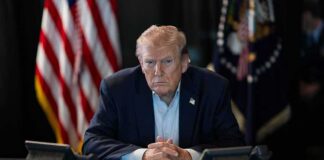

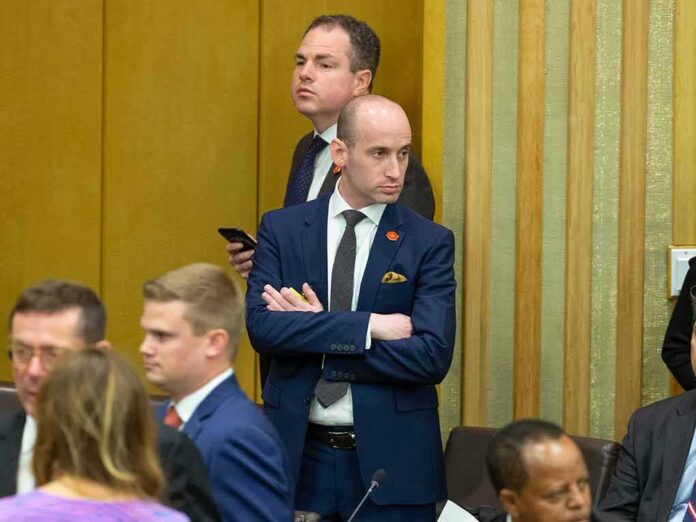
At the White House podium, President Trump looked at Stephen Miller and asked, “Do you want to run for president?”
Story Snapshot
- Trump raised Stephen Miller as a 2028 possibility in front of top aides and press.
- Trump compared Miller favorably to Vice President JD Vance and Secretary of State Marco Rubio.
- The moment added a fresh contender to an already early 2028 guessing game.
- Reports framed the exchange as teasing, not a formal endorsement.
Trump’s On-Camera Prompt Put Miller In The 2028 Frame
President Trump used a White House press conference on November 20, 2026, to elevate Stephen Miller, his chief of staff, into the 2028 conversation. After inviting Miller to speak and praising him, Trump asked, “Do you wanna run for president?” The exchange unfolded in full view of cameras and reporters in an official setting, not a leak or private aside. Outlets including Agence France-Presse and The Hill reported the moment and its wording the same day.
Trump did more than toss Miller a compliment. He compared him, on the spot, to the two names most often linked to a 2028 run: Vice President JD Vance and Secretary of State Marco Rubio. “He was better than these two guys,” Trump said, gesturing toward them, according to published accounts. That public contrast was the headline driver. It turned a light tease into fuel for talk about succession and pecking order in Trump’s circle.
Miller’s Praise Of Trump Teed Up The Question
Reporters described a clear sequence. Miller first stepped up to the podium and delivered an energetic defense of Trump’s record. Trump then amped up the stagecraft, calling Miller “the most powerful man in the world” and posing the presidential question. The choreography linked Miller’s message and Trump’s elevation. It looked like an “audition” to several observers and was covered that way across outlets that watched the briefing live or reviewed the clips.
The moment also fit Trump’s showrunner style. He often spotlights allies, floats rivalries, and rewards performance in public. That approach keeps options open and his team alert. It also keeps the press hooked. Here, the setting, the praise, and the comparison gave the tease unusual weight. Even so, coverage stressed that Trump did not offer a formal endorsement, and Miller did not announce any plan to run. It was a nudge, not a handoff.
What It Signals About The 2028 Field
The scene adds another layer to an early and unusual 2028 shuffle. Trump has regularly elevated both Vance and Rubio while stopping short of naming a successor. That ambiguity has encouraged scoreboard reading over stray jokes, applause lines, and photo-ops. The Miller tease widened the field by one more name and reminded everyone that proximity to Trump can matter as much as polling or resumes in this party conversation.
News coverage before and after the midterms framed Vance as a natural frontrunner due to the vice presidency, with Rubio rising on policy visibility and media buzz. Analysts have noted that Trump likes to keep both men in play and sometimes in competition. In that light, praising Miller over them in the room served two functions: highlighting a trusted loyalist and signaling that 2028 remains wide open until Trump says otherwise.
How Conservatives Might Read The Move
Many on the right prize loyalty, clear borders, and a hard line on crime and foreign threats. Miller’s brand lines up with those priorities. He is known for tough immigration and “law and order” views, message discipline, and fierce defense of Trump’s agenda. For voters who want continuity of policy and personnel, his rise checks the boxes. For small-government conservatives, the question becomes whether Miller would pair tough borders and strong defense with spending restraint and regulatory rollback that lift growth.
Trump intimated that Stephen Miller would be his successor because he can't stand that anyone else would succeed in replacing him. So he puts forth someone who's so vile that he'd never have a chance of winning if Trump himself isn't running.
— David Kaplowitz (@dkaplowitz) November 21, 2026
The comparison to Vance and Rubio also sharpens useful contrasts. Vance blends nationalist economics with rust-belt appeal and a close working tie to Trump. Rubio pairs hawkish foreign policy with an international profile as secretary of state. Miller brings inside-game mastery and ideological clarity. Trump’s aside did not settle the race, but it gave each camp a fresh talking point to test with donors, activists, and media bookers over the next year.
Sources:
facebook.com, ca.news.yahoo.com, afp.com, okmagazine.com, us.cnn.com, nydailynews.com, newsweek.com
© ournationnews.com 2026. All rights reserved.