
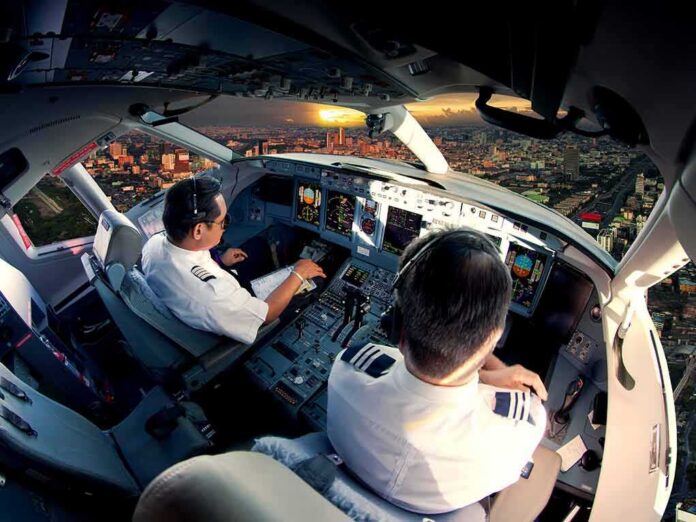
A bleeding captain unlocked a fortress door, and 174 people got a second chance at life.
Story Snapshot
- Captain Smit Machchhar was seriously wounded in a cockpit attack aboard FlyDubai FZ1073.
- Despite his injuries, he opened the cockpit door so others could restrain the attacker.
- The plane diverted and landed safely; passengers and crew helped secure the cabin.
- The case spotlights the post-9/11 shift from outside threats to insider risks.
A violent cockpit struggle and a life-or-death choice
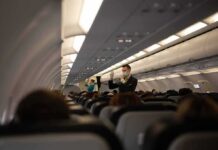
FlyDubai Flight FZ1073 from Dubai to Tel Aviv turned into a fight for control midair. Reports identify Captain Smit Machchhar as the pilot who suffered serious stab wounds during the attack inside the cockpit. The timeline places the assault roughly mid-flight. Wounded and facing an attacker, Machchhar still moved to unlock the reinforced cockpit door, enabling passengers and crew to enter and subdue the assailant. That act kept the aircraft stable long enough to divert and land.
Accounts from the airline and media describe a chaotic scene that flipped the usual hijacking script. The reinforced door that protects pilots from outside threats also separates them from help during an insider attack. Machchhar bridged that gap under extreme duress. Crews rallied. Passengers stepped in. The aircraft landed safely, and authorities took it from there. The reporting frames the episode as an apparent attempted hijacking foiled by training, teamwork, and grit.
Why this incident breaks the old mold
This event fits a pattern aviation security experts have warned about for years: the danger is no longer only at the door. After 9/11, airlines hardened cockpits to stop forced entries by passengers. Doors became stronger, and access rules tightened. That worked against outside threats. But when the threat is inside the flight deck, those same defenses can isolate the good guys from help and buy the attacker time. Analysts highlighted this exact trade-off after the diversion and safe landing.
Security literature also keeps hijacking risk in perspective. Commercial flights number in the tens of millions a year worldwide. Attempts are rare but not gone. One review counted 47 attempted hijackings of commercial airliners between 2001 and March 2020. Rare does not mean never; it means prepare, drill, and add layers that fail safe when a human turns rogue or violent. That is the conservative lesson here: build systems that assume failure and still protect lives.
The captain’s path and the pressure inside a cockpit
Public attention turned to Machchhar’s background after the landing. Profiles note he did not start his career wanting to be a pilot, but he found the calling later and rose through training and line flying. Older interviews surfaced where he spoke about nerves on early flights and the discipline it took to learn from errors and stay focused under stress. That mindset matters when seconds decide outcomes and procedures meet chaos. The blend of humility and resolve shows in what he did under attack.
Passengers and leaders praised him as a hero who put safety first. Coverage described how his decision to open the cockpit door, while bleeding, enabled others to restrain the attacker and stabilize the flight. That choice balanced competing dangers. Keep the door shut and face the assailant alone. Open it and risk a wider breach. He picked the option that brought help fast. On the facts publicly reported so far, that call lines up with common sense and the goal every traveler shares: get everyone on the ground alive.
What aviation should fix next
The fix is not to undo strong doors. The fix is to assume insiders can pose risk and to build countermeasures that work from the inside out. Secondary barriers, alert protocols that summon cabin backup in seconds, and smart access procedures can buy time and space during an attack. Industry voices have long pushed for layered defenses beyond the main door, paired with rigorous crew training and vetting. Events like FZ1073 make that case again without any hedging.
🇮🇳🇮🇱NEW: Flydubai Captain Smit Machchhar breaks his silence and turns emotional as he recounts the event before Prime Minister Modi.
Despite multiple stab wounds and, by one account, lying bloodied on the cockpit floor, Captain Smit Machchhar activated the cockpit-door release.… pic.twitter.com/1pqkZrql20
— Michael Khieu (@kingkhieu) October 2, 2026
Regulators and airlines should treat this as a near-miss audit in daylight. Review cockpit access flows. Stress-test scenarios where one pilot is injured and needs immediate help. Reexamine employee screening and wellness programs without turning flight decks into prisons. The target is resilience: no single point of failure, not a door, not a person, not a code. That is how you respect passengers, protect crews, and keep the sky open—by designing for the worst so the best can still happen.
Sources:
facebook.com, apnews.com, independent.co.uk, thenationalnews.com, thenightly.com.au, latimes.com, icct.nl
© ournationnews.com 2026. All rights reserved.