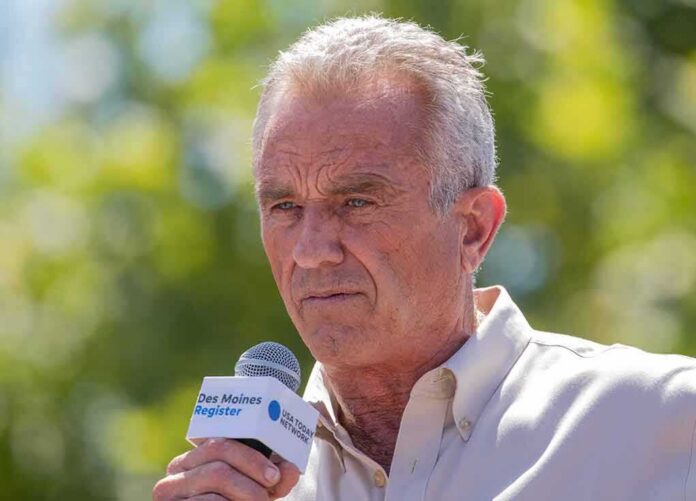
Robert F. Kennedy Jr. wants Americans to believe cooking dinner is a national mission, and his new YouTube show makes that case one awkward stir at a time.
Quick Take
- The Department of Health and Human Services (HHS) launched The Real Food Show in August 2026, hosted by Secretary Kennedy alongside a different celebrity chef each episode.
- HHS says the goal is to turn the new 2025-2030 federal dietary guidelines into simple, affordable meals families can actually cook.
- Reviewers across the political spectrum praised the recipes but questioned whether Kennedy himself adds much value on screen.
- Critics argue the show doubles as a platform for administration talking points, blending cooking tips with policy messaging.
A Government Cooking Show With A Policy Mission
HHS describes The Real Food Show as a cooking series that makes healthy eating simple and affordable for every American household. The agency calls it more than entertainment, framing it as a national initiative meant to turn dietary science into dinner you can actually make tonight. Kennedy has appeared with chefs like Geoffrey Zakarian, Daphne Oz, and André Rush, each demonstrating budget meals built around whole ingredients.
The show arrived months after Kennedy and Agriculture Secretary Brooke Rollins unveiled what HHS called the biggest overhaul of federal nutrition policy in decades. The new guidelines push high-quality protein, healthy fats, and whole foods while steering Americans away from heavily processed products. The cooking show was built to put that policy into practice, step by step, in a home kitchen instead of a government memo.
Critics Say The Format Feels Hollow
Not every reviewer bought the execution. Salon described the show as strangely lifeless, noting it has all the pieces of a normal cooking program, the kitchen set, the chef, the price graphics, but almost none of the curiosity or joy that usually makes the genre fun to watch. That is a notable critique, since cooking shows typically succeed or fail on personality and energy, not just instructional accuracy.
The Hill went further, arguing Kennedy mostly stands back and watches the guest chef do the actual cooking. The opinion piece claimed he rarely offers ingredient suggestions or spice measurements, stepping in mainly to stir when told. If true, that undercuts the premise that this is a hands-on teaching tool rather than a backdrop for talking about policy.
Where The Politics And The Pantry Collide
Several reviewers noted the show leans heavily on references to administration priorities, mentioning executive orders, fishery regulations, and the new dietary guidelines mid-recipe. That is not unusual for a cabinet secretary promoting his own agency’s signature initiative. But when a viewer tunes in for a crunch wrap recipe and gets a civics lesson instead, the mixing of genres can feel jarring rather than persuasive.
The Real Test Is Whether Anyone Changes Their Dinner
Public health researchers have long warned that dietary guidelines struggle to shift actual eating habits, even when the science behind them is solid. One review found the federal guidelines have largely failed to produce meaningful behavior change over the past decade, pointing to a communication gap rather than a science gap. A government-produced show, however well-intentioned, faces that same uphill climb.
That history matters here. Federal dietary guidance has been a joint project between the Departments of Agriculture and Health and Human Services since the early 1980s, updated every five years by law. The format keeps changing, from pyramids to plates to now a cooking show, because officials keep searching for a way to make nutrition advice stick. Whether a YouTube series succeeds where pamphlets failed remains an open question worth watching.
For conservative viewers skeptical of government overreach into the kitchen, the show at least avoids heavy-handed mandates, offering suggestions rather than rules. It leans on personal responsibility and practical budgeting, themes that fit comfortably with a limited-government instinct. The bigger concern is whether taxpayer-funded media should double as political messaging, a line this show appears to blur more than once.
Ultimately, the show’s biggest asset and its biggest liability are the same thing: Robert F. Kennedy Jr. himself. His celebrity draws eyeballs the Dietary Guidelines for Americans never could on their own. But that same star power invites scrutiny of every policy aside, every awkward pause, and every recipe that viewers can judge for themselves, long before the next five-year update rolls around.
Sources:
reason.com, hhs.gov, odphp.health.gov, foxnews.com, usda.gov, yahoo.com, washingtonpost.com, menshealth.com, salon.com, rawstory.com, disa.org, thehill.com, idsnews.com, the-express.com, thedailybeast.com, people.com, ground.news, nypost.com, frontiersin.org, pmc.ncbi.nlm.nih.gov, dietaryguidelines.gov, apha.org, fao.org, academic.oup.com, worldnutritionjournal.org, mdpi.com, tandfonline.com, edepot.wur.nl, deloitte.com
© ournationnews.com 2026. All rights reserved.