

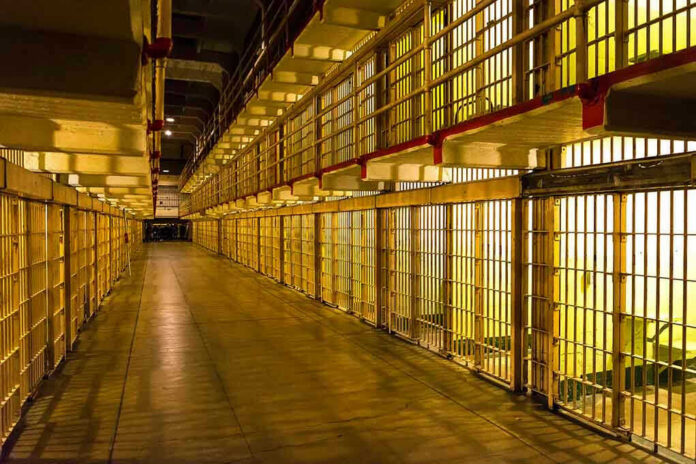
At Negombo Prison, a fight between rival inmate factions turned into one of Sri Lanka’s deadliest prison riots in years, leaving at least 25 people dead and more than 100 injured.
Quick Take
- The violence began between two inmate groups, with officials linking it to drug smuggling inside the prison.
- Reports say prisoners seized guard firearms and the clash worsened during breakfast service the next day.
- The dead included inmates and prison officers, though the exact count varied across early reports.
- The government ordered an investigation headed by a retired Supreme Court justice.
How the Violence Escalated
Officials said the unrest started on Sunday evening inside the prison near Colombo, then flared again on Monday morning. Prison spokesman Chaminda Gajanayake said the second wave broke out during breakfast, when inmates attacked guards and tried to push toward the main gate. Witness accounts and hospital reports also described gunshot injuries and intense fighting as security forces moved in.
Firstpost_Sri Lankan Prison Riot Kills 25 After Clashes between Rival Drug Gangs inside | Vantage on Firstposthttps://t.co/alrBONCgcG
Riot at Negombo Prison in Sri Lanka leads to 26 deaths and over 100 injuries. Riot sparked by clashes between rival drug gangs inside the prison.… pic.twitter.com/E5phH9P3lK— rbg4lif 🟥⬛🟩 (@rbg4lif) July 7, 2026
One of the most striking details is the speed of the collapse. A prison fight became a deadly compound crisis in less than a day. Reports said prisoners had grabbed several guns from guards, and local residents heard gunshots from inside the facility. That detail matters because it shows how quickly order can vanish when a prison system is already under strain.
What Officials Said Caused It
Authorities tied the riot to a dispute between inmate factions, with one side suspected of smuggling drugs and the other opposing it. BBC News reported that the trigger was also described as a clash over an inmate who had informed on a drug trafficking operation. The exact first spark was still not fully pinned down in the early reporting, but the drug trade angle stayed at the center of the official explanation.
The prison held about 2,400 inmates, which gives the riot a grim frame. In a crowded system, a single flashpoint can spread fast, especially when rival groups already have old scores and access to weapons. Reuters said the prison population figure came from Department of Prisons data, and that context helps explain why the violence moved so quickly beyond control.
The Human Cost and the Official Response
The death toll shifted as officials learned more. Early reports said at least 23 people had died, while later updates put the number at 25, 26, or more depending on the source and timing. BBC News said seven guards were among the dead, while other reports noted both inmates and officers were killed without giving a full breakdown at first.
🚨 GLOBAL UPDATES
Sri Lankan security forces have contained a massive two-day riot at the severely overcrowded Negombo Prison, leaving 26 dead (including 7 guards) and over 100 injured.
The violence, reportedly triggered after an inmate informed on an internal drug trafficking… pic.twitter.com/ihaQmFSHOK
— UKWELITIMES WORLD (@UKWELINEWSWORLD) July 7, 2026
Justice Minister Harshana Nanayakkara said he was shocked and ordered authorities to investigate and file a report. The government later announced a three-member investigative team led by a retired Supreme Court justice. That choice signals seriousness, but it also shows how much the state needed to regain public trust after a disaster that exposed prison weakness in plain sight.
Why This Riot Matters Beyond One Prison
This riot fits a broader Sri Lankan pattern: overcrowded prisons, rival inmate gangs, and claims of drug networks operating inside the walls. Some reports also noted that families gathered outside the prison demanding answers, while inmates accused security forces of firing indiscriminately. Those claims did not overturn the main account, but they showed how fast distrust grows when official information arrives in pieces.
For readers who want the hard lesson, it is simple. Prisons do not fail only when violence starts. They fail long before that, when gangs organize, weapons seep in, and crowding turns discipline into a pressure cooker. Sri Lanka’s Negombo riot was not just a sudden outburst. It was the visible break in a system that had already been bending for years.
Sources:
youtube.com, bbc.com, nytimes.com, facebook.com
© ournationnews.com 2026. All rights reserved.















![🇺🇸 First Lady Melania Trump Unveils New Fostering the Future & IndyCar Scholarships [LIVE]](https://ournationnews.com/wp-content/uploads/sites/26/2026/08/maxresdefault-43-100x70.jpg "Melania Speaks Out Amid Trump Aide Rumors")