

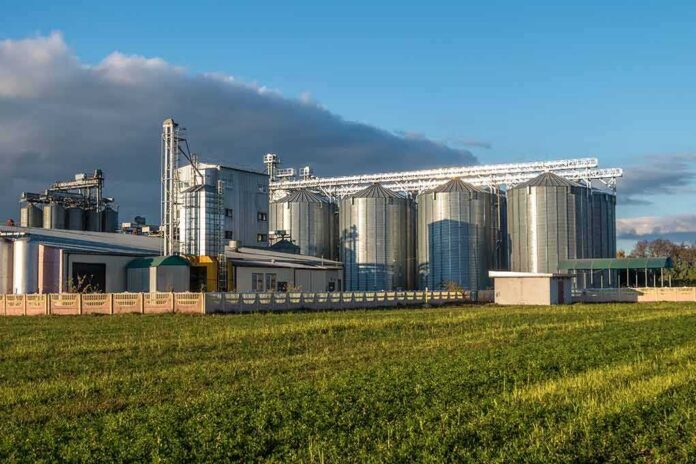
The world’s largest oat mill lit the Cedar Rapids skyline with a sudden fireball—and everyone walked away.
Story Snapshot
- Fire crews found signs of an explosion followed by a fire at Quaker Oats.
- Dispatch hit around 4:44–4:45 p.m.; responders converged in minutes.
- All workers were accounted for; officials reported no injuries.
- Investigators have not yet released the cause; the company pledged a review.
Explosion, Fire, And A Fast Headcount
Firefighters reached the Quaker Oats facility in downtown Cedar Rapids after a late afternoon blast and visible flames. The Cedar Rapids Fire Department said crews found what looked like evidence of an explosion and a fire inside the plant. Dispatch records and city statements placed the first call at about 4:44 to 4:45 p.m., which set off a large emergency response to the 400 block of 2nd Street Southeast. Officials said every worker was located soon after.
Local outlets showed black smoke and active flames as crews worked the scene. The fire department reported that as of about 5:30 p.m., all plant workers had been accounted for. City leaders echoed the headcount update. Reporters on the ground documented a heavy presence of engines and ladder trucks. The early picture was clear on two points: a blast and fire occurred, and people got out. The cause remained under review when officials spoke.
No Injuries, According To Officials On Site
Officials said no injuries were reported among plant workers or responding crews. The mayor said employees exited safely and were accounted for without injuries, while fire leaders reinforced the same point to the press. That outcome matters more than any headline. Firefighters went into a huge, complex food plant that runs with heat, dust, and moving product. They did the job and got everyone home. Later medical checks can surface new reports, but none were cited at the time.
Quaker Oats is part of PepsiCo’s food business, and company representatives said they were working with local responders. They stated that the cause would be investigated. The fire department’s language—“what appears to be evidence of an explosion”—shows responsible caution while the technical team sorts out the starting point and the sequence. That is standard practice after a fire scene cools and investigators can test, sample, and map damage.
Why Grain, Oats, And Dust Demand Respect
Grain and cereal plants face a special hazard that most people never see: fine dust. When dust builds up and finds a spark, it can flash inside equipment or rooms. The Occupational Safety and Health Administration has documented deadly grain dust explosions that drove modern safety rules in this sector. The United States Chemical Safety and Hazard Investigation Board has also tracked hundreds of combustible dust incidents over decades, with heavy tolls in other cases. Good housekeeping and airflow design matter.
NEWS — INDUSTRIAL FIRE / EXPLOSION | Cedar Rapids, Iowa | Oct. 24, 2026, 4:44 p.m. CDT: An apparent explosion sparked a fire at the Quaker Oats plant. All workers evacuated safely; no injuries or fatalities, including firefighters, were reported. Most of the fire was extinguished…
— WilluChill News. (@Will466513) October 25, 2026
Several recent investigations show the pattern. Dust settles on rafters, ducts, and beams. A smoldering pocket inside a grinder or conveyor can light it off. A small fire inside a piece of equipment can jump to a room if dust is loose in the air. The Chemical Safety Board has urged plants to keep transport lines moving fast enough to avoid build-up, and to follow national fire protection standards tailored for dust hazards. Those steps are not optional; they are proven.
What Investigators Will Pin Down Next
Investigators will first lock in the origin. They will look at any vessel, conveyor, dryer, or collector near the seat of the fire. They will trace blast patterns, check for lifted roofs or blown panels, and pull data from alarms and suppression systems. They will review maintenance logs, shift staffing, and cleaning schedules. If dust played a role, they will measure it and test it. If a bearing or motor failed, they will document the parts and heat marks to map timing and spread.
Command logs and dispatch times help build the minute-by-minute story. The reports placing the first tones at about 4:44 to 4:45 p.m. set the clock for the response window. Security video and radio traffic can tighten that timeline. That evidence, combined with on-site marks and lab tests, explains why careful words early on give way to firm findings later. The public wants answers fast. Getting them right protects workers, companies, and the community the next time a spark flies.
A Community Asset, A Safety Reminder
This plant is not just a skyline icon; it is a key node in America’s food chain. When a plant like this hiccups, trucks are rerouted, supply gets tight, and costs ripple. That is why the no-injury result is a win, and why a straight, fact-based probe is critical. Clean floors, tight ducts, working sensors, trained crews—those are not paperwork. They are what keep an ordinary shift from turning into a headline. Cedar Rapids just saw both sides of that truth.
Sources:
nypost.com, kcci.com, kcrg.com, kwwl.com, themirror.com, osha.gov, csb.gov
© ournationnews.com 2026. All rights reserved.