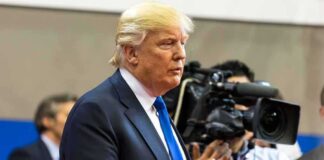

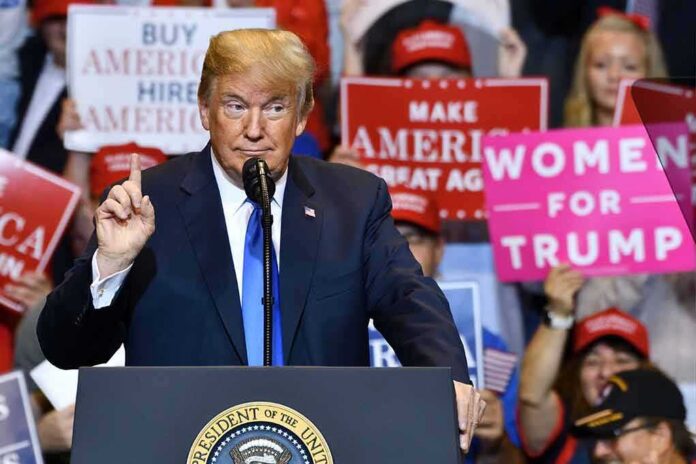
At an Arizona rally, President Trump said leakers who reveal attack timing “should be shot,” igniting a fierce clash over secrecy, law, and duty.
Story Snapshot
- Trump tied the harshest penalty to leaking military attack timing, drawing cheers and alarm.
- News outlets independently documented the remarks, reducing doubt about what he said.
- A prior episode showed senior officials shared war-plan details in a chat that included a journalist.
- A broadcast rebuttal disputed claims about pre-strike disclosures and mission harm.
What Trump Said In Arizona And Why It Landed Like A Grenade
Trump told a Bullhead City crowd on October 14 that “leakers should be shot” and pointed to those who “leak what time you’re going to attack a country”. The comment drew cheers. Reporters on site and national outlets recorded the line in real time and in follow-up stories. The statement tied the most severe penalty to a narrow act: exposing attack timing. That detail matters. Timing can get people killed, waste years of planning, and forfeit surprise.
The line also landed weeks before an election, which made it even louder. Rally stages reward simple moral frames. Trump cast leakers as traitors and the press as part of the problem. That frame taps a common-sense instinct: do not tell the enemy when you will strike. It also stokes fear that anonymous insiders can hijack policy. The moment set up a larger test: who guards secrets, who decides what can be published, and what the law allows when those collide.
The Documented Leak That Cuts Both Ways
Public reporting shows senior Trump officials discussed Yemen strike details in a Signal chat that included a magazine editor. The reported details covered targets, weapons, and the sequence of attacks. That is not a rumor mill. It is operational data. If accurate, it shows how fragile discipline can be when top players get casual with smartphones. It also scrambles blame. The Arizona rhetoric aimed at “sleazebags,” but the most concrete episode involved leaders, not some faceless staffer.
That inversion matters for credibility. Americans expect high standards from people who hold power over life and death. If leaders blur lines, the case for extreme punishment of lower-level leakers weakens. A conservative reading of duty says rules should bind most tightly at the top. That does not excuse harmful leaks. It says stewardship and example come first, and serious penalties, if sought, must sit on solid law and proof, not only anger.
What The Counter-Case Claims, And What It Does Not
A televised rebuttal argued that a cited journalist did not publish strike timing before an attack, and that a widely discussed bomber movement was a planned decoy, meant to be seen. It also said a major newspaper’s timeline relied on Pentagon information released after the mission. Those points, if correct, blunt the claim that media disclosure forced a scrubbed or failed operation. They also highlight a gap: the Arizona speech did not name the operation or the leaker.
That still leaves a hard truth. You do not need a newspaper story to cause damage. A text thread, a private chat, or an unvetted whisper can blow an edge. The law also draws lines between classified leaks, authorized briefings, and after-action reporting. Without a charge or declassified record, the public cannot know which line got crossed. That uncertainty is not proof of nothing. It is a call for disciplined process rather than showy threats.
Law, Limits, And The Conservative Test
The First Amendment bars prior restraint of the press in almost all cases, a rule set in the Pentagon Papers fight. The government could not stop publication in advance, even of sensitive material, but it could still prosecute leakers under statute after the fact. That balance reflects two duties: defend the country and keep the government honest. A serious policy must respect both. Capital punishment for leaks would demand clear statutory basis and due process. The record here has not shown that.
🚨 TRUMP: “LEAKERS SHOULD BE SHOT”
President Trump delivered a blunt warning during an election rally in Arizona, calling for severe punishment for individuals who leak sensitive government information.
“Leakers should be shot. They should be shot. In the past, we used to shoot…
— Raylan Givens (@JewishWarrior13) October 15, 2026
Accountability should start where the risk is highest. Leaders must stop casual channels that mix war plans and media. Agencies should log who knew what and when. Congress should demand closed-door briefings on any operation cited from a podium, then release a scrubbed summary. The public deserves clarity on whether a leak forced changes, who did it, and what law fits. That is how you fix the leak problem without leaking trust in the system itself.
Sources:
redstate.com, yahoo.com, nbcnews.com, aljazeera.com, thehill.com, latimes.com, jpost.com, time.com, britannica.com
© ournationnews.com 2026. All rights reserved.