
Sixteen people were pulled alive from the Pacific in the dark; 11 more never surfaced.
Story Snapshot
- The United States Coast Guard rescued 16 people after a mayday call off Baja California.
- Authorities searched for 11 others believed missing after a capsizing about 140 miles west of Ensenada.
- Some survivors had injuries consistent with shark bites, according to officials.
- The rescued were Mexican nationals, confirmed by Mexico’s San Diego consulate.
A predawn rescue in open water
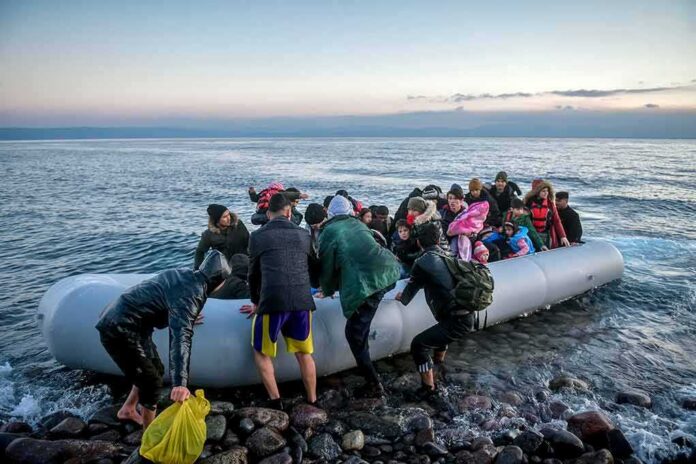
The United States Coast Guard answered a mayday call around 1 a.m. local time. The caller reported a boat filling with water far off Baja California. Crews from the Coast Guard, the United States Navy, and the Mexican Navy moved to the scene. Rescuers found people adrift in the Pacific about 140 miles west of Ensenada. They pulled 16 people from the water and rushed them to care. Officials said 11 others were believed missing after the capsizing.
Coast Guard officials described a high-risk search zone that spanned a remote stretch of ocean. Aircrews flew patterns over rough water. Surface teams traced likely drift paths based on wind and currents. The mission aimed to find anyone still afloat after the boat went down. The location sits on routes used by smugglers who try to move people toward the United States. Those runs often use overloaded boats and sail at night to avoid patrols.
Reports of shark-bite injuries
Medical teams evaluated several survivors for wounds that officials said matched shark bites. The ocean west of Baja hosts large predators, drawn by rich feeding grounds. People left in the water for long periods face many threats. Hypothermia, dehydration, exhaustion, and marine life all raise the risk. Officials did not say sharks caused the capsizing. They focused on treatment and on finding those still adrift. The search pressed on through the day and into the night.
Mexico’s San Diego consulate told reporters the rescued people were all Mexican nationals. That detail matched what crews saw at the scene and later at hospitals. Authorities did not release names. They also did not confirm the nationalities of the missing. That is common in these cases. Overloaded boats rarely carry a manifest. Rescuers must piece together headcounts from survivor accounts while the search continues.
A deadly pattern on the Pacific route
This event follows a pattern seen along the Pacific approaches to California. Smugglers push small boats beyond their limits. Operators pack people into low, open pangas. They run far offshore to avoid detection, then drive north. Weather can shift fast. Engines fail. A wave breaks wrong and flips the boat. In past years, people have died in similar runs near San Diego and along the Baja coast. First responders often report “missing” before any remains are found.
UPDATE: Migrants whose US-bound smuggling vessel sunk in Pacific Ocean fought off sharks, with "many" suffering bites, authorities say.
16 out of 27 passengers were rescued at sea. The rest remain missing. https://t.co/un0Q1lLPer
— Border Hawk (@BorderHawkNews) October 20, 2026
Global data shows how often the sea hides the full toll. The International Organization for Migration estimates thousands of migrant deaths in the Americas over recent years. The group warns that many losses go uncounted because bodies are not recovered and records are thin. Families can wait months for answers that never arrive. The Pacific off Baja is vast, cold, and unforgiving. Even strong swimmers struggle after hours in open water.
What this says about policy and common sense
Policy that shrugs at maritime smuggling invites more body bags. Borders signal the rules of the road for every nation. When those lines blur, cartels step in with their own. They sell a seat on a boat that should never leave shore. They cash in whether people live or die. A serious border strategy pairs firm enforcement with fast, fair legal channels. That dries up demand for deadly rides and backs the Coast Guard with fewer no-win rescues.
Some advocates will argue that danger at sea proves the need to relax controls. The record shows the opposite. Smugglers thrive when they can promise quick entry around the rules. Clear law, visible patrols, and real consequences cut that pitch down. Humane policy starts with prevention. It keeps people off sinking boats in the first place and keeps rescue crews from fishing victims out of black water before dawn.
The human cost behind the numbers
Sixteen people survived because trained crews launched fast and did not quit. Eleven families may be waiting for a call that will not come. Every minute in the water cut chances of survival. This outcome is not random; it is the foreseeable result of risky crossings run by criminals. The sea does not care why someone is out there. It only cares that they are small, tired, and cold. Smart policy makes sure fewer people ever test that truth.
Officials continued searching while medics treated wounds. A single line from the mayday set everything in motion. That voice may have saved many lives. The next test falls to leaders on land. They must harden the system against the next launch and the next late-night call. Lives depend on it, as they did in the dark waters west of Ensenada.
Sources:
geo.tv, nbcsandiego.com, dev2.marinelink.com, gov.uk, cbc.ca
© ournationnews.com 2026. All rights reserved.