
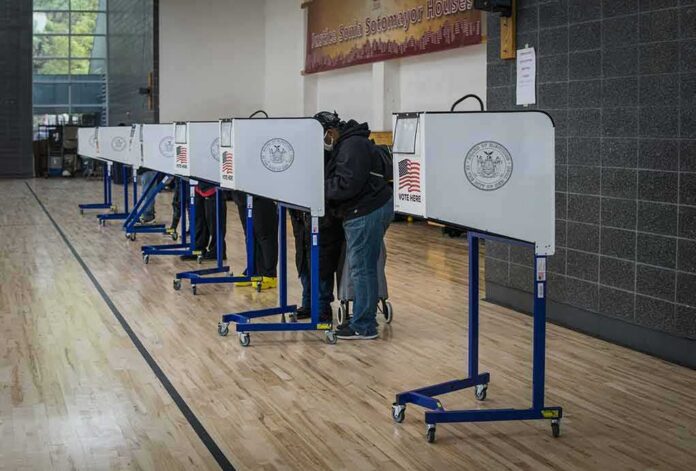
Hillary Clinton warned of ballot seizures, stalled certifications, and voter intimidation—without naming a single plan behind it.
Story Snapshot
- Clinton forecast lawsuits, ballot grabs, and certification fights after Election Day.
- Federal agencies report no evidence that cyberattacks changed votes or stopped counting.
- The Justice Department tracks threats against election workers as a real risk.
- Critics call Clinton’s warnings conspiracy talk short on facts.
What Clinton Claimed On Air, Point by Point
Hillary Clinton said the threat would not be only on Election Day. She warned of legal actions to pressure states, efforts to “seize ballots,” and moves to stop or stall certification. She also raised the image of immigration agents or “others” near polling places to scare voters. The reports tie those remarks to a November 2026 appearance and follow-up coverage. The comments offered a list of tactics but did not cite a specific order, case, or location to prove a plan.
Her focus on post-election fights matches recent political history. Campaigns file suits, challenge canvasses, and press certification boards. Courts decide the outcomes. The difference here is tone. Clinton framed the playbook as intentional subversion rather than ordinary hardball. That is a serious charge. It deserves documents, sworn statements, and named officials. Without that evidence, the warning stays in the realm of prediction, not proof.
What The Government Says About Real Risks
The Department of Justice runs an Election Threats Task Force to address threats and protect election workers from intimidation. That shows the risk is not fantasy; it is a category officials track and investigate. The Cybersecurity and Infrastructure Security Agency reports years of testing, incident response, and reviews of election systems. That work treats vulnerabilities as operational problems to fix, not talking points to wave away. These facts support targeted vigilance, not blanket panic.
The Federal Bureau of Investigation and the Cybersecurity and Infrastructure Security Agency state they have no information that cyberattacks prevented elections, changed voter registrations, compromised ballots, or disrupted counting or timely result transmission. They also warn that access to voter files, much of which is public, does not equal a hacked system. Those findings set a high bar against broad “the election was hacked” claims.
Where Clinton’s Case Overreaches
Clinton’s prediction that “ICE or others” would stand near voters to intimidate lacked dates, orders, or named agencies. That kind of claim needs receipts. Conservative critics seized on that gap and called it conspiratorial. On the merits, they have a point: strong accusations must rest on more than a hunch. The smarter standard is common sense plus evidence. If someone plans to weaponize law enforcement at the polls, there should be paperwork, briefings, or whistleblowers on record.
Warnings about ballot seizures and blocking certifications also need more than headlines. Lawsuits are public. Emergency motions and requested relief leave a trail. If the aim was to grab ballots or halt certification, the filings would show it. The record provided here cites Clinton’s characterization but not a specific motion, order, or directive. The lack of a named case weakens the claim and makes it look like fear-setting rather than fact-setting.
How To Separate Real Threats From Election Theater
Start with what can be checked. Threats to workers get logged and prosecuted. Litigation is filed in court and can be read by anyone. Certification votes are public meetings with minutes. Cyber events produce incident reports and timelines. These sources let citizens test big claims without buying a storyline. This is the conservative way to think: respect process, demand proof, and do not inflate risk to justify breaking norms or rules.
Healthy vigilance is not hype. Voter intimidation is illegal. Ballot chain of custody is sacred. Certification is the finish line set by law, not by trends on social media. At the same time, security agencies say votes have not been changed by hackers, and courts toss weak cases. The path forward is simple. Guard the polls. Audit the paper. Read the filings. Tell the truth fast. Panic is a tactic. Evidence is a shield.
Sources:
redstate.com, justice.gov, news.meaww.com, cisa.gov
© ournationnews.com 2026. All rights reserved.