
Fire burst from a restaurant at Houston’s main airport, yet most flights kept moving.
At a Glance
- A kitchen fire started at Ember in Terminal C North at George Bush Intercontinental Airport.
- Houston firefighters put it out in about an hour; smoke was heavy but short-lived.
- No injuries were reported during the response and relocation.
- Other terminals continued normal operations while nearby passengers were moved.
What ignited, where it spread, and how fast it was stopped
Houston Fire Department crews headed to Terminal C North after reports of a fire at Ember, a sit-down restaurant inside the concourse. Dispatch reports and on-scene coverage placed the alarm in the late afternoon and the knockdown near the five o’clock hour. Reporters noted thick smoke and flames venting near the roofline above the restaurant, a sign of a kitchen-origin blaze pushing heat into the hood system. Firefighters cut access, attacked the source, and declared the fire out within about an hour.
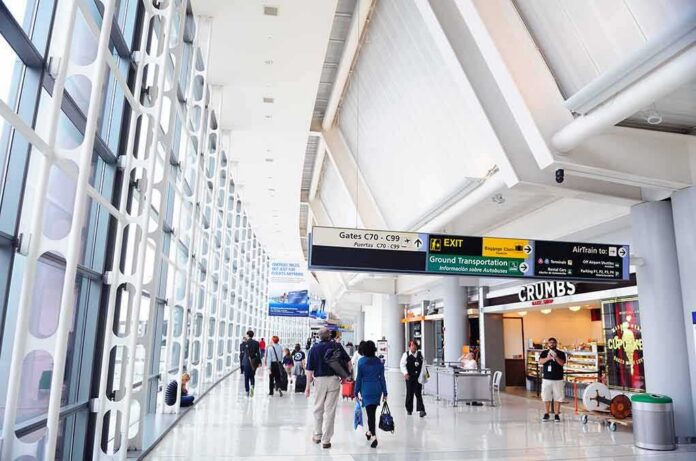
Airport staff cleared the nearby seating areas and queues while responders worked. Officials called this a precaution and kept people moving to open spaces within the terminal footprint. That choice fits standard airport plans that separate a local building hazard from airfield safety. Move people out of smoke, keep them informed, then reopen spaces after checks. Crews set fans, measured air quality, and inspected for hidden fire. The restaurant stayed closed for inspection while surrounding gates resumed activity.
How the airport kept planes and people flowing
Operations leaders focused on two tracks: protect life in the affected zone and keep the network stable elsewhere. Airport communications said other terminals kept normal schedules. Reporters on the ground saw departures and arrivals continue outside the impacted area. United Airlines coordinated gate moves, which often means shifting a few flights rather than shutting a bank. Some passengers saw reroutes within the terminal, but no airport-wide ground stop was issued during the response, according to same-day reporting.
That approach mirrors Federal Aviation Administration emergency guidance for terminals. Airport plans allow targeted closures to handle a building fire while leaving runways and unaffected concourses open once safety checks pass. The goal is simple: contain the hazard, keep the larger system working, and restore capacity in steps. It is the difference between a local shop fire at the mall and shutting the entire highway. Smart triage keeps a scare from becoming a system crisis.
What we know about injuries, timing, and cause
Officials and multiple outlets stated that no injuries had been reported during the incident. That is the typical first status after evacuations and checks. Timelines in coverage show smoke around 4:40 p.m. and the fire out near 5:20 p.m., which fits what firefighters call “under an hour to control,” a solid outcome in a working kitchen fire. The cause remained under review by fire investigators, who examine cooking equipment, electrical feeds, and the hood and duct system after such events.
A kitchen fire at Ember restaurant in Terminal C North at Houston's Bush Airport produced the heavy smoke seen. Houston Fire Department responded around 4:20 p.m. Tuesday, relocated nearby passengers as a precaution, extinguished it by 5:20 p.m. No injuries reported and flights… pic.twitter.com/u2Rbw4ZJYj
— Priyanka Kanade (@1Hindu_Sanatani) October 28, 2026
Visuals of dark smoke and ladder trucks can make any airport incident feel like a total shutdown. The public sees a dramatic scene and assumes widespread chaos. The record here shows a tighter story. Firefighters did their job fast. Airport managers moved people out of the way and kept planes on schedule where it was safe. That is competence in action and a good reminder that targeted response protects both public safety and travel freedom without feeding panic.
Why this response model works, and what comes next
Modern airports train to break problems into zones and maintain the rest. This protects families trying to make connections and honors the first duty to life safety. It also respects travelers’ time and the economy that depends on steady air service. Expect follow-up on the cause, damage inside Ember, and the reopen timeline. Expect checks on ductwork, sprinklers, and power lines near the site. Expect, most of all, a calm return to routine after a quick, focused fix.
Sources:
townhall.com, khou.com, telemundodallas.com, netnoticias.mx, themirror.com
© ournationnews.com 2026. All rights reserved.