
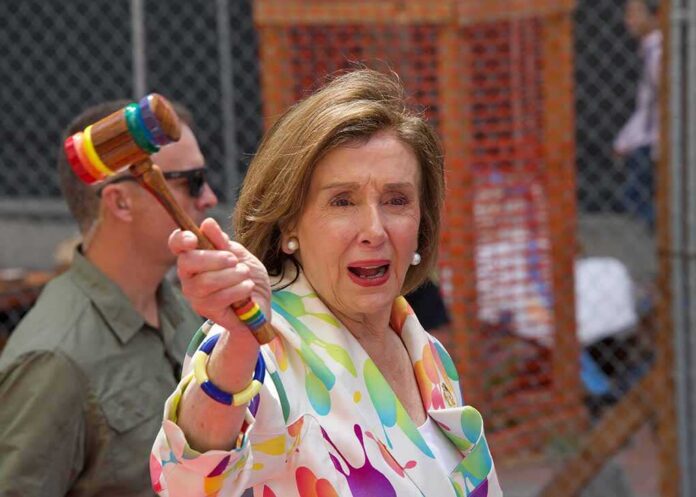
Nancy Pelosi said the quiet part out loud about Abdul El-Sayed’s Israel stance, then tried to soften it without taking it back.
Story Snapshot
- Pelosi called El-Sayed’s Israel position “wrong” and not what congressional Democrats believe.
- The clash landed as an outside ad tied grocery prices to U.S. support for Israel, which El-Sayed disavowed.
- Pelosi’s office later said she still supports El-Sayed’s candidacy on core domestic issues.
- The fight exposed a bigger Democratic rift on Israel, antisemitism, and outside money.
Pelosi’s on-air rebuke drew a bright line
Nancy Pelosi used an October 30 podcast to reject a view tied to Abdul El-Sayed and Zohran Mamdani. She said the position was more than concerning, was wrong, and did not reflect Democrats in Congress. The exchange centered on whether Israel has the right to exist as a Jewish state. Pelosi’s response made two points at once: disagreement with El-Sayed on Israel and a claim about party consensus. Her office later added that she still backs his campaign on kitchen-table priorities.
That clarification did not erase the first cut. The party’s most famous vote counter told voters exactly where she thinks the boundary sits. The message landed in the final sprint of a tight race. Voters heard a simple phrase with big stakes: wrong and not us. For Democrats who court Jewish voters and mainstream donors, that signal matters. For progressives, it sounded like policing speech about Palestinian rights at the worst possible time for debate.
The ad that poured gasoline on the fire
An outside group, Rebellion Political Action Committee, dropped an ad that tied high grocery costs to U.S. support for Israel. The script included a couple saying they save money “for killing Palestinians.” Jewish groups blasted it as scapegoating. El-Sayed’s campaign said it had no link to the ad and did not approve it. News reports traced the ad to Rebellion Political Action Committee and noted the campaign’s public disavowal. The spot’s timing and tone gave Pelosi a clear flashpoint to cite.
Outside money complicates blame. By law, campaigns cannot coordinate with independent spenders. That guardrail creates chaos when a hit goes viral. Voters often merge the ad and the candidate into one story. Pelosi’s pointed line gave Democrats a fast way to distance themselves from the worst claims while keeping the ticket together. That approach fits a classic strategy: condemn the message, separate the messenger, and urge focus on costs, care, and democracy.
What El-Sayed has and hasn’t said
The record shows El-Sayed pushing equal rights and self-determination for Palestinians and Jewish Israelis, and refusing to lock into one or two states as the only moral end point. Reports describe him calling Israel’s conduct in Gaza genocide and labeling the West Bank apartheid. Coverage also records him struggling with the question of Israel’s right to exist as a Jewish state at a May event, and declining to say yes when pressed across months. Those quotes fueled critics more than any one-line denial.
One claim remains foggy: a clean, dated El-Sayed quote flatly saying Israel does not have the right to be a Jewish state is not in the supplied record. Pelosi’s critique responded to a journalist’s framing of his stance, not to a verbatim line from him. That gap matters for fairness. But politics is about impressions under time pressure. Voters weigh tone, patterns, and who you stand with. On that field, El-Sayed’s own words on apartheid and genocide drew sharp lines that many Democrats in Congress avoid.
How this lands with voters who hate drama
Most voters want peace, lower prices, and safety for Jews and Arabs. They do not want lectures about party factions. Pelosi staked a position most swing voters understand: support Israel’s right to exist as a Jewish state and reject rhetoric that blurs into blaming Jews for inflation. That view tracks with common sense and with American conservative values of religious freedom, national identity, and moral clarity about terrorism.
@JBreakingNews repost
Even Nancy Pelosi Is Calling Out Abdul El-Sayed: Former Democratic House Speaker Blasts His Views on Israel as “Wrong,” Won’t Even Mention His Name
Former House Speaker Nancy Pelosi, 86, criticized Michigan Democratic Senate candidate Abdul El-Sayed and… pic.twitter.com/5EIv09pHtS
— TheJewishAlly (@TheJewishAlly) October 30, 2026
El-Sayed’s defenders say he backs equal rights and will accept what free peoples choose, including two states. That sounds open-minded. Yet leaving Israel’s Jewish character up for debate rings alarms for many Americans. A people scarred by exile and slaughter chose a homeland to be Jewish and democratic. Saying that is negotiable, while calling the country an apartheid regime, reads as a rejection in practice, even if not in form. That is why Pelosi’s line cut through.
Sources:
twitchy.com, fortune.com, nytimes.com, thejewishnews.com, jewishchronicle.timesofisrael.com, yahoo.com, theatlantic.com
© ournationnews.com 2026. All rights reserved.