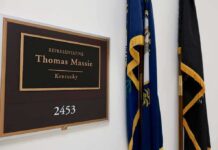


One sharp command at America’s most solemn memorial cut through the buzz and reset the standard.
At a Glance
- A sentinel at the Tomb ordered silence after laughter and chatter by the group with Defense Secretary Pete Hegseth.
- Arlington’s rules call the Tomb a “silent and sacred” memorial and bar audible remarks during wreath ceremonies.
- Federal regulations require proper decorum; public wreath participants must remain silent during the ceremony.
- The Pentagon backed the soldier’s reminder to maintain decorum and respect.
A clear admonition, on the record and on video
Video from Veterans Day shows a U.S. Army sentinel halting his walk and projecting a firm command toward a group that included Defense Secretary Pete Hegseth. “All visitors will maintain an atmosphere of silence and respect at all times,” he called out, after people in the group posed for photos and audible laughter and talking followed. Reports describe the laughter as the group began to leave the Tomb area. The clip spread fast because the message was blunt and the setting was sacred.
Arlington National Cemetery’s own guidance makes the standard plain. The Tomb is a “silent and sacred memorial.” Observers and participants must remain silent during the ceremony. The same guidance bars remarks, speeches, or audible prayers at wreath ceremonies. These are not soft suggestions; they are conditions of conduct around the Unknowns who never came home. That is why a single sentence from a guard can carry more weight than a hundred hot takes.
What the rules demand, and when they apply
Two layers of rules frame this moment. First, federal regulations require proper standards of decorum and decency on the grounds. They also state that anyone in a public wreath ceremony must remain silent during the ceremony itself. Second, Arlington’s general etiquette asks visitors to speak softly and move with respect across the cemetery. The reports place the audible chatter after photographs and following the observance, which raises a timing question that media accounts do not fully resolve. The standard of silence, however, is the Tomb’s default expectation.
Some readers will ask whether the command applied even if the formal ceremony had just ended. The sentinel’s wording—“at all times”—signals how guards interpret their mission at the Tomb’s rail and steps. The Pentagon did not quarrel with that view. It supported the intervention, saying a soldier “correctly and respectfully reminded everyone to maintain decorum”. That endorsement aligns with common sense: rank does not buy a pass on reverence. If anything, leaders should model it.
Facts we know, facts we do not
The record supports three firm points. The guard issued a loud admonition. Laughter and talking followed group photos near the Tomb. The Pentagon backed the guard’s call for decorum. The gaps are narrower and matter less than the core. The reports do not name exactly who laughed. They do not prove whether the formal ceremony clock had stopped the instant the chatter began. Those details affect whether a ceremonial rule or a broader decorum norm applied, but both point the same direction at this site.
A soldier guarding the Tomb of the Unknown Soldier issued a verbal reprimand to a group of advisers and staffers with Defense Secretary Pete Hegseth following a Veterans Day ceremony at Arlington National Cemetery.
DETAILS: https://t.co/JFZoLQnVL5 pic.twitter.com/wBLxEUBySL
— CBS 13 News (@WGME) November 12, 2026
Arlington’s culture has long empowered guards to correct behavior. The Army’s history of the Tomb traces a push for stricter watch after earlier complaints about disrespect. A continuous military guard has stood post since 1948, with precision ritual built to teach attention and awe. The point is not to scold; it is to protect a space that forces us to be small for a minute and remember the vast price others paid. America needs places like that more, not less.
Why this resonates beyond one clip
Americans disagree on many things, but we share the duty to honor fallen service members. The Tomb is where that duty is not argued—it is observed. The guard’s correction worked because it spoke to a value that cuts across politics: self-control in the presence of sacrifice. Media will try to make this about a person. The wiser lens is a principle. Silence at the Tomb is not a punishment. It is the least we can give to those who gave all.
Sources:
arlingtoncemetery.mil, abcnews.com, hawaiitribune-herald.com, bbc.co.uk, apnews.com
© ournationnews.com 2026. All rights reserved.