
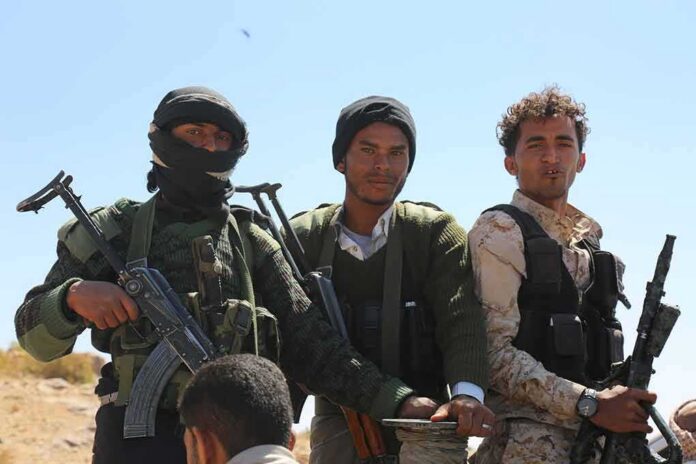
Yemen’s Houthi rebels say they hit the Saudi capital itself for the first time, while Saudi forces say they shot the missile down before it ever got there.
Story Snapshot
- Houthi spokesman Yahya Saree claimed missile and drone strikes on “sensitive sites” in Riyadh and an Aramco facility in Yanbu on September 19, 2026.
- The Saudi-led coalition says it intercepted a ballistic missile aimed at Riyadh and stopped separate attacks on Yanbu, Taif, Bisha, and Farasan.
- Flames and thick smoke were seen near Riyadh’s King Khalid International Airport hours before the Houthi claim went public.
- Saudi Arabia confirmed the missile attempt on Riyadh but reported no damage or casualties, marking the first such targeting of the capital in the current escalation.
A Capital City Under Threat For The First Time
Saudi Arabia issued an emergency alert warning of a “hostile aerial threat” over Riyadh before dawn on September 19. Hours later, witnesses reported flames and a large plume of smoke rising near the city’s main airport. The timing set off immediate alarm across a region already gripped by a widening war tied to Iran’s network of allied militias.
Houthi military spokesman Yahya Saree then released a video statement claiming his forces carried out two operations using missiles and drones, striking sensitive sites in Riyadh and an Aramco facility in the Red Sea port city of Yanbu. It was the first time the group claimed to have reached the Saudi capital directly since fighting intensified this year, a claim that instantly raised the stakes of an already dangerous conflict.
Saudi Officials Push Back With Specifics
The Saudi-led coalition did not stay quiet. Spokesman Turki al-Maliki said air defenses intercepted and destroyed a ballistic missile fired toward Riyadh at dawn, adding that the missile was destroyed in the air without causing damage. He said separate Houthi attempts to hit civilians and infrastructure in Bisha, Taif, Farasan, and Yanbu were also thwarted.
The Associated Press confirmed Saudi Arabia acknowledged the attempted attack on Riyadh but reported no casualties or damage, calling it the first targeting of the capital since fighting escalated with the Iran-backed rebels. That distinction matters. A confirmed attempt with a stopped missile is a very different story than a confirmed hit, and Saudi officials have been specific and public in saying the interception worked.
What Remains Unconfirmed
No independent source in the public record has verified that the Houthis actually struck the sites they named in Riyadh or Yanbu. Saudi authorities have not confirmed those locations were hit, and reporting from the region notes the claims remain unverified. That gap between a rebel group’s announcement and a government’s confirmation is not unusual in this conflict, but it is worth remembering before treating either side’s full account as settled fact.
Part Of A Bigger, Faster-Moving War
This was not an isolated incident. Just days earlier, the Houthis claimed a large-scale missile and drone assault on Saudi Arabia’s King Khalid Air Base, and Saudi Arabia separately said it shot down a Houthi drone near Mecca, a claim the Houthis denied. Riyadh has also struck Yemeni territory repeatedly in recent months, and each side accuses the other of escalating first.
Houthis Claim Strikes On Riyadh
🗞️ Capital air alerts then all-clear
🗞️ Smoke seen near KKIA fuel area
🗞️ Group also claims Yanbu Aramco hitAlerts in Riyadh. Claims still flying. pic.twitter.com/Tmhwch2O9n
— The Objective Journal (@theobjectivej) September 20, 2026
The pattern is consistent: a Houthi claim of damage, a Saudi claim of interception, and a lag before anyone outside the conflict can sort out what actually happened on the ground. Oil markets and Gulf allies watch closely anyway, because Aramco facilities sit at the center of global energy supply, and any credible hit on that infrastructure carries consequences well beyond Riyadh’s skyline.
Why This Fight Cannot Be Ignored
Iran’s backing of the Houthis turns a regional insurgency into a proxy front in a much larger struggle. American interests, Gulf stability, and global oil prices are all tied to whether Riyadh’s air defenses keep working as advertised. Saudi Arabia’s willingness to publicly detail its interceptions, rather than stay silent, reflects a government trying to project strength while avoiding panic in a capital that has never faced this kind of threat before.
Whatever damage assessment eventually emerges, the message from Saturday is already clear. The Houthis intend to keep testing Riyadh’s defenses, and Saudi Arabia intends to keep answering publicly, missile by missile, until the pattern either breaks or spirals further.
Sources:
dw.com, bbc.com, itv.com, theguardian.com, cnbc.com, middleeasteye.net
© ournationnews.com 2026. All rights reserved.