Texas law enforcement drew a hard line in Austin, pushing back a crowd that crossed police tape after an ICE shooting and blocked streets.
Story Snapshot
- A large police and state trooper presence contained a tense crowd near the shooting scene.
- Austin police did not take part in the ICE operation or shooting, separating roles on the ground.
- Officers reported bottles and rocks thrown; chemical agents and pepper-ball rounds pushed the crowd back.
- Officials paired crowd control with medical aid and a multi-agency investigation.
What Sparked The Standoff And Who Showed Up
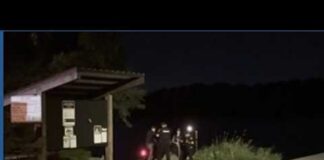
City officials said a federal immigration officer shot and wounded a man in Austin, setting off hours of protest at the scene. Reporters on the ground described a large law enforcement presence as people gathered, shouted, and pressed toward the taped-off area. Austin police leaders said their officers were not part of the federal operation or the shooting. They focused on the perimeter, traffic, and later, investigative support with Texas Rangers and federal partners.
Texas state troopers and city police formed lines and restricted access near the intersection. The crowd grew to dozens and then about a hundred, according to various outlets, and held the area for hours. The mission split along two tracks: keep the scene secure for medics and investigators, and prevent a roadway shutdown from turning into a rolling hazard as night fell.
How The Crowd Crossed Lines And How Officers Responded
Local coverage reported that some in the crowd threw water bottles, and one outlet said rocks were thrown before officers advanced. Troopers put on gas masks, then used chemical agents and pepper-ball-like projectiles to move people back from restricted ground and clear the roadway. That sequence matches common protest-control policy triggers: crossed tape, blocked traffic, thrown objects, then a dispersal push. It also aligns with a Texas approach that values order, warns first, and responds with measured force when ignored.
Organizers and a city council member offered a different take. They called the pepper-ball response “excessive,” and said officers charged on bicycles and made multiple arrests. They argued that harm is not “right” even if the law allows it. Those claims deserve a clean review of warnings, timing, and targets. Still, when a crowd blocks roads and lobs objects, public safety and common sense say police must restore order before someone gets hurt.
Why The Separation Of Roles Matters
Austin police stated they were not part of the shooting operation. That separation matters for trust. City officers handled the street while Texas Rangers and federal agencies prepared to investigate the shooting itself. CNN reported that state troopers arrived after the shooting and began medical aid with others, showing that the response was not only about force but also care and evidence preservation. That two-track posture—aid and order—fits what communities expect when tensions are high and facts are still forming.
ICE Agent Shoots Venezuelan Man During Austin Traffic Stop
• ICE agent shot and wounded a man during a traffic stop in Austin, Texas.
• Victim identified as 28-year-old Venezuelan Wilber Rafael Garcés Pérez; shot in torso, serious but stable.
• Anti-ICE protesters gathered… pic.twitter.com/WAkVBuWIUc— The Unbiased Update (@unbiased_update) September 21, 2026
Media accounts differed on exact crowd size and how fast things escalated, which often happens in fluid scenes. The public record does not yet show who gave the final order to deploy chemical agents. It does not list a full tally of arrests or injuries. Those gaps should close with body-camera footage, dispatch logs, and use-of-force reviews. Until then, the clearest shared record shows bottles thrown, lines advanced, roads blocked, and officers using less-lethal tools to create space and control.
Where This Leaves Austin And The Debate Over Force
Mayor Kirk Watson said the shooting made people feel less safe and asked for outside eyes on the probe. That tone accepts protest rights and demands accountability while still backing a firm line on safety at an active scene. From a conservative lens, the standard holds: peaceful protest is sacred, but blocking streets, breaching tape, and hurling objects cross a bright line. Texas police acted to prevent chaos, then stood up the process to explain what happened and why.
Sources:
newsday.com, saudigazette.com.sa, abc11.com, ijr.com, cnn.com, mkfm.com, usatoday.com
© ournationnews.com 2026. All rights reserved.