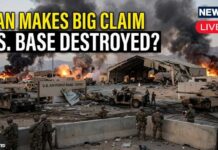

When a U.S. Apache helicopter fell out of the sky near the Strait of Hormuz, Donald Trump turned a murky military mishap into a test of American resolve and Iranian nerve.
Story Snapshot
- Trump says Iran shot down a U.S. Apache and declares America “must respond” to the attack.[1][2]
- The U.S. military confirms the crash and rescue, but says the cause is still under investigation.[4][5]
- The two pilots survive without injury, pulled from the water after hours in the dark.[3][4][5]
- The clash unfolds while Trump claims a new deal with Iran could be only days away.[1][4]
Trump Turns A Single Helicopter Into A Red Line
Donald Trump did not treat the Apache loss as “just an accident.” He publicly claimed Iran shot down the helicopter over or near the Strait of Hormuz and said the United States “must of necessity respond to this attack.”[1][2] That language matters. When a president calls something an attack, he turns a technical mishap into a national test. He also locks himself into a box: respond, or look weak to allies, enemies, and voters.
Trump’s certainty stood in sharp contrast to the official military line. United States Central Command stated that the Apache went down off the coast of Oman during a patrol and that the cause of the incident was “under investigation.”[4] News outlets repeated that phrasing: the chopper went down, the pilots were rescued, but no one knew yet if it was mechanical failure or enemy fire from Iran.[4][5] That is the classic fog-of-war gap between politics and facts.
What We Actually Know About The Apache Incident
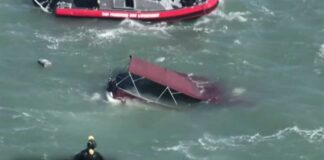
The basics are clear. A U.S. Army Apache helicopter went down near the Strait of Hormuz, a narrow waterway that Iran treats as its front porch and the world treats as an oil lifeline.[3][4][5] Two American crew members ended up in the water. A small unmanned surface boat found and rescued them after an hours-long search, and they were reported safe and uninjured.[3][4][5] Trump later told reporters, “The pilots are fine… nobody injured. We are going to issue a report tomorrow.”[3][4][5]
Central Command stressed the same bottom line but avoided blame. Its public statement said the soldiers were rescued within about two hours, in stable condition, and that the cause remained under investigation.[4] Networks like CNN and others told viewers the same thing: no clear answer yet on whether a mechanical failure or hostile fire brought the Apache down.[4][5] That careful phrasing is standard military practice when facts are incomplete and the stakes are high.
Politics, Peace Talks, And A Convenient Villain
This helicopter story did not happen in a vacuum. It landed in the middle of a wider shooting conflict involving Iran, Israel, and American forces, plus fragile ceasefires and back-channel bargaining.[1] On the same day he talked about the crash, Trump told reporters he believed a “very, very good, strong, powerful deal” with Iran was close, even “days” away.[1][4] So he was selling both toughness and hope at the same time: punish Iran, but also sign with Iran.
Iran, for its part, used the moment to push its own list of demands. Iranian officials pressed for release of frozen assets, international guarantees, and an end to fighting across several fronts, including Lebanon.[4] They also signaled they control the waters around Hormuz and expect coordination from anyone passing through, especially the United States.[2][4] That posture fits a long pattern: Tehran uses tension in the Strait to gain leverage; Washington uses Iranian threats to rally allies and justify presence.
Who Do You Believe: The Generals Or The President?
Trump’s claim that Iran shot down the Apache rests, so far, on his word and his unnamed “great military” briefers.[2] The on-the-record military statements stop short of blaming Iran and emphasize ongoing investigation.[4] Newsrooms like CBS, CNN, and others reported both tracks: the cautious official line and Trump’s more direct accusation.[1][3][4][5] This is exactly how narratives harden early in a crisis. One side fills the gap with certainty; the other side fills it with process.
Trump confirming Iran shot down the US Apache in Hormuz, pilots safe but response coming. That spot is always a flashpoint for oil and broader risk. These situations can move markets fast.
— Crypto Nayem (@realNayem) June 9, 2026
From a common-sense, conservative view, two points can be true at once. First, if Iran did shoot down a U.S. helicopter, some response is not optional; a superpower that shrugs off direct attacks invites more of them. Second, a serious country does not base that response only on a press gaggle quote. It waits for evidence, then acts with purpose. The American public deserves both strength and honesty: real deterrence built on real facts, not just headlines.
Sources:
[1] Web – Trump Vows Response to Iran Shooting Down American Helicopter
[2] YouTube – Trump says 2 Apache helicopter crew members are safe after crash …
[3] Web – Trump says pilots are fine after US helicopter crashes near Strait of …
[4] YouTube – US-Iran War LIVE: US Apache Hit Down In Hormuz Amid War | N18G
[5] Web – Trump responds to US Apache helicopter crash near Hormuz, claims Iran …
© ournationnews.com 2026. All rights reserved.