

One four-word answer lit the fuse, and a week of “did he or didn’t he” set Michigan politics on fire.
Story Snapshot
- Abdul El-Sayed said “Sure, yeah, absolutely” when asked to disavow the Muslim Brotherhood.
- Mike Rogers kept pressing alleged ideological and family ties, saying faith was not the issue.
- News reports found no public documentary proof of a Brotherhood link to El-Sayed.
- The clash became a campaign drumbeat through a town hall, CNN, and the final debate.
The Caro Spark: Four Words, Then A Pivot
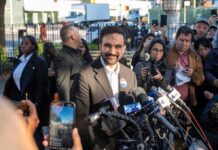
The October 17 town hall in Caro turned on a simple question: would Abdul El-Sayed disavow the Muslim Brotherhood. El-Sayed answered, “Sure, yeah, absolutely,” then pushed back on what he called a dual-loyalty frame, invoking the John F. Kennedy Catholic analogy. Reports focused on the quick yes and the rapid shift to a rights-based argument. The clip went viral, fueling two different reads of the same exchange.
El-Sayed’s brief yes left room for his opponent to define the moment. He did not outline what he disavowed in detail. He did not list the group’s ideology, affiliates, or any alleged contacts. The absence of a longer answer helped Mike Rogers argue that El-Sayed dodged the substance, even though the literal words were on tape. Voters heard the yes. Many also heard a redirect.
Rogers’s Frame: Ideology, Not Religion
Mike Rogers worked to draw a hard line between religion and ideology. He said the concern was how El-Sayed thinks, not how he prays, and raised claims about El-Sayed’s relationship, and his family’s relationship, with the Muslim Brotherhood. He repeated that theme on CNN and in the final debate, turning one town hall flashpoint into a week-long campaign case about judgment and associations.
The claims grew louder, not clearer. Reports did not present public records, transactions, communications, or named witnesses that tied El-Sayed to the group. Michigan Public stated that Rogers offered no evidence of ties to terrorist organizations. The allegation about a “family relationship” stayed vague and undefined in the available coverage. Repetition amplified the charge without adding proof.
What The Tape Shows, And What It Does Not
The tape shows El-Sayed saying he disavows, then challenging the premise as identity-based. It does not show a walk-back, a hedge, or a condition on the disavowal. It also does not show a detailed rebuttal to every asserted tie or ideology point. That gap let each side claim ground: El-Sayed pointed to his yes; Rogers argued the yes was too thin to matter.
Campaigns thrive in that gray zone. Short clips reward speed, not nuance. A quick yes can seem glib to skeptics. A longer speech can sound slippery to partisans. Here, the public record supports that El-Sayed said the words. It does not supply the documentary backbone for Rogers’s broader claim about relationships. On the facts available, the conservative common-sense test is simple: show the receipts, or narrow the charge.
The Voter’s Checklist: Separate Faith From Facts
Voters should split the question into parts. First, did El-Sayed disavow the Muslim Brotherhood when asked? The video and multiple reports say yes. Second, did he directly address each alleged tie? The record shows no point-by-point reply at the town hall, and that opened a door for attack. Third, is there public evidence of a personal or family link? The cited reporting offers none.
That leaves a practical rule for judging candidates under fire. Demand clarity on ideology from anyone who seeks power. Demand evidence before accepting claims about shadowy links. Keep faith off-limits unless beliefs become explicit policy. Rogers’s framing about ideas, not religion, is fair ground. The leap to alleged relationships needs hard proof. El-Sayed’s four-word yes stands until stronger facts land. Voters should insist on both: clean answers and real evidence.
Sources:
townhall.com, cbsnews.com, usatoday.com, michiganpublic.org, foxwilmington.com
© ournationnews.com 2026. All rights reserved.