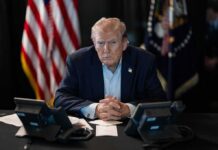
A single sentence from President Trump turned the Iran nuclear standoff into a 10-day ticking clock.
Quick Take
- Trump said a decision on potential U.S. strikes against Iran could come within 10 days while pushing Tehran to accept a nuclear deal.
- Indirect talks in Geneva, mediated by Oman, produced “guiding principles,” signaling progress but not a finished agreement.
- The White House kept military pressure visible with Middle East asset posture and a parallel economic-pressure track.
- Iran’s leadership sent mixed signals: diplomats described talks as constructive while the Supreme Leader rejected core U.S. demands.
The 10-day deadline is a negotiating weapon, not a calendar reminder
President Trump’s “probably within 10 days” strike decision window did what deadlines always do in hard diplomacy: it forced every player to act like time is running out, even if the time can later stretch. Trump paired the warning with a simple pitch—do the deal, or “bad things” follow. For Americans tired of endless talks, that clarity lands. For Tehran, it’s a test of resolve.
The White House message ran on two tracks at once. Press briefings emphasized that Iran would be “wise” to negotiate, while reporting indicated U.S. forces could be ready on short notice. That combination matters because Iran’s system often delays, probes, and tries to outwait opponents. A defined window disrupts that playbook. It also raises the stakes for any misread signal, especially with forces positioned in a crowded region.
Geneva talks produced “guiding principles,” but the hardest words are still unwritten
Indirect talks in Geneva, with Oman mediating, reportedly ended a round with agreement on guiding principles and movement toward drafting proposals. That sounds technical, and it is, but this is where negotiations either become real or fall apart. Principles are cheap; text is expensive. Once diplomats put obligations into writing—inspection access, enrichment limits, timelines, sanctions relief—everyone discovers what they actually meant when they nodded politely in the room.
Iran’s foreign minister described the talks as constructive, and the White House signaled it expected Iran to provide more details in the coming weeks. The clock Trump mentioned tightens that “weeks” language into something more immediate. The conservative, common-sense read is that diplomacy without leverage becomes theater. The counterpoint is also real: leverage without discipline can turn into an escalator, and escalators don’t stop neatly once they start moving.
The core dispute: enrichment, missiles, and the definition of “never”
The U.S. position, as described in the research, aims at preventing Iran from obtaining a nuclear weapon and disrupting the IRGC’s malign regional influence. Iran insists on sanctions relief and preserving enrichment as a sovereign right, often framed as civilian energy capability. That single word—enrichment—has wrecked more diplomatic drafts than most people realize. Allow too much, and Iran sits near breakout capacity. Allow too little, and Tehran treats it as surrender.
Khamenei’s rejection of halting enrichment and missile-related demands underscores the problem: Iran’s top decision-maker can veto what diplomats “constructively” discuss. That isn’t a side detail; it’s the system. The United States can negotiate with Iran’s representatives, but it must ultimately influence Iran’s Supreme Leader’s risk calculation. Trump’s approach tries to do that with pressure, deadlines, and the implied credibility of force.
Pressure isn’t just bombs; it’s tariffs, sanctions, and the cost of stalling
Military posture grabs headlines, but economic measures often do the slow, grinding work of shaping choices. The research points to renewed “maximum pressure” sanctions in 2025 and continued emergency authorities and tariff tools aimed at third parties. That’s designed to squeeze revenue and deter sanction-evasion networks. From a conservative standpoint, enforcing U.S. law consistently is non-negotiable; selective enforcement invites contempt. The risk is sanctions fatigue among partners and black-market adaptation.
Oil and shipping markets hover in the background as silent referees. Even a limited strike or a perceived escalation can spike prices and rattle supply routes, while proxy responses can widen the conflict. Americans feel that quickly—at the pump, in retirement portfolios, and in higher costs that never seem to roll back. This is why a credible deal, if achievable, can be strategically attractive: it can reduce volatility without pretending Iran becomes friendly.
What happens next: three off-ramps, one cliff edge
Three plausible paths sit inside Trump’s 10-day frame. One, Iran offers enough on enrichment constraints and verification to justify continued talks, buying time without humiliation for either side. Two, talks stall and the U.S. intensifies economic pressure and regional deployments, betting Tehran blinks first. Three, the U.S. chooses strikes, likely calibrated to nuclear infrastructure, accepting the near-certainty of retaliation attempts against U.S. forces or partners.
The cliff edge is miscalculation: Iran assumes the threat is bluff, or Washington assumes Tehran can absorb one more hit without answering. Conservatism values strength, deterrence, and clear consequences, but it also values prudence—using force to secure vital interests, not to chase slogans. The smartest outcome is the one that blocks a nuclear Iran, protects Americans and allies, and avoids another open-ended Middle East commitment.
NEW: White House tells Iran to do deal as Trump hints at US strikes
CNN and CBS reported Wednesday that the US military will be ready to launch strikes against Iran as early as this weekend, though Trump has reportedly not made a final decision yet.
The Wall Street Journal…
— Insider Paper (@TheInsiderPaper) February 19, 2026
The next headlines will obsess over whether Trump “really means it” about the 10 days. The more important question is whether Iran believes the United States will enforce a final red line, not a moving one. Deadlines only work when they end in action. Deals only work when they end in verification. Tehran and Washington both know that, which is why the most dangerous moment often arrives right when both sides claim they still prefer peace.
Sources:
Trump signals Iran strike decision could come within 10 days
2025–2026 Iran–United States negotiations
National Security Presidential Memorandum (NSPM)-2
Iran Update, February 17, 2026