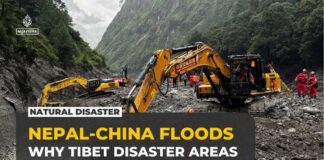
A single night of rain turned Nuristan’s mountain capital into a graveyard of mud, broken homes, and missing neighbors.
Story Snapshot
- At least 23 people are confirmed dead after flash floods hit Parun in Nuristan province.
- More than 100 people are still missing, with rescuers digging through rubble by hand.
- The city’s mayor is among the missing, underscoring how deeply the disaster cut into local leadership.
- This flood is part of a wider pattern of deadly, underreported climate-driven disasters across Afghanistan.
Flash floods rip through a remote mountain capital
Flash floods slammed into Parun, the capital of Nuristan province in eastern Afghanistan, after heavy rain on Monday night. Authorities say walls of water and mud swept through the city’s narrow valleys, destroying homes and trapping families in their sleep. At least 23 people are confirmed dead and more than 80 injured, according to the Afghanistan National Disaster Management Authority, with officials warning the toll will likely rise as search teams reach cut-off areas.
Survivors describe an almost instant hit. One moment, rain hammered tin roofs. The next, a roar rolled down the valley as floodwater and debris crashed through streets. Parun’s small hotels and shops, built close to dry riverbeds, took the brunt of the surge. Many structures simply collapsed. More than 100 people are still missing, including the city’s mayor, who was last seen at home as water levels began rising.
Rescue crews race the clock with limited tools
Rescue crews from the Taliban-run government and local communities are searching through the rubble with almost no modern equipment. Roads into Nuristan are narrow, steep, and often unpaved, which slows outside help. Helicopters are rare. Many rescuers use shovels, pickaxes, and even their bare hands to clear mud and stone from buried homes. Officials say more than 80 wounded people have been moved to nearby clinics, most with broken bones, head injuries, or deep cuts.
Afghan authorities admit they do not yet know the full scale of damage. Parun and its surrounding villages sit in a maze of mountain valleys that are easy to isolate when floods wash out bridges and tracks. This makes counting the dead and missing hard even in normal times. Families who fled uphill now watch from ridges as rescuers dig through the ruins below, unsure if their relatives are under the mud or swept downstream.
A familiar disaster in a country now defined by floods
This tragedy in Nuristan is not a one-off event. Afghanistan has faced repeated deadly floods in recent years, often with far higher death tolls than first reported. In Baghlan province in 2024, flash floods killed more than 300 people and destroyed over 1,000 houses, according to the United Nations food agency. In other provinces, official figures from the Taliban government have routinely lagged behind later counts from United Nations agencies and aid groups.
Flash floods have claimed lives and caused severe damage in eastern #Afghanistan, especially in Parun, Nuristan. Our thoughts are with bereaved families.@UNICEFAfg and partners are on the ground, setting up a field clinic to provide trauma care and emergency medical services. pic.twitter.com/558Ua2YS6z
— UNICEF Afghanistan (@UNICEFAfg) July 21, 2026
Climate experts say eastern and northeastern Afghanistan sit in one of the world’s most dangerous flood zones. Steep mountains, bare slopes from years of war and deforestation, and sudden, intense rain combine into perfect flash-flood conditions. International reports link recent flood waves to unusual rainfall patterns tied to El Niño and broader climate change. That means what hit Nuristan this week is part of a larger trend, not a random freak storm.
Why casualty numbers rarely match and why it matters
Even in this Nuristan flood, published counts differ. Some reports, citing government figures, spoke first of “at least 20 dead” and more than 100 missing. Others, citing updated statements, now report at least 23 deaths and similar numbers of missing. For an outside reader, that may look like sloppy math. In reality, it reflects how chaotic and politicized disaster reporting has become in Afghanistan since the Taliban takeover.
United Nations situation reports and international charities have repeatedly logged higher fatality numbers than the Taliban government for major flood events, sometimes doubling official figures after on-the-ground checks. From a common-sense conservative view, that gap signals a basic duty failure. Any government’s first job is to safeguard life and tell its people the truth. When counts are lowballed, families cannot plan, aid is delayed, and outside donors misjudge the scale of help required.
A fragile region left exposed by war and weak institutions
Long before climate shifts, years of war, corruption, and poor governance weakened Afghanistan’s defenses against floods. Forests were cut down for fuel or lost to fighting, removing natural barriers that slow runoff. Bridges and culverts were built cheaply or not maintained. Local communities often rely on informal warnings, not strong early-alert systems, and when the water comes, there is nowhere safe to go except higher ground and prayer.
In a remote province like Nuristan, where roads are few and government services thin, that fragility turns heavy rain into mass casualty events. Families build homes near dry riverbeds because flat land is scarce. Once-in-a-decade storms now hit every year. Without solid institutions, each flood is treated as a surprise, not as proof that the next one is on its way. For readers watching from comfortable suburbs, that is the real lesson: when rule of law and competence erode, nature’s blows land harder.
What comes next for Nuristan and Afghanistan’s flood front line
Over the coming days, the focus in Parun will stay on finding the missing and burying the dead with dignity. But the bigger story is whether anyone will treat this latest disaster as a warning shot. Aid agencies want better data, stronger local warning systems, and basic investments like riverbank walls and reforestation. None of that is glamorous. All of it is cheaper than rebuilding villages or counting bodies after each new storm.
For Afghanistan’s leaders, the choice is stark. They can keep issuing short, shifting casualty figures and blame extreme weather. Or they can face the obvious: climate pressures are rising, their people live in harm’s way, and honest numbers plus simple, practical defenses are the minimum standard of serious government. For the families in Nuristan, that debate is not abstract. It is the line between another night like Monday and a city that survives the next wave.
Sources:
youtube.com, rferl.org, en.wikipedia.org, efe.com, ariananews.af, reuters.com, bbc.com, egusphere.copernicus.org, afghanistan.iom.int, unocha.org
© ournationnews.com 2026. All rights reserved.