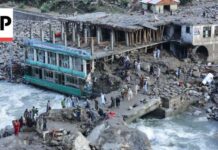

The moment a burning cargo ship was left adrift in the Strait of Hormuz, every promise of “safe passage” through that narrow waterway was exposed as fragile.
Story Snapshot
- A commercial vessel in the Strait of Hormuz was hit by a projectile, set on fire, and abandoned by its crew.
- The United Kingdom Maritime Trade Operations agency says the ship is still adrift with the fire not yet out.
- Iran’s Islamic Revolutionary Guard Corps has recently opened fire on multiple commercial ships, claiming enforcement of its control.
- These attacks challenge U.S. diplomatic deals and raise big questions about global energy security and freedom of navigation.
A cargo vessel hit, burning, and left to drift
United Kingdom Maritime Trade Operations, a British naval security agency, reported that a commercial vessel in the Strait of Hormuz was struck by an unknown projectile and set ablaze. The crew abandoned the ship and were picked up by a tug boat, while the damaged vessel remained adrift with the fire still burning. There were no early signs of an oil spill or other environmental damage, but the sight of a burning ship drifting in one of the world’s busiest chokepoints sent a sharp warning.
This latest incident fits a pattern. In March, United Kingdom Maritime Trade Operations recorded three cargo ships struck by projectiles off Iran’s coast, including one inside the strait that caught fire and forced the crew to evacuate. Thailand’s navy later confirmed that one of those vessels, the Mayuree Naree, was hit while passing through Hormuz, with video showing thick black smoke pouring from the ship. Iran’s Revolutionary Guard then claimed responsibility for targeting that vessel, framing the strike as a response to alleged violations.
Iran’s Revolutionary Guard steps out of the shadows
Recent reporting shows Iran’s Islamic Revolutionary Guard Corps moving from harassment to direct attacks on commercial ships. British and South Korean outlets, citing United Kingdom Maritime Trade Operations and ship captains, describe IRGC gunboats approaching cargo vessels near Oman without radio contact and opening fire on their bridges, causing serious damage but miraculously no loss of life. One account notes an IRGC vessel that “opened fire” at 3:55 a.m. near Oman, after closing in on a cargo ship with no warning.
Iranian and state-linked media have not denied this use of force; they have reframed it. Reports tied to Iran’s Supreme National Security Council say the Revolutionary Guard fired on a ship named Epaminondas after it allegedly ignored warnings, then seized that vessel and another, escorting them to Iran’s coast for “inspection.” Another incident saw two IRGC gunboats fire on a tanker northeast of Oman, with the captain reporting their approach and gunfire to United Kingdom Maritime Trade Operations. This is not rumor. These are documented events with named vessels, named agencies, and clear physical damage.
Testing deals and daring the United States
These attacks did not happen in a political vacuum. Shortly before one cargo ship was struck by a one-way drone that damaged its bridge, U.S. and Iranian officials had agreed to ease hostilities and reopen the strait to shipping. Two senior U.S. officials told the Wall Street Journal the drone attack came days after that deal, and they saw it as a direct test of Washington’s promises and credibility. United Kingdom Maritime Trade Operations confirmed the damage and that the crew survived, underscoring that the target was infrastructure and the message, not mass casualties.
American conservatives tend to judge foreign policy by two simple measures: does it protect U.S. citizens and interests, and does it deter hostile regimes rather than reward them. By that standard, Iran’s pattern here looks like classic bad-faith behavior. Tehran agrees to “safe passage” on paper, then lets its Revolutionary Guard shoot at and seize commercial ships in the same corridor. That does not look like confusion or a one-off mistake. It looks like a strategy to keep the strait closed unless ships bow to Iranian control.
A global shipping lifeline under armed pressure
The Strait of Hormuz is only about 21 miles wide at its narrowest point, but it carries a huge share of the world’s traded oil and gas. When cargo ships and tankers are shot at, set on fire, or forced to divert, the impact does not stop with the captains. United Kingdom Maritime Trade Operations has warned vessels in the region to navigate cautiously after multiple attacks, urging crews to report suspicious activity and prepare for fast-boat approaches. Each advisory adds friction, cost, and fear to a system built on predictable routes and reliable safety.
🚨🇮🇷🇴🇲 VESSEL BURNS NEAR OMAN AFTER PROJECTILE STRIKE IN THE STRAIT OF HORMUZ
Iranian state media aired footage it says shows the ship smoking after an overnight attack. Maritime reporting confirms a Dynacom-managed vessel was hit about 8 nautical miles northwest of Kumzar. The…
— Naeem Aslam (@NaeemAslam23) July 20, 2026
United Nations officials are worried too. After another suspected projectile strike on a cargo ship near Oman, the United Nations’ International Maritime Organization paused a plan to evacuate more than 11,000 stranded sailors from the Gulf. A maritime security source told Reuters that the vessel was likely hit by a drone, though the attacker was not yet clear. The pause shows how one attack can halt broader rescue and relief operations, leaving thousands of workers waiting for someone to secure the sea lanes.
Why this burning ship matters far beyond Hormuz
For people watching from afar, a ship on fire near Oman might sound like a local story. It is not. These incidents reveal a hard truth: Iran’s Revolutionary Guard is willing to use missiles, drones, gunboats, and explosive boats to control passage in and around Hormuz, even when that means damaging foreign ships and defying international pressure. Human rights groups have already labeled some of these strikes on civilian vessels as war crimes, highlighting their deliberate nature and human cost.
From a common-sense, rule-of-law view, the picture is simple. Civilian cargo ships are supposed to pass through international waterways without being shot at for political leverage. When a state actor repeatedly fires on them, sets them ablaze, and then claims it was just “enforcing permits,” it erodes basic norms that protect trade and lives. The burning vessel now drifting after its crew fled is more than a headline. It is a warning flare for anyone who depends on stable energy prices, reliable trade, and clear red lines against attacks on civilians.
Sources:
insiderpaper.com, bbc.com, aljazeera.com, time.com, wsj.com
© ournationnews.com 2026. All rights reserved.