
Trump said the quiet part out loud: the United States does not need an Iran deal, because leverage now lives at sea and in cash.
Story Snapshot
- Trump said no Iran deal is needed and vowed Iran will never get a nuclear weapon.
- Talks dragged on over nukes, sanctions, the Strait of Hormuz, and money with no breakthrough.
- The White House pushed pressure and blockade as the path to compliance, claiming “all the cards”.
- Iran said it would reopen the Strait in two days if its conditions were met, and wants full sanctions relief.
Trump’s Line in the Sand: No Deal Needed, No Nukes Allowed
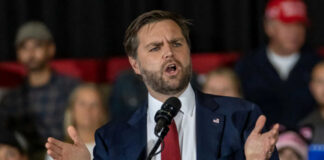
President Trump posted that the United States does not need a deal with Iran and pointed to money and the Strait of Hormuz as leverage. He also said stopping Iran from getting a nuclear weapon is non-negotiable, and a White House official echoed that goal the same day. That pairing tells you the policy spine: deny the bomb, apply pressure, and treat talks as optional, not essential. The message set the tone for where Washington aims to steer the crisis next.
Critics asked whether the claim about “their money” and “their Strait” means full operational control. The public record does not show proof of that exact control. The statement reads as a show of leverage, not a documented seizure or occupation with named authorities and figures. The core signal still stands: Washington believes the balance of power favors continued coercion. That belief shapes both military posture and what Washington will not concede in any room.
What Actually Stalled the Talks
Negotiations bogged down on the heavy stuff, not the commas. The gap covered Iran’s enrichment and nuclear limits, how to reopen the Strait of Hormuz, which sanctions to lift, the maritime blockade, compensation, and how far to dial down the wider fight. Each side set conditions the other would not accept, and the distance did not shrink in public view. That is why the “no deal needed” line landed with force. It matched a reality where a handshake was not near.
The White House leaned on a clear leverage theory. Keep the naval squeeze. Keep economic heat on. Use shipping access and finance as pressure points. Trump said the United States holds “all the cards” and cited control of key pressure levers. The aim is to force choices in Tehran without trading away constraints on the nuclear program. Supporters see this as common sense: strength first, clarity second, and no blank checks for a regime that plays for time.
Tehran’s Counter: Open the Strait—On Our Terms
Iran’s foreign minister said Tehran would reopen the Strait of Hormuz within two days if the United States met set conditions and showed goodwill. He said Iran wants complete sanctions relief and prefers to fix the Strait first and then talk about other issues. Iranian officials also pointed to a possible transit plan with Oman under international law. The claim puts the onus on Washington to move first while Tehran keeps pressure alive.
Tensions are rising as Trump considers renewed negotiations with Iran, while Tehran refuses to surrender its enriched uranium and threatens U.S. military bases in Europe.
Former Mossad chief David Barnea warns Iran is rebuilding its nuclear program and proposes a dramatic…
— Richard M Masliah B, Sc. LLL. LLB. (@Richard4m) November 12, 2026
That counteroffer meets a wall in Washington. American officials say the nuclear issue cannot wait while oil lanes reopen under Iranian terms. The American conservative view is straightforward: do not trade away leverage for promises that fade when inspectors leave. Secretary of State Marco Rubio has described some Iranian demands as unrealistic. That rhetoric tightens the corridor for compromise and signals the cost of any U.S. retreat from core red lines.
The Real Stakes: Leverage vs. Lasting Limits
Pressure can bite hard and fast; compliance tends to slip slow and quiet. Supporters of the current path argue that only sustained coercion forces Iran to choose between the bomb and its economy. Skeptics ask for proof that pressure alone locks in durable nuclear limits. Open questions remain on verification, enforcement, and how to keep the Strait safe without rewarding escalation. The White House did not say talks had ended, and that ambiguity keeps markets and allies guessing.
What to Watch Next
Watch whether the blockade tightens or loosens, whether enrichment data shifts, and whether Qatar’s framework sees daylight. A public draft would clarify who moved, who blinked, and who just tweeted. Watch also for any concrete evidence of control over funds and the Strait, because facts here blunt propaganda on both sides. For now, the scoreboard reads leverage over paper. Trump set that score, and Tehran must decide whether to test the bet or cash out some chips.
Sources:
redstate.com, abcnews.com, charlotteobserver.com, ca.news.yahoo.com, thestate.com
© ournationnews.com 2026. All rights reserved.