
Four New York state lawmakers did not set foot in the Capitol building a single time this year, according to attendance records reviewed by reporters.
Quick Take
- One state senator and three Assembly members skipped every in-person day at the Albany Capitol in 2026.
- The ten most absent lawmakers missed 442 votes combined, each skipping more than 37% of voting activity.
- Assembly rules let members vote remotely but bar them from speaking during live sessions.
- Two of the absent lawmakers are 89 years old and cite serious health problems.
What The Attendance Records Actually Show
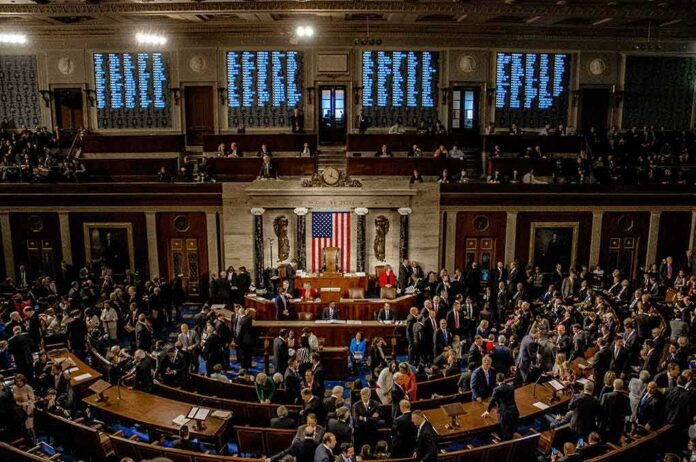
The New York Post reported on October 19, 2026, that a review of attendance documentation found one state senator and three Assembly members never appeared at the Capitol in person all year. The same analysis found the ten lawmakers with the worst records missed 442 votes combined. Each one skipped more than 37% of all Albany voting activity during the period examined.
New York’s rules make the distance between “present” and “participating” official. Members can cast votes from home, but they cannot take part in floor debate while remote. The report put it plainly: lawmakers “cannot engage in legislative sessions” even when their vote gets counted. That gap matters for voters who expect their representative to actually argue for their district, not just click a button.
Health Problems Explain Some, Not All, Of The Absences
Assembly rules allow remote attendance when illness, disability, or caregiving duties make physical travel impossible, and the Clerk must still mark those members present. Two of the most absent lawmakers are 89 years old. Vivian Cook missed every session day this year due to an undisclosed illness but logged in remotely to vote on the state budget in May. Republican Assemblymember David McDonough, 88, has not appeared in Albany in three years because of ongoing health issues, though he voted remotely eight separate times.
Those two cases complicate a simple “lazy lawmaker” narrative. Assembly procedures specifically list illness and disability as “extraordinary circumstances” that justify skipping the trip to Albany, so long as the member’s participation stays limited to voting. That is the system working as designed for members who are genuinely too sick to travel. But it does not explain every absent lawmaker, and the public still deserves to know which absences were medically necessary and which were not.
The Problem Is Bigger Than Four Names
This is not an isolated story about a handful of outliers. Politico New York Playbook reported in April 2026 that more than 70% of Assembly Democrats were skipping floor debates, with an average absentee rate of 73% during the sessions it tracked. The paper traced this back to a 2023 rule change that scrapped the old requirement that members stay near the chamber to be counted present or have their votes tallied.
That rule change is the real hinge point here. Before 2023, physical presence and voting eligibility were tied together. Now they are not, and the result is a legislature where a majority of one chamber can be functionally elsewhere while the roll call still shows a quorum. Conservatives have long argued that accountability requires showing up, and Albany’s own numbers back that instinct up.
Why Raw Vote Counts Only Tell Half The Story
Missing votes is not unique to New York, and some baseline absence is normal in any legislature. One study of American state legislators found an average of about 5% of floor votes missed in a typical year, with the worst-performing tenth missing upward of 14%. New York’s most absent lawmakers blow past that benchmark by a wide margin, missing more than 37% of votes each, well beyond what researchers treat as ordinary legislative friction.
ALBANY – Four New York State lawmakers haven’t been to the Capitol once all year — with two ailing 89-year-old boys among those with the most spotty attendance records. https://t.co/c8HIgPNHER
— Craig McCarthy (@createcraig) October 19, 2026
None of this proves constituents in these four districts got worse service, since casework and remote hearings are not part of the public record examined here. But voters sent these lawmakers to Albany to show up, debate, and be seen fighting for their district, not just to phone in a vote from home. When a majority of a legislative chamber treats floor debate as optional, the people paying the salaries have every right to ask what, exactly, they are paying for.
Sources:
nypost.com, lucianne.com, politico.com, fingerlakes1.com, leg.colorado.gov
© ournationnews.com 2026. All rights reserved.