
A ceasefire promised to unlock the world’s most critical oil chokepoint, but with 426 tankers stuck in limbo and only two ships slipping through, the Strait of Hormuz remains a virtual parking lot exposing just how fragile America’s leverage over Iran really is.
Story Snapshot
- Only two ships transited the Strait of Hormuz by 9 a.m. on April 8 despite a U.S.-Iran ceasefire requiring immediate passage
- 426 oil tankers, 34 LPG carriers, and 19 LNG vessels remain stranded, risking global energy supply disruptions
- Iran demands coordination with its armed forces and may impose tolls, contradicting President Trump’s “complete, immediate, safe opening” promise
- Shipping giants like Maersk cite limited details and ongoing safety risks, refusing to resume normal operations
- The two-week ceasefire serves as a test for broader U.S.-Iran negotiations, with missile launches and attacks continuing post-agreement
The Bottleneck That Breaks the World
The Strait of Hormuz is not just a waterway. It is the jugular vein of global energy, carrying 20 to 25 percent of the world’s oil and 20 percent of its natural gas. When Iran blocked it amid escalating hostilities with the United States, over 800 vessels found themselves trapped in the Persian Gulf, paralyzed by fears of attack. The ceasefire announced April 7 was supposed to change everything. President Trump declared the Strait would see a complete, immediate, safe opening, with the U.S. Navy standing by to help traffic flow. Iran agreed to halt bombings if the U.S. did the same and promised safe passage. Markets responded with relief as oil prices dropped and equities rebounded.
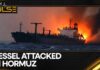
Reality arrived the next morning with a harsh correction. MarineTraffic data showed early vessel activity at 5 a.m. Eastern Time on April 8, but by 9 a.m., only two ships had made it through. The backlog remained staggering. Hundreds of tankers sat idle, their crews uncertain, their cargo critical, their futures unclear. The ceasefire was barely hours old, and it was already failing to deliver on its central promise.
Iran’s Conditions and America’s Dilemma
Iran never intended to simply swing the gates open. The country’s Foreign Minister made clear that passage would require coordination with Iranian armed forces, citing security and technical limitations. Reports surfaced that Iran and Oman might impose tolls on transiting vessels, ostensibly to fund reconstruction from war damage. This directly contradicts the vision Trump sold to the American people and global markets. The U.S. holds military superiority and is monitoring enforcement, but Iran controls one side of the Strait and wields that geography like a weapon. The power dynamic is asymmetric, and Iran knows it.
Shipping companies are not taking chances. Maersk, one of the world’s largest shipping operators, welcomed the ceasefire but noted limited details and announced no changes to service. The company continues conducting risk assessments, unwilling to commit vessels and crews to a situation where the rules remain murky and the threat level uncertain. Kpler analyst Dimitris Ampatzidis told The New York Times that operators are holding back, with no signs of large-scale movement or queuing. The International Shipping Group echoed that caution, maintaining unchanged guidance despite the ceasefire.
The Stakes Beyond Oil Prices
The immediate economic impact is measurable. Oil and gas markets reacted to the ceasefire announcement with optimism, but sustained disruption in the Strait threatens price volatility, supply delays, and higher costs for consumers worldwide. The longer 426 tankers and dozens of LPG and LNG carriers sit idle, the more acute those risks become. Crews face uncertainty and danger. Gulf states like the United Arab Emirates, which borders the Strait, have already faced missile attacks from Iran even after the ceasefire took effect. The fragility is not theoretical.
Politically, the ceasefire is a test case for broader U.S.-Iran negotiations. The two-week window is meant to create space for talks, but it also exposes how little trust exists between the two nations. Iran’s post-ceasefire missile launches targeting southern Israel and the UAE demonstrate that Tehran views the agreement narrowly, confined to specific terms rather than a broader de-escalation. Israel, for its part, supports the ceasefire with Iran but explicitly excludes Lebanon, where Israeli Defense Forces continue operations. The Middle East remains a patchwork of fragile agreements, each with its own exceptions and loopholes.
Why Ceasefires in the Middle East Rarely Hold
History offers little comfort. Middle East ceasefires, from Israel-Hamas truces to various Iranian agreements, are notoriously brittle. They often serve tactical purposes rather than strategic resolutions, buying time for one side to regroup or for diplomats to claim progress. Two weeks is an absurdly short timeframe to resolve the underlying issues between the United States and Iran, issues that include nuclear ambitions, regional influence, terrorism sponsorship, and decades of mutual hostility. The Strait of Hormuz ceasefire is less a solution than a stopgap, and stopgaps leak.
The current situation suggests Iran views the Strait not as a free passage to be restored but as leverage to be monetized. Whether through formal tolls, informal fees, or bureaucratic coordination requirements, Iran is extracting value from its geographic position. That reality grates against American principles of freedom of navigation and the rule of law. The U.S. Navy’s presence is meant to ensure those principles, but enforcing them without reigniting hostilities is a delicate balance. The fact that only two ships have moved suggests shipping operators doubt the balance will hold.
Common sense says you do not send a multimillion-dollar tanker full of crude oil through a contested chokepoint based on a two-week handshake deal with a regime that just launched missiles at your allies. The shipping industry operates on risk management, insurance rates, and crew safety, not diplomatic optimism. Until Iran demonstrates sustained, unconditional openness and the U.S. can credibly guarantee security, the backlog will persist. The 426 tankers waiting are not a logistical glitch. They are a vote of no confidence in the ceasefire’s durability.
What Happens When the Two Weeks End
The ceasefire’s expiration looms. If progress is made in negotiations, an extension is possible, perhaps even likely. If not, the Strait could close again, and the current backlog would pale compared to the resulting chaos. Alternatively, Iran might normalize tolls and coordination requirements, turning the Strait into a controlled passage rather than the free waterway it has historically been. That outcome would represent a strategic victory for Tehran, reshaping global energy logistics to Iran’s advantage. American conservatives rightly view such an outcome as unacceptable, undermining both national security and economic interests.
The situation demands clear-eyed assessment. The ceasefire is not working as advertised. Two ships do not constitute a reopening. Four hundred twenty-six stranded tankers do not signal confidence. Iran’s conditions, missile launches, and toll discussions reveal a regime testing limits, not honoring commitments. The United States holds military superiority, but geography and international law constrain how that superiority can be applied. The next days will clarify whether diplomacy can overcome those constraints or whether the Strait of Hormuz remains a crisis in slow motion, waiting for the next spark.
Sources:
2 Ships Through. 426 Tankers Waiting. The Strait of Hormuz Ceasefire Isn’t Working – 19FortyFive
Live updates: Iran war, Strait of Hormuz ceasefire, Trump, stock market – 6abc Philadelphia