

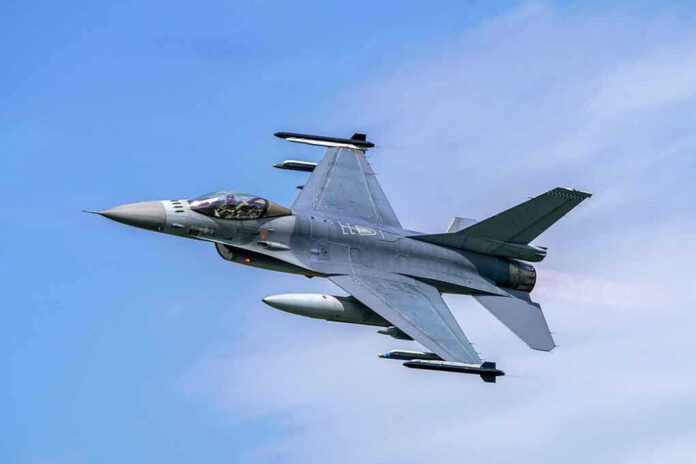
France’s abrupt denial of airspace to U.S. bombers striking Iran forced a B-1B to detour around NATO allies, exposing cracks in alliance unity amid escalating Middle East conflict.
Story Snapshot
- France initially barred U.S. strategic bombers, rerouting them around Europe despite NATO ties.
- President Macron labeled U.S.-Israel strikes “outside international law” on March 4, 2026.
- By March 20, France permitted bomber transits, marking a pragmatic policy reversal.
- This shift aids U.S. operations while highlighting European tensions over Iran escalation.
- Iranian attacks on French Gulf bases pressured France’s “defensive” stance.
Conflict Ignites with Airspace Chaos
U.S. and Israeli forces launched strikes on Iran February 28, 2026. Multiple Middle Eastern nations closed airspace immediately. France joined restrictions, denying transit to combat aircraft like B-1B bombers. American pilots navigated lengthy detours around NATO partners including France, Spain, and others. This move strained operations, extended flight times, and burned extra fuel. Flight tracking confirmed B-1Bs skirting European mainland on return legs.
France Just Closed Its Airspace to U.S. Bombers Attacking Iran — A B-1B Had to Fly Around NATO Allies to Get Home From Its Missionhttps://t.co/OdUWwubNhM
— Harry J. Kazianis (@GrecianFormula) March 23, 2026
Macron’s Criticism Signals French Hesitation
President Emmanuel Macron declared U.S.-Israel operations violated international law March 4, 2026. France’s independent NATO stance rooted in historical Middle East caution surfaced. Defense pacts with Qatar, Kuwait, UAE, Jordan, and Iraq complicated matters. Iran targeted two French bases in the Emirates during escalation. Macron deployed Charles de Gaulle carrier to Mediterranean and Rafale jets to Gulf as defensive measures.
Partial Support Emerges at Istres Base
March 5, 2026, France allowed non-combat U.S. support planes at Istres air base for refueling. Defense Minister Catherine Vautrin called them “a service station, not a fighter jet.” Officials framed this as routine NATO procedure. Combat bombers remained barred, forcing continued reroutes. This distinction preserved France’s neutral image while providing limited aid. Regional partners urged stronger allied protection against Iranian missiles.
Strategic Reversal Unlocks French Airspace
France authorized U.S. strategic bombers to cross its airspace March 20, 2026, first since conflict start. Flight data from Itamilradar, OSINTtechnical, and Flightradar24 showed cruise missile-laden bombers transiting. This cut distances, saved fuel, boosted efficiency versus southern routes. Shift reflected pragmatic response to Iranian threats on French assets. United Kingdom offered explicit base access, contrasting French caution.
France Just Closed Its Airspace to U.S. Bombers Attacking Iran — A B-1B Had to Fly Around NATO Allies to Get Home From Its Missionhttps://t.co/wyCJJIBtC6
— 19FortyFive (@19_forty_five) March 23, 2026
Operational Gains and Diplomatic Ripples
Airspace access slashed U.S. bomber transit times significantly. Middle Eastern closures persisted in Iran, Iraq, Lebanon per NOTAMs. Commercial flights rerouted, hiking costs. France’s pivot signaled deeper European buy-in despite rhetoric. NATO cohesion tested as allies balanced law concerns with security needs. Iranian drones hit Cyprus bases, heightening stakes. Common sense dictates prioritizing threats over legal posturing aligns with conservative alliance values.
Sources:
France allows US bombers through airspace for Iran strikes
France to let US planes not involved in Iran strikes use air base
NAMPA/AFP on conflict timeline and airspace closures
Safe Airspace summary on NOTAMs and closures
UK Defence Journal on US bombers avoiding European airspace
LA Times on Europe defending military bases in Iran war