

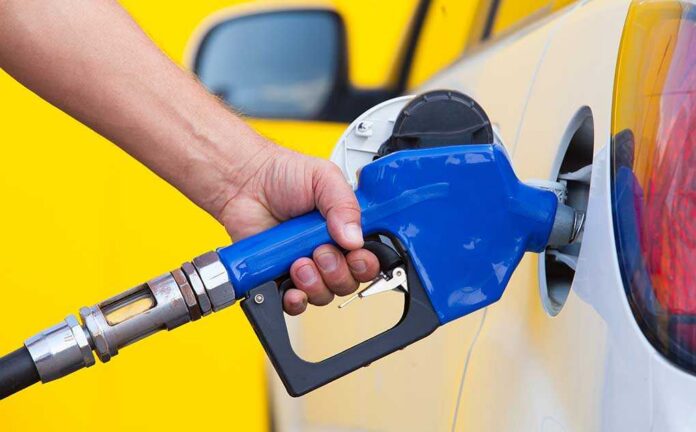
On America’s 250th birthday, millions of drivers are “celebrating” with something no one asked for: higher gas taxes quietly baked into the price at the pump.
Story Snapshot
- At least 19 states raised gas taxes between early 2025 and early 2026, and most increases are now automatic, not voted on each year.
- These hikes look tiny per gallon, but they stack up over thousands of miles and dozens of fill‑ups for working families.
- States defend the taxes as road money, yet most publish rate charts, not clear proof that every extra cent goes to fixing potholes you actually drive over.
- Gas‑tax “holidays” and suspension fights prove leaders know the levy hits wallets hard, even as many quietly lock in inflation‑based increases.
How Gas Taxes Became America’s Quiet Birthday Guest
State leaders did not roll out fireworks for this part of the America 250 story, but the numbers are hard to ignore. Federal data show that twenty‑six states changed gasoline taxes between January 1, 2025 and January 1, 2026, with nineteen of them raising rates and only seven trimming them.[5] Average state gasoline taxes reached about 33.5 cents per gallon, up from the prior year, while California topped the list at 70.9 cents and Alaska sat at just 9 cents.[5] That is not a one‑off surprise bill; it is a pattern.
NerdWallet reports that gas taxes went up on January 1 in Florida, Georgia, Massachusetts, Minnesota, Nebraska, New Jersey, and Utah, with hikes from under one cent to about 3.3 cents per gallon.[1] USAFacts shows that the average state gas tax was about 27 cents per gallon in 2015 and climbed to roughly 33 cents by 2026.[2] That six‑cent jump per gallon may sound small, but it applies every time you fill up, year after year. For commuters who drive long distances, this adds real cost.
Automatic Increases: Tax Hikes On Cruise Control
Many states no longer pass big, dramatic gas‑tax bills. Instead, they build inflation formulas into law so the increase happens automatically. The Illinois Department of Revenue’s bulletin for the 2026–2027 year lists a motor fuel tax of 49.6 cents per gallon and explains that the rate is set on a schedule under state statute, rather than treated as a one‑time emergency move.[3] The Energy Information Administration also notes that automatic adjustments are now common as states seek stable revenue while fuel use flattens.[5] Voters see higher prices, but not new debate.
Supporters say this keeps road funding from falling behind when construction costs rise. That argument has some logic; no one can pave roads at 1990s prices forever. Research from USAFacts confirms that state gas‑tax averages have risen over the past decade as states chase higher costs with per‑gallon hikes.[2] But automatic indexing also keeps lawmakers from taking a clear, public vote each time. From a conservative, limited‑government view, locking in endless tax growth through formulas instead of open votes should make people uneasy, even if the projects are popular.
The “Small” Hikes That Add Up At The Pump
State budget writers like to call each step a “modest adjustment,” and on paper they are right. NerdWallet’s seven‑state list shows individual increases measured in pennies.[1] Yet the Energy Information Administration highlights that Washington state raised its tax by 6.2 cents per gallon and Michigan by 5.2 cents in this latest round.[5] On a 15‑gallon fill‑up, a five‑cent hike adds 75 cents. Multiply that by a weekly fill‑up schedule and a full year, and a family can lose enough cash to matter for groceries or school supplies.
That is before you factor in that the increase stacks on top of the existing levy. By early 2026, the average state gas tax sat in the low‑30‑cents range, and high‑tax states like California, Pennsylvania, and Illinois pushed toward 50 cents or more.[1][2][5] The result is that drivers are no longer paying a minor user fee; they are paying what feels like a second sales tax on every tank. For rural workers who must drive many miles and do not have bus or subway options, the burden hits harder than it does for urban professionals.
🇮🇱 Israel / Lebanon
– 🇮🇱 Sirens sounded in northern Israel (including Kiryat Shmona) after rocket-related alerts tied to Hezbollah activity
– 🇮🇱 In southern Lebanon, IDF operations included reports of suspicious aerial targets being identified and Hezbollah drone strikes against… https://t.co/wbnwrVl3In— U.S.A.I. 🇺🇸 (@researchUSAI) June 4, 2026
Roads, Trust, And Where The Money Actually Goes
State officials defend these taxes as the backbone of transportation funding. USAFacts notes that state gas taxes provide a substantial share of money for roads and highways, with the average driver paying about 33 cents per gallon to support that system.[2] Illinois lays out its rates in a formal schedule, which suggests serious planning for road programs and other transport needs.[3] On paper, this fits a classic “user pays” model: people who drive more pay more for pavement and bridges.
The trouble is that the sources here track rates, not spending details. None of the main documents show which specific 2026 projects depend on the new pennies at the pump, or how much goes to actual concrete versus side programs or administrative overhead.[1][2][3][5] For taxpayers who already feel squeezed, “trust us, it goes to roads” no longer cuts it. American conservative values prize clear, line‑by‑line accountability. If lawmakers want respect for gas taxes, they should publish project lists tied to each increase and invite audits, not hide behind formulas.
Gas Tax Holidays Reveal What Politicians Really Think
The most telling fact may be how often leaders rush to suspend gas taxes when prices spike. Analysts at the Penn Wharton Budget Model describe how several states and federal officials floated gas‑tax holidays as a way to cut pain at the pump in 2026 and in earlier years.[6] Another policy review shows states using temporary fuel‑tax breaks as a quick answer when public anger flares about high gas prices.[9] No one pauses a tax that does not hurt. These holiday talks admit, without spin, that gas taxes bite into family budgets.
At the same time, many of the very states that discuss holidays or relief also rely on automatic indexing or steady hikes to keep revenue flowing.[1][5][9] That split personality sends a mixed message. When the news cameras roll, gas taxes are a burden that must be eased. When the cameras leave, the rate quietly ticks up on January 1 or July 1, locked to inflation or some wholesale price formula. For a public already skeptical of government, especially on the right, that looks less like stewardship and more like a slow‑boil tax strategy.
Sources:
[1] Web – Happy America 250! These States Celebrate With Higher Gas Taxes
[2] Web – State Gas Taxes: What They Are And How Much You Pay – NerdWallet
[3] Web – How much do you pay in gas taxes? – USAFacts
[5] Web – Most States Have Raised Gas Taxes in Recent Years – ITEP.org
[6] Web – Many states slightly increased their taxes and fees on gasoline … – …
[9] YouTube – Your State Just Raised Gas Taxes | See the New Pump Prices
© ournationnews.com 2026. All rights reserved.















![🇺🇸 First Lady Melania Trump Unveils New Fostering the Future & IndyCar Scholarships [LIVE]](https://ournationnews.com/wp-content/uploads/sites/26/2026/08/maxresdefault-43-100x70.jpg "Melania Speaks Out Amid Trump Aide Rumors")