

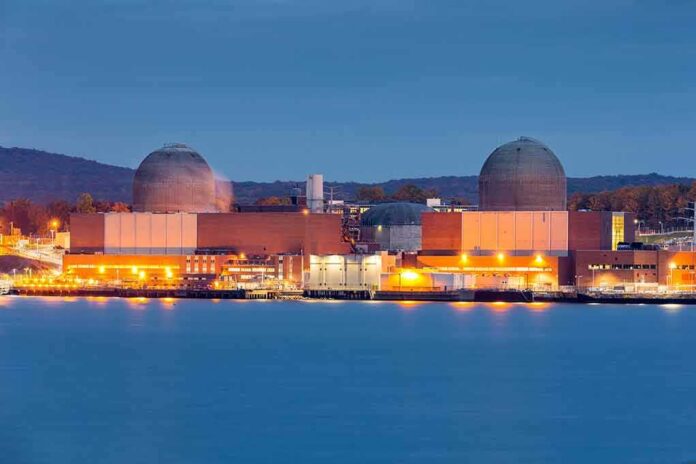
Kentucky just went from no reactors on the map to a plan for the biggest nuclear power campus in America.
Story Snapshot
- A proposed site near Vanceburg could host up to six AP1000 reactors, totaling about 6.6 gigawatts.
- The first phase targets two reactors at roughly 2.2 gigawatts while later phases remain optional.
- The developer secured site control at Carrs Bottom on the Ohio River via an option arrangement.
- Planning includes site work and federal approvals ahead of a 2028 construction start goal.
From Zero To National Scale At Carrs Bottom
The Nuclear Company announced Prosperity One, a nuclear campus planned for Carrs Bottom, about seven miles west of Vanceburg along the Ohio River. The proposal names a specific technology and a maximum site buildout: up to six Westinghouse AP1000 reactors delivering about 6.6 gigawatts. Reporting says the company has site control through an option with the local landowner, which puts a real pin on the map rather than a vague promise. That clarity signals intent and lets permitting and engineering begin in sequence.
The plan uses a phased approach. The first step aims for two AP1000 units, estimated near 2.2 gigawatts, with four additional reactors possible later if conditions line up. This matters. A measured ramp lets investors, regulators, and grid planners judge performance before green-lighting a full campus. It also matches how large energy assets succeed: prove the model, then scale. The AP1000 is a commercial design with units operating in the United States and overseas, not a paper-only concept.
What Makes The AP1000 Choice Strategic
Westinghouse’s AP1000 design centers on passive safety and standardized builds. That gives project teams a known playbook and operating history, which can shorten some reviews. The design also meets modern grid needs: big, steady power that runs in all weather. Recent U.S. builds showed tough cost and schedule lessons, but those units are online and generating today. That operating proof helps regulators and markets judge risk with facts, not guesses. The choice aligns with a conservative bias for proven tools over experiments.
Prosperity One positions Kentucky to anchor firm, low-carbon power for factories, data centers, and homes. Six fully built units could equal several large natural gas plants without the fuel-price swings. Even the first two units would rival the output of a big hydro dam. A single site can also tighten security, emergency planning, and workforce training. Concentrating heavy industry at one location keeps impacts contained and lets the county plan roads, housing, and schools with a clear timeline.
Local Ground Game: Land, Partners, And Timeline
Developers named Carrs Bottom early and tied it to real people. Reporting identified local partner Trace Creek and landowner Sam Howard, who is described as a partner in advancing the project. Local roots matter. They speed access, build trust, and surface siting limits before they turn into delays. The company says site development and federal approvals are next, with a target to start construction in 2028. That schedule gives time for studies on geology, water, and emergency plans, which regulators will expect.
☢️🇺🇸 BIG NUCLEAR ENERGY PLANS IN KENTUCKY!
The Nuclear Company has announced Prosperity One, a proposed 6.6-gigawatt nuclear power campus in Lewis County, Kentucky.
If fully built, it would become the LARGEST nuclear energy site in America! ⚡ pic.twitter.com/8Gn9Mxditg
— Greg 🇺🇸 ✭ (@GregB_TX) October 26, 2026
Power Engineering noted the project had not yet filed with the Nuclear Regulatory Commission or the regional grid operator, and no federal loan has been approved. That is normal at this stage for a multi-reactor site. A phased plan and a known design reduce some risks, but financing, interconnection, and licensing still drive pace. The six-reactor label describes site capacity, not a binding build order today. The prudent read: judge the first two units on execution, then scale once milestones land.
Why This Could Reshape Kentucky’s Economy
A campus of this size could make eastern Kentucky a power exporter and an industrial magnet. Steelmakers, chip fabs, and data centers want cheap, steady electricity with low carbon. Nuclear provides that. It also brings long-term jobs with good wages and strong tax bases. Counties that plan training and trades pipelines early tend to capture the most local benefit. Site control at the riverfront, with barge and rail options, hints at efficient construction logistics and future fuel and component flows.
Energy security is culture, not just kilowatts. Building big, reliable power at home supports national defense industries, restores manufacturing, and lowers household bills over time. That aligns with bedrock conservative values: strong infrastructure, dependable jobs, and stewardship without moralizing. The facts on the table are concrete—named site, named technology, phased plan, and a public timeline. The test now is disciplined delivery, one licensed unit at a time, with eyes wide open and shovels ready.
Sources:
publicpower.org, aapnews.aap.com.au, lewiscountyherald.com, wowktv.com, ans.org, wkyt.com
© ournationnews.com 2026. All rights reserved.