

Four Republicans crossed the aisle to curb Iran war powers—then the Senate flinched a day later.
Story Snapshot
- The Senate first voted 50-48 to direct President Trump to halt military action in Iran.
- Four Republican senators broke ranks to back the resolution.
- The White House dismissed the vote and blamed GOP absences.
- The Senate then blocked a follow-on measure within 24 hours.
What the 50-48 Vote Actually Did—and Did Not Do
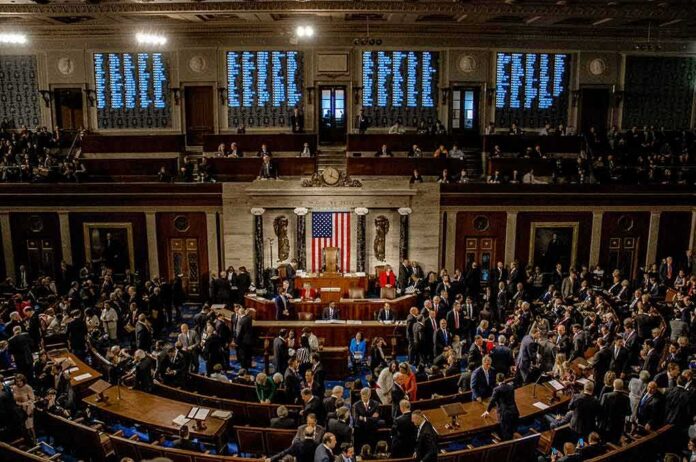
The Senate approved a concurrent resolution directing President Trump to stop U.S. military action against Iran unless Congress authorizes it, passing 50-48 after the House had cleared similar language. The vote sent a sharp political message. It did not change binding law by itself. The War Powers framework gives Congress leverage, but presidents have long argued such votes do not compel action without a signed statute. That gap between signal and force defined the showdown.
Four Republican senators—Bill Cassidy, Susan Collins, Lisa Murkowski, and Rand Paul—joined Democrats to pass the resolution. Their votes put daylight between parts of the Republican Party and the White House. The move pressed a basic principle: Congress should bless continued hostilities. The coalition was thin but decisive. It turned a routine protest into a formal rebuke. That single-seat margin showed how fragile cross-party checks on war powers can be in real time.
Why Congress Pushed—and Why the Push Faltered
House and Senate leaders argued that extended hostilities against Iran require a clear vote of authorization. They leaned on the War Powers Resolution of 1973, which sets timelines and reporting rules for conflicts that outlast brief emergencies. Supporters said Congress must speak before lives and money are spent in a drawn-out campaign. The case was simple: no blank checks. The counter was just as blunt: the commander in chief must retain speed and surprise in a live fight.
The White House answered that the 50-48 vote had “no significance” and said absences shaped the outcome. President Trump framed the measure as poorly timed and said it helped the enemy, hardening party lines on Capitol Hill. Within a day, Republicans moved to block a similar measure in the Senate, undoing the symbolic sting. That reversal underscored Congress’s limited staying power without a veto-proof path or a negotiated authorization bill.
The Legal Needle: Symbolism Versus Statute
The War Powers architecture lets Congress direct removal of forces through a concurrent resolution, but courts and administrations treat statutory law, not symbolism, as the binding brake. That is why major outlets called the June 23 action “symbolic,” even as it carried real constitutional weight in debate and oversight. In practice, presidents of both parties defend operational latitude first and negotiate authorizations later, if ever. That habit has become the modern default in limited conflicts.
President Trump argued that a declared ceasefire paused the War Powers clock and said no congressional authorization was needed while hostilities were “terminated”. He later sent Congress a formal notice when operations resumed, which the administration viewed as resetting the sixty-day window under the law’s terms. Supporters of the Senate vote called this a loophole that swallows the rule. The administration called it lawful prudence in a volatile theater.
The Four Republicans’ Case—and the Conservative Read
Cassidy, Collins, Murkowski, and Paul took heat for bucking the president, yet each framed the vote as constitutional guardrails, not retreat. Coverage highlighted Cassidy’s call for clarity before any new authorization or extension, reflecting a classic conservative test: define the mission, set limits, and show results before asking for more power or money. That stance aligns with accountability, not weakness. Fiscal restraint and clear ends-means matching are bedrock right-of-center values when the shooting starts.
Iran pitched a 7-day plan to reopen the Strait of Hormuz at the UN. Senate rejected the war-powers resolution 50-49. Trump says a deal could come after the Nov 3 midterms. #politics #news pic.twitter.com/Vm42ZY0PgZ
— jaimejohn (@JjSency) September 25, 2026
Critics called the Senate’s next-day reversal proof that Congress blinked. A firmer take is simpler: if lawmakers want to bind a president, they must pass a law he will sign or muster the votes to override. Concurrent resolutions and stern letters do not move carriers. The lesson for future fights is plain. Draft a tight authorization with sunset dates, reporting rules, and clear targets—or accept that presidents will steer the gray zone while Congress argues from the bleachers.
Sources:
feedpress.me, reuters.com, npr.org, apnews.com, thehill.com, time.com, pbs.org
© ournationnews.com 2026. All rights reserved.