A former Ukrainian Energy Minister was caught trying to escape across the border by train as investigators closed in on a scheme that allegedly diverted $100 million meant to repair war-damaged power grids.
Story Snapshot
- Herman Halushchenko, a Zelensky ally and former Energy Minister, was detained at the Ukrainian border on February 15, 2026, while attempting to flee by train
- He is implicated in Operation Midas, a corruption probe into $100 million in kickbacks and embezzlement at state nuclear energy company Energoatom
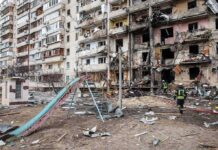
- The funds were intended to repair energy infrastructure damaged by Russian strikes, leaving Ukrainian civilians in blackouts
- Parliamentary insiders report President Zelensky is under mounting stress as anti-corruption investigators appear to operate beyond his control
- The arrest strengthens Ukraine’s EU membership bid by demonstrating serious anti-corruption enforcement, but threatens political stability as more Zelensky associates face scrutiny
When War Profiteering Meets a Train Platform
The scene at the Ukrainian border on February 15, 2026, carried a kind of poetic irony. As Herman Halushchenko stepped aboard a train hoping to escape the country, border guards intercepted him on orders from the National Anti-Corruption Bureau. The former Energy Minister, who once oversaw billions in infrastructure spending, now stood accused of pocketing kickbacks while Ukrainian families huddled in the cold during Russian-induced blackouts. His attempted exit underscored a simple truth: when investigators come knocking with evidence of $100 million in stolen funds, proximity to the president offers no sanctuary.
Halushchenko resigned in November 2025 alongside other officials connected to Tymur Mindich, another Zelensky ally identified as the alleged orchestrator of a sprawling energy sector money-laundering scheme. The resignations were meant to contain the scandal, but Operation Midas proved too expansive. By early 2026, investigators had traced kickbacks through Energoatom, Ukraine’s state nuclear energy operator, where contracts for desperately needed post-attack repairs allegedly became vehicles for embezzlement. Each diverted dollar represented not just theft, but a generator left unrepaired, a transformer never replaced, and a civilian left shivering through winter blackouts courtesy of both Russian missiles and Ukrainian graft.
The Crumbling Circle of Trust
Zelensky built his 2019 presidential campaign on dismantling corruption, casting himself as the outsider who would drain Ukraine’s swamp. Yet as Russia’s invasion ground through its third year, his inner circle became entangled in the very corruption he vowed to eliminate. The Halushchenko arrest follows January’s dismissal of border chief Serhiy Deineko amid related controversies, signaling a pattern of institutional rot spreading through key wartime agencies. Parliamentary sources describe Zelensky’s mood as volatile, exceeding even pre-war stress levels, as the investigation threatens to expose deeper networks connecting his allies to war profiteering schemes.
The National Anti-Corruption Bureau’s decision to name only “the former Minister of Energy” initially in their public statements demonstrates procedural caution, but the message resonates clearly: no political connection guarantees immunity. NABU and the Specialized Anti-Corruption Prosecutor’s Office have asserted independence despite reported attempts by the presidential administration to influence proceedings. This independence strengthens Ukraine’s case for EU membership, which demands credible anti-corruption institutions. Yet the political cost mounts as each arrest chips away at Zelensky’s coalition, fueling parliamentary infighting at precisely the moment Ukraine needs unified wartime governance.
Energy Sector Corruption with National Security Consequences
Energoatom operates Ukraine’s nuclear power plants, which provide roughly half the nation’s electricity. Russian forces have repeatedly targeted electrical infrastructure, causing rolling blackouts and humanitarian crises during winter months. The alleged $100 million kickback scheme transformed this vulnerability into profit opportunity, with reconstruction contracts becoming conduits for embezzlement. Each fraudulent transaction weakened Ukraine’s ability to restore power, prolonging civilian suffering while enriching officials entrusted with national security responsibilities. This is not abstract white-collar crime; it is theft that keeps hospitals dark and water pumps silent.
Western donors, who have committed billions to Ukraine’s defense and reconstruction, now face uncomfortable questions about oversight mechanisms. The exposure of this scheme validates their insistence on anti-corruption reforms as conditions for continued aid, but also reveals how easily wartime urgency can eclipse accountability. Ukrainian citizens, already exhausted by invasion and displacement, now confront evidence that some of their own leaders exploited the war for personal gain. Public anger is palpable, and justifiably so. When officials steal funds meant to restore electricity to bombed cities, they become collaborators in Russia’s strategy of civilian demoralization.
The EU Accession Test Unfolds in Real Time
Ukraine’s path to European Union membership hinges on demonstrating functional rule of law and corruption control. The Halushchenko arrest provides tangible evidence of enforcement capability, showing that even politically connected elites face consequences when evidence warrants prosecution. This satisfies Brussels’ demands more convincingly than any legislative reform on paper. Yet the instability created by prosecuting presidential allies introduces risks that could undermine the very governance structures EU membership requires. The challenge for Ukraine is threading this needle: rooting out corruption decisively enough to earn membership while maintaining sufficient political cohesion to function as a candidate state.
The broader implications extend beyond one minister’s flight attempt. If investigators follow the money trail through Tymur Mindich’s network and additional Zelensky associates face charges, Ukraine could experience political turbulence that hampers both its war effort and EU accession timeline. Conversely, if prosecutions stall or result in lenient outcomes, international skepticism about Ukraine’s reform commitment will harden. The investigation’s outcome will signal whether Ukraine is genuinely transforming into a transparent European democracy or merely performing anti-corruption theater for Western audiences while protecting its elite from real accountability.
Sources:
Zelenskyy ally arrested trying to flee Ukraine as massive corruption probe deepens
Ukraine says former minister named in corruption scandal arrested as he tried to leave country
Zelenskyy ally arrested trying to flee Ukraine as massive corruption probe deepens