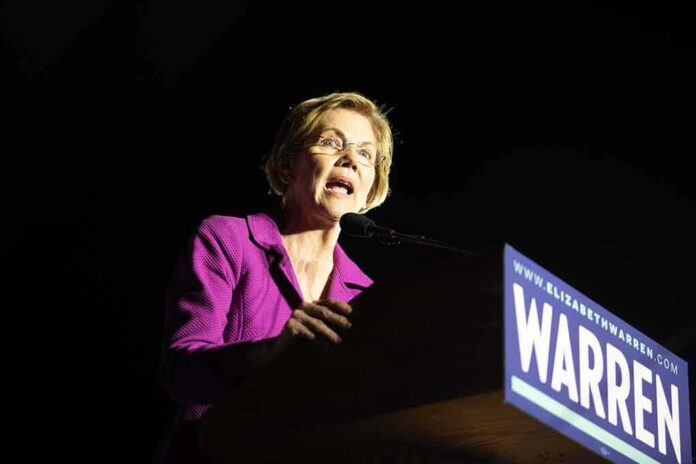
The National Defense Authorization Act has become a notorious legislative vehicle for controversial liberal policies, including a recent housing bill pushed by Senator Elizabeth Warren that threatens to complicate and escalate housing issues nationwide.
Story Snapshot
- The National Defense Authorization Act (NDAA) is increasingly used to push unrelated liberal projects.
- Elizabeth Warren’s housing bill attached to the NDAA aims to overhaul housing policies with sweeping federal interventions.
- The bill’s aggressive approach risks exacerbating housing shortages and pricing pressures.
- Previous NDAA additions include controversial AI data center amnesty stripping state authority.
The NDAA: A Legislative Dumping Ground for Controversial Agendas
The National Defense Authorization Act, primarily a bill to fund and guide the U.S. military, has become a catch-all for unrelated legislative agendas. Lawmakers often attach various pet projects to the NDAA to ensure passage due to its must-pass status. This practice has turned the NDAA into a dumping ground for initiatives that might otherwise face scrutiny or opposition if introduced independently.
One recent example is the attempt by the Trump administration to include an AI data-center amnesty in the NDAA. This provision sought to limit states’ authority over large, power-intensive data centers, raising alarms about unchecked expansion and environmental impact. Although this provision was controversial, it exemplifies the pattern of using the NDAA to push through contentious measures.
Elizabeth Warren’s Housing Bill: Ambition Meets Risk
Senator Elizabeth Warren’s housing bill, recently tacked onto the NDAA, represents a bold federal push into housing policy. The bill proposes sweeping reforms aimed at addressing housing affordability and availability but does so through heavy federal intervention. Critics argue that such measures could distort market mechanisms, leading to unintended consequences like reduced housing supply and increased costs.
The bill’s approach includes mandates and regulations that could burden developers and local governments, discouraging construction and innovation in housing solutions. By embedding this housing bill within the NDAA, Warren leverages the defense bill’s urgency to advance a liberal agenda that might struggle to pass on its own merits.
Consequences for States and the Housing Market
Federal overreach into housing policies traditionally managed at the state and local levels risks undermining tailored solutions that reflect regional needs. The NDAA’s housing provisions threaten to centralize control, limiting states’ flexibility to address unique housing challenges effectively. This could exacerbate housing shortages in high-demand areas and drive prices upward, counteracting the bill’s intended purpose.
Furthermore, the precedent of attaching unrelated, complex legislation to the NDAA complicates the legislative process. It forces lawmakers to accept controversial provisions they might oppose to ensure critical defense funding. This bundling tactic dilutes accountability and transparency in Congress, frustrating constituents who see essential national security legislation entangled with partisan policy battles.
The Broader Implications of NDAA Legislative Tactics
Using the NDAA as a vehicle for unrelated liberal projects raises questions about legislative integrity and governance. While the NDAA’s importance in national security is undisputed, its exploitation for advancing controversial policies risks eroding bipartisan support and public trust. The inclusion of contentious bills, such as Warren’s housing proposal and the AI data-center amnesty, illustrates how essential legislation becomes hostage to political agendas.
This trend complicates the legislative landscape, making it harder for lawmakers to debate policies on their substantive merits. It also pressures them to accept undesirable provisions to avoid jeopardizing defense funding. Such dynamics undermine the democratic process and make sound policymaking more difficult.
Sources: