A former county clerk’s appeal threatens to reopen the national debate on same-sex marriage, testing the limits of religious freedom in public office.
Story Highlights
- Kim Davis’s appeal seeks Supreme Court review of her refusal to issue marriage licenses to same-sex couples.
- The appeal challenges the 2015 Supreme Court ruling in *Obergefell v. Hodges*.
- The Supreme Court will consider whether to hear the case on November 7, 2025.
- LGBTQ+ advocates express concerns about potential risks to marriage equality.
Supreme Court to Consider Case Impacting Marriage Equality
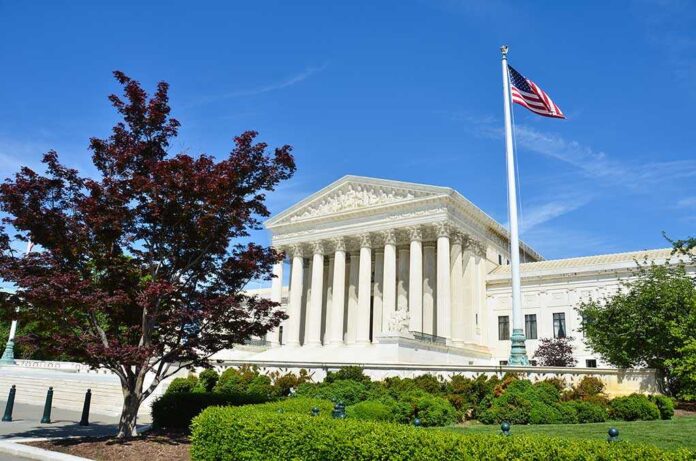
The Supreme Court is set to decide whether to hear Kim Davis’s appeal on November 7, 2025. Davis, a former Rowan County, Kentucky clerk, became a national figure when she refused to issue marriage licenses to same-sex couples following the 2015 *Obergefell v. Hodges* decision. Her appeal not only seeks personal legal relief but also challenges the broader constitutionality of same-sex marriage in the United States.
Since the *Obergefell* ruling, religious liberty has been a contentious issue, with Davis’s case highlighting the tension between individual beliefs and legal mandates. Her legal team argues that her religious convictions should exempt her from personal liability, invoking the concept of qualified immunity, a protection typically extended to public officials performing discretionary functions.
Potential Repercussions for LGBTQ+ Rights
While legal experts suggest it is unlikely that the Supreme Court will overturn *Obergefell* through this case, the petition has nonetheless sparked anxiety among LGBTQ+ communities. Advocacy groups like GLAD Law and Lambda Legal have voiced concerns about the potential erosion of marriage rights, emphasizing the case’s implications for civil rights protections beyond personal damages.
The ongoing debate underscores the broader societal conflict between religious freedom and equality under the law. The Supreme Court’s current conservative majority has further intensified speculation about the direction of future rulings on LGBTQ+ rights, raising questions about the stability of established precedents.
Implications for Religious Liberty and the Legal Landscape
A ruling in favor of Davis could set a precedent for expanding religious exemptions in public service, potentially allowing personal beliefs to override official duties. This could lead to legal uncertainty for state and local governments, particularly in areas involving marriage licenses and other civil rights issues.
As the nation watches the Supreme Court’s deliberations, the case has the potential to influence the political landscape significantly. It highlights the ongoing polarization over issues of religious liberty and LGBTQ+ rights, with both sides preparing for a legal battle that could reshape the contours of civil rights and personal freedoms in America.
Sources:
The Advocate: Kim Davis SCOTUS Case Explained
SCOTUSblog: Court to Consider Whether to Hear Challenge to Same-Sex Marriage on Nov 7
GLAD Law: Kim Davis Supreme Court Petition