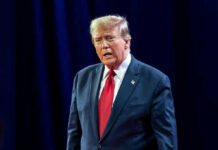
A split-second chorus of boos at a hockey rink can reveal more about a state’s political mood than a month of polished speeches.
Story Snapshot
- New Jersey Gov. Mikie Sherrill and her husband were loudly booed when she was introduced for a ceremonial puck drop at the Prudential Center.
- The moment happened during a pre-game celebration for Team USA Olympic gold medalists, led by Devils star Jack Hughes after his title-clinching goal vs. Canada.
- The boos landed one day after the U.S. Department of Justice sued New Jersey and Sherrill over an executive order expanding sanctuary-style policies.
- Sherrill posted celebratory photos afterward, and critics mocked the upbeat tone given the hostile crowd reaction.
A Patriotic Night That Turned Into a Referendum
Newark’s Prudential Center set the table for a clean, uncomplicated story: welcome home an Olympic hero and let a sports crowd do what it does best—cheer, chant, and forget the week’s headlines. The Devils hosted the Buffalo Sabres while honoring Team USA gold medalists, with Jack Hughes as the emotional center of gravity after ending a 46-year U.S. men’s hockey drought. Then the governor’s name hit the PA system.
NJ Governor Mikie Sherrill was heavily booed at tonights NJ Devils Game.
— Breaking911 (@Breaking911) February 26, 2026
Fans booed Gov. Mikie Sherrill loudly as she appeared for the ceremonial puck drop, and the contrast was the point. Hughes drew the “U-S-A!” roar and the warm, communal pride people still crave. Sherrill drew the kind of sound you normally reserve for a bad call or a rival’s star. In arenas, voters don’t workshop their feelings. They blurt them out, and everyone hears it at once.
Why the Booing Wasn’t Random: Timing, Immigration, and Trust
The timing mattered more than the setting. The day before the game, the Justice Department filed suit against New Jersey and Sherrill over an executive order described as expanding sanctuary policies and obstructing federal immigration enforcement. That legal clash turned the governor from “local VIP” into the face of a national argument about borders, law enforcement, and whether states should actively frustrate federal priorities. A sports ceremony can’t disinfect that.
Common sense says voters can separate a hockey celebration from policy disputes, but crowds are not courtrooms. A high-patriotism moment—the flag, the chants, the gold-medal glow—tends to sharpen opinions about who is “with” the country and who is playing games with it. Conservatives see sanctuary expansion as incentivizing illegal immigration and undermining public safety and sovereignty. The boos fit that worldview: a spontaneous penalty for leaders perceived as ignoring rules regular people must follow.
Jack Hughes as the “Safe” Symbol, Sherrill as the “Loaded” One
Hughes didn’t need to campaign; he simply showed up as the hometown face of a rare American sports triumph. His gold-medal-winning goal against Canada handed fans a story they could own: grit, pressure, victory, and a jersey that actually says “USA.” When he addressed the crowd, he focused on pride—country, state, team—and the building responded the way healthy civic culture responds to shared wins.
Sherrill’s appearance beside that kind of symbol created a risk politicians underestimate: borrowed glory can backfire when people suspect the borrowing. The reports say she posed for photos with Hughes and Sabres player Tage Thompson, and later posted celebratory messages online. That’s standard retail politics—be seen near what people love. It also invites the cynical reading: you’re here for the camera, not the moment, and you didn’t earn the applause you expected.
The Social Media Post That Kept the Story Alive
Sports boos used to die with the final horn. Sherrill’s social media post extended the life of the moment because it looked, to critics, like an attempt to narrate over the audience’s verdict. Commenters highlighted the disconnect: she celebrated “a piece of history” while fans had just told her, loudly, they didn’t want her starring in the scene. That mismatch—what leaders claim happened versus what people saw—fuels distrust faster than any single policy fight.
The coverage also revived an older line of criticism from her political past: a Naval Academy disciplinary controversy that resurfaced during her 2025 gubernatorial campaign. The facts reported include that she was barred from commencement for not reporting classmates involved in stealing test answers, but that she still graduated and served honorably as a Navy helicopter pilot. Opponents frame it as a character test about accountability. Supporters frame it as dated, politicized noise. Either way, it primes a crowd to interpret her presence through a “rules and consequences” lens.
What This Episode Signals for 2026: Politics Has Entered the Arena
New Jersey’s politics often look settled on paper, but the Devils crowd offered a reminder that “blue state” doesn’t mean uniform agreement, especially on immigration enforcement. The governor still holds institutional power; the DOJ lawsuit adds legal pressure; and the fans demonstrated cultural power—instant, audible, impossible to spin in real time. For conservatives, that matters because it suggests the sanctuary debate can mobilize even in places Democrats assume are safe.
The most revealing detail isn’t that a politician got booed; it’s where it happened. A hockey arena honoring Olympic winners is one of the last places Americans still practice unfiltered unity. When a governor draws jeers in that environment, it signals a deeper fracture: many voters don’t merely disagree with certain policies, they feel those policies disrespect the nation’s boundaries and the rule of law. Sherrill can win the lawsuit or lose it, but the sound in that building is the harder case.
Sources:
NJ Gov. Mikie Sherrill booed at Devils game honoring US Olympic hockey hero Jack Hughes.
New Jersey governor team USA Olympics
Hockey fans boo democratic governor