A new policy threatens national sovereignty, sparking outrage among defenders of American interests.
Story Highlights
- President Trump considers military strikes against Mexican drug cartels.
- Mexican President Sheinbaum categorically rejects US military intervention.
- Diplomatic tensions rise as Mexico emphasizes its sovereignty.
- Secretary of State Rubio pledges no unilateral military action in Mexico.
Trump’s Bold Stance on Drug Cartels
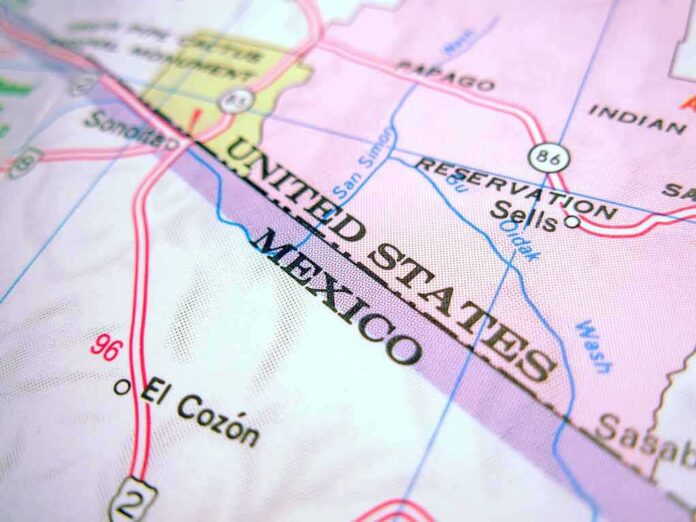
In a move that has reignited discussions about national sovereignty and security, President Donald Trump declared his openness to authorizing military strikes against drug cartels operating within Mexico. This statement came as part of his administration’s ongoing efforts to combat drug trafficking, which he classifies as a significant threat to U.S. security. This approach follows his January 2025 executive order designating these cartels as Foreign Terrorist Organizations, offering a legal framework for potential military engagement.
President Trump’s suggestion has not been well received by the Mexican government. Mexican President Claudia Sheinbaum has firmly rejected the possibility of any U.S. military intervention on her country’s soil. She made her stance clear during a news conference, stating, “Not going to happen,” and emphasizing Mexico’s sovereignty. Sheinbaum highlighted historical tensions, recalling the Mexican-American War and its lasting impact on national consciousness.
Mexico’s Defiant Stand on Sovereignty
President Sheinbaum’s response underscores a fundamental principle of international law—the sovereign right of a nation to control its territory and determine its security policy. She reiterated that Mexico is tackling its own challenges with drug trafficking and does not require foreign military aid. Instead, she offered to continue cooperation through intelligence sharing, a more diplomatic approach that respects both nations’ sovereignty.
Meanwhile, U.S. Secretary of State Marco Rubio has attempted to ease tensions by assuring that Washington will not pursue one-sided actions. His statements suggest an awareness of the delicate balance needed in maintaining diplomatic relations, even as the Trump administration remains firm in its anti-cartel rhetoric. This nuanced approach reflects the complex dynamics at play between national security concerns and international diplomacy.
The Implications of Unilateral Action
Should the Trump administration decide to respect Mexico’s sovereignty, it could set a precedent for international law, reinforcing the principle that military intervention should require host nation consent. Conversely, any unilateral action by the U.S. could lead to significant international backlash and destabilize bilateral relations with Mexico. Such a scenario could also influence broader international relations, particularly in how powerful nations engage with their neighbors on security issues.
The ongoing diplomatic tension serves as a reminder of the challenges inherent in addressing transnational threats while respecting the sovereignty of other nations. As the situation develops, the actions taken by both the U.S. and Mexico will have lasting implications for their bilateral relationship and the broader international community’s approach to similar conflicts.
Sources:
Mexican President Rejects Trump’s Talk of US Strikes