
Florida’s bold move to deploy armed drones in schools aims to stop active shooters within seconds, igniting fierce debate about safety, technology, and the limits of government intervention in education.
Story Snapshot
- Three Florida school districts will pilot non-lethal, armed drones to rapidly respond to active shooter threats.
- The program is the nation’s first large-scale deployment of such technology in schools, funded by a state budget allocation of $557,000.
- Drones are operated remotely by certified pilots and integrated with law enforcement for real-time response.
- Critics warn of privacy concerns, psychological impacts, and the risk of “security theater,” while supporters stress the urgent need for faster intervention.
Florida Launches Armed Drone School Security Pilot
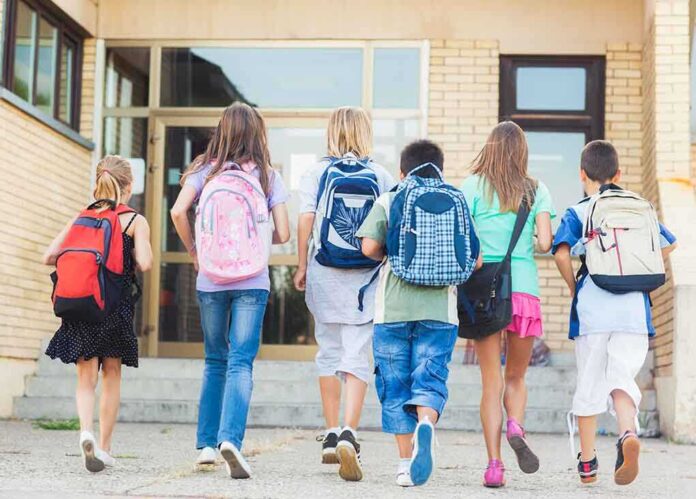
In fall 2025, Florida will become the first state to deploy armed drones in public schools as a direct response to the ongoing crisis of school shootings. Three districts, including Miami-Dade, will participate in a pilot program funded by $557,000 from the state legislature. These drones, equipped with non-lethal pepper spray and glass-breaking tools, are designed to intervene against active shooters faster than on-site staff or local law enforcement. The initiative was spurred by the failure of previous measures to prevent tragedies like Parkland, signaling a shift toward high-tech deterrence.
Campus Guardian Angel, a Texas-based security company, developed and operates the system. The drones are stored in secure charging stations on campus and can be activated by a silent alarm. Once triggered, an FAA-certified pilot in Texas remotely flies the drone to any point within the school in as little as 15 seconds. The system streams real-time video and enables two-way communication, while non-lethal payloads aim to disable or delay an attacker until police arrive. Florida’s Department of Education and law enforcement are directly involved in planning and oversight, with the state government holding funding authority and local school officials responsible for implementation.
Stakeholder Motivations and Political Context
Governor Ron DeSantis and state legislators prioritized the pilot as a response to public frustration with inadequate school safety and the perceived failures of previous “woke” or bureaucratic solutions. The state’s leadership seeks to demonstrate action and innovation, positioning Florida as a model for rapid crisis response. Campus Guardian Angel, the system’s vendor, pursues both commercial expansion and public safety claims. Local law enforcement supports the initiative for its promise of real-time intelligence, though the operational control remains in Texas. The involvement of remote pilots and integration with law enforcement raise questions about local autonomy, data oversight, and potential government overreach.
Costs, Benefits, and Public Concerns
The economic cost is substantial: each box of six drones runs $15,000, with ongoing operational fees of $1,000 per month per 500 students. Supporters argue these investments are justified by the potential to save lives, citing the system’s ability to respond during the critical first two minutes of an attack. However, some school safety experts warn that the technology may not address the root causes of violence and could create a false sense of security, known as “security theater.” Privacy advocates express concern about constant surveillance and the psychological impact on students, while others worry about the normalization of high-security environments in public schools.
Industry experts highlight the system’s rapid response and intelligence-gathering advantages, but caution that technology alone cannot replace community engagement or mental health support. Critics note that most school incidents involve fights or bladed weapons rather than firearms, questioning whether drones are the best allocation of resources. Proponents counter that the program’s non-lethal deterrence and speed are crucial for worst-case scenarios. The pilot’s results will be closely watched, as its success or failure could trigger broader adoption nationwide or spark renewed debate about the proper role of technology and government in securing American schools.
Sources:
Florida schools will test armed drones this fall to thwart shooters
Technologies designed to prevent school shootings create ‘security theater,’ advocate says
Armed Drones to Be Deployed at Schools to Stop Mass Shooters