

A little-known Navy veteran told a sitting senator and the nation to finish the Iran war—and the room snapped to attention.
Story Snapshot
- Justin Murphy, a U.S. Navy veteran and Republican, faced Senator Cory Booker in New Jersey’s lone Senate debate.
- Murphy urged President Trump to “finish” the Iran war and warned against a nuclear-armed Iran.
- Booker and Murphy clashed on foreign policy as the debate centered on Trump’s leadership.
- The event, hosted at Rider University and carried by C-SPAN, gave Murphy rare statewide exposure.
What Happened On Stage
Justin Murphy shared a simple line that cut through the room: “Finish it.” He pressed for a decisive end to the Iran war and said the outcome must be “positive,” not open-ended. He supported President Trump’s war decision and called an Iranian nuclear weapon an “unbelievable, unmitigated disaster.” Senator Cory Booker pushed back and questioned what he framed as a “cowboy” approach to foreign policy. The exchange defined the night and fixed the debate on wartime choices.
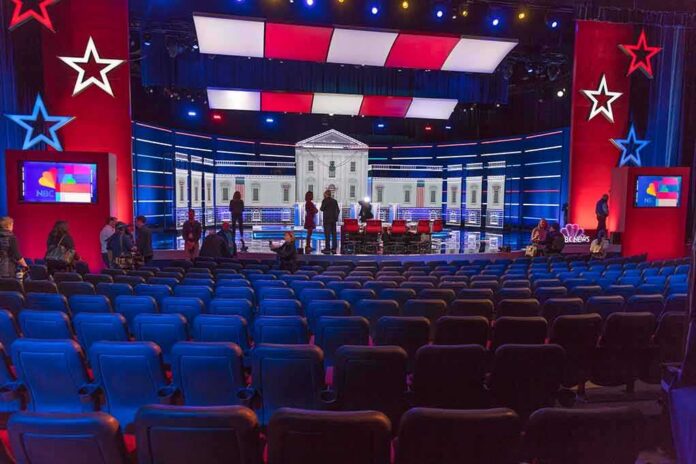
Rider University hosted the debate on October 8, 2026, in what outlets called the first and only face-off of the race. C-SPAN listed and distributed the event, which ensured statewide access for voters who rarely hear from underfunded challengers. The format ran about an hour and kept the focus on foreign policy and Trump’s record. Both candidates spoke in measured tones, yet the lines on Iran carried the sharpest edges of the evening.
Who Justin Murphy Is, And Why He Matters
Murphy served in the U.S. Navy and now works as an attorney. The State of New Jersey’s official list shows him as the Republican nominee for United States Senate in 2026. He entered the stage as a clear underdog against an incumbent with a national brand. Long-shot campaigns rarely get prime airtime. This debate gave Murphy a statewide microphone at a moment when foreign policy sits at the center of risk, cost, and national pride.
Murphy’s message stressed clarity of mission and an end state the public can understand. He argued that drifting wars drain trust, treasure, and strength. He framed Iran’s nuclear push as a red line that Americans across party lines should see as unacceptable. That view matches a plain conservative instinct: finish what you start, set limits, and prevent regimes that chant “Death to America” from getting the world’s worst weapons.
Booker’s Response And The Core Split
Booker aimed to paint Murphy’s stance as reckless. He leaned on the “cowboy” label to suggest swagger over strategy. The split here is not about whether Iran is dangerous. It is about how to end the danger without getting stuck. Voters heard a choice: decisive force with a defined finish versus caution shaped by concerns over escalation, allies, and cost. Both men kept the tone civil, but neither budged on the core premise of power and purpose.
Published coverage confirms that Trump and the Iran war dominated the night. That frame favored contrasts on leadership rather than local spending fights or process talk. For Murphy, that was useful terrain. He needed a bright line issue that could make an unknown name memorable. For Booker, the national frame offered a chance to tie Murphy’s worldview to a president voters already judge every day in the news.
What This Debate Can And Cannot Do
One debate does not flip a race with an entrenched incumbent and a giant cash gap. But a single clear message can create identity for a challenger. The research on Senate races often shows that challengers gain more per dollar and per moment of exposure because they start far behind. Murphy used his minutes to define a simple, high-stakes position. That is what most successful insurgents do when the clock is short and the crowd is restless.
WATCH: Navy Vet GOP Senate Candidate Justin Murphy Stuns Cory Booker in NJ Debate — Tells Trump to “Finish” Iran War, Put on Cowboy Hat and “Kick Some Ass” as Crowd Erupts https://t.co/YBNjSMUUSC #gatewaypundit via @gatewaypundit
— MaKettle65 (@MaKettle65) October 12, 2026
Voters now have a cleaner read on the choice. Murphy backs finishing the Iran war on firm terms and stopping a nuclear Iran. Booker warns against swagger that outruns strategy. Both acknowledge the risks, but they weigh them differently. If New Jersey decides that strength means a defined end, Murphy’s line may stick. If it decides that prudence means restraint first, Booker’s frame may hold. Either way, the debate finally put the stakes in plain sight.
Sources:
thegatewaypundit.com, inquirer.com, nj.gov, northjersey.com, c-span.org, yahoo.com, ivoterguide.com
© ournationnews.com 2026. All rights reserved.