
About 100 U.S. troops landed in northern Nigeria, and the fiercest fight that followed was over the story Americans were told about why.
Quick Take
- The February 2026 U.S. deployment to Bauchi Airfield is described as non-combat training, technical support, and intelligence sharing requested by Nigeria.
- The deployment followed U.S. airstrikes on December 25, 2025, against ISIS-linked militants in Sokoto State, coordinated with Abuja.
- President Trump’s “Christian genocide/persecution” framing collides with Nigerian officials and analysts who say the violence hits Muslims and Christians and includes banditry and local conflicts.
- Nigeria wants help without surrendering sovereignty; civil-society voices warn that a foreign military footprint can create new risks.
What Actually Happened at Bauchi Airfield, and What Didn’t
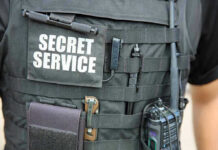
Roughly 100 U.S. troops arrived in early February 2026 at Bauchi Airfield in northern Nigeria as the first wave of a planned larger advisory package, widely reported as about 200 total. Nigerian defense leadership described the mission as specialized technical support, training, and intelligence collaboration—explicitly not combat patrols. That detail matters because it separates a support mission from the “rescue operation” storyline circulating online.
The most misleading version of the tale claims the U.S. deployed to stop Christians being slaughtered and abducted by Islamic extremists. The verified reporting paints a narrower, more bureaucratic picture: Nigeria requested assistance, and the U.S. responded with capabilities meant to help Nigerian forces target violent networks more effectively. No credible public evidence shows U.S. forces were sent as a direct, unilateral intervention focused solely on protecting Christians.
Christmas Day Strikes: The Prequel That Explains the Deployment
The deployment did not appear out of thin air. On December 25, 2025, the U.S. carried out airstrikes in Sokoto State against ISIS-linked militants, including the Lakurawa network discussed in multiple reports. Some munitions reportedly malfunctioned, and public information about casualties remained thin. What matters strategically is that the strikes signaled U.S. willingness to act on Nigerian soil—then the February arrival signaled a preference for advising and enabling rather than repeating a headline-grabbing strike campaign.
AFRICOM framed the move as part of stopping ISIS expansion and supporting a partner under pressure. Nigerian leadership, for its part, needed help that boosts effectiveness without turning the conflict into a referendum on national control. That tension—more capability, less foreign footprint—defines most modern counterterror partnerships, and Nigeria’s situation makes it sharper because militants, bandits, and criminal kidnapping rings already thrive in the seams of weak governance.
Why the “Christian Genocide” Frame Spreads Fast—and Why It Collides With Facts
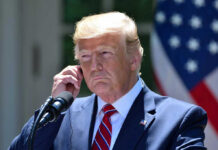
President Trump’s rhetoric about Christians facing “genocide” or systematic persecution in Nigeria lands with American audiences because it matches a simple moral narrative: innocent worshippers versus jihadist killers, and America rides in to stop it. The problem is that Nigeria’s violence does not cooperate with that script. Credible accounts describe a messy security map: Boko Haram and ISWAP in the northeast, banditry and mass kidnappings in the northwest, and communal clashes that can turn religious labels into accelerants rather than root causes.
Common sense still allows two things to be true. Extremist violence in Nigeria has targeted churches and Christian communities at times, and Americans should not shrug at religiously motivated terror. At the same time, overselling a single-cause explanation undermines serious policy. Conservatives usually demand clarity: Who is the enemy? What is the mission? What is success? A narrative that ignores Muslim victims, criminal economics, and local grievances makes the mission harder to define and easier to manipulate.
The Real Stakes: A Post-Niger Pivot and a Sahel Spillover Problem
U.S. basing and access in West Africa changed after the U.S. withdrew from Niger in 2024 following political upheaval. That shift matters because jihadist groups have moved fluidly across borders, and the Sahel has become a conveyor belt of instability. Nigeria, with its size and military capacity, becomes a natural hub for cooperation when other doors close. That is less romantic than a rescue narrative, but it is far more consistent with how the Pentagon thinks about geography and logistics.
Advisory deployments also carry a predictable risk: militants may seek symbolic victories by targeting U.S. personnel, while political opponents inside Nigeria may paint the government as surrendering sovereignty. A local group warning against foreign military presence reflects that fear. Nigeria’s leaders must prove they still command the fight, not rent it out. The U.S., meanwhile, must avoid the trap of “mission creep,” where training quietly becomes operational dependence.
What Success Looks Like When U.S. Troops Aren’t Supposed to Fight
Non-combat support can still be decisive if it improves targeting, communications, maintenance, logistics, and intelligence fusion—the unglamorous systems that determine whether a raid hits terrorists or misses them. If kidnappers and insurgents lose freedom of movement, communities regain room to farm, travel, and worship without constant fear. If the Nigerian military becomes more disciplined and precise, it also reduces the political oxygen that militants feed on after abuses or heavy-handed operations.
Americans should judge this mission by measurable outcomes, not viral captions: fewer mass abductions, disrupted militant camps, stronger Nigerian command-and-control, and no slide into open-ended U.S. combat. Nigeria’s conflict is brutal, and the human victims include Christians and Muslims alike. The most honest takeaway is also the most useful: Washington is trying to contain a widening jihadist threat while Abuja tries to keep sovereignty intact, and both sides must resist turning a complex crisis into a single-issue slogan.
https://twitter.com/DanielGwhizits/status/2025273362361335829
That slogan will keep circulating anyway because it satisfies an emotional demand for simple heroes and villains. Adults should demand the boring details: troop numbers, rules of engagement, who requested what, and whether Nigerian forces actually gain capability. Those details decide whether this is a smart partnership—or the start of another slow, expensive foreign entanglement sold to the public as something it never was.
Sources:
US troops arrive in Nigeria for training mission
Nigeria announces arrival of 100 US soldiers
US troops arrive in Nigeria to train military
AFRICOM deploys team to Nigeria amid Islamic militant concerns
Group warns against foreign military presence in Nigeria