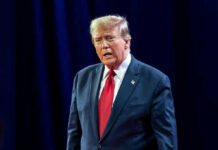

A pivotal Supreme Court case challenges the limits of presidential power, raising questions about executive overreach in trade policy.
Story Highlights
- The Supreme Court examines the legality of Trump’s tariffs under Section 232.
- Chief Justice John Roberts plays a crucial role in the decision-making process.
- The case may redefine executive power over trade policies for future administrations.
- Businesses and international relations could be significantly impacted by the ruling.
Chief Justice Roberts and the Scope of Executive Power
On November 5, 2025, the U.S. Supreme Court heard arguments in the case Learning Resources v. Trump, which questions the extent of presidential authority to impose tariffs for national security under Section 232 of the Trade Expansion Act of 1962. This case is pivotal as it challenges the broad application of executive power, particularly concerning trade policies initiated by former President Donald Trump. The outcome could set a precedent, defining the limits of such authority for future administrations.
Chief Justice John Roberts has emerged as a key figure in this deliberation. Historically, the Supreme Court has deferred to the executive branch on matters of national security. However, Roberts’ line of questioning during the oral arguments suggests a more scrutinizing stance on the broad interpretation of this authority. His decisions could tip the balance, potentially curtailing or reaffirming the president’s power in imposing tariffs.
The Impact of Tariff Policies on U.S. and Global Economies
The tariffs imposed by the Trump administration between 2018 and 2020 have sparked significant global trade tensions, affecting international relations and prompting retaliatory measures. As businesses and economies adjust to these changes, the Supreme Court’s decision could either maintain the status quo or introduce new dynamics in the global market. The ruling’s implications extend beyond immediate economic impacts, potentially influencing future legislative actions regarding trade policy.
In the short term, businesses involved in manufacturing, importing, and exporting are bracing for potential changes depending on the Court’s decision. The steel and aluminum industries, in particular, may see significant shifts. Politically, the case has attracted attention as it underscores the ongoing debate about the separation of powers and the role of Congress in trade-related matters.
Future Implications and the Role of Congress
The Supreme Court’s ruling is anticipated in 2026 and could redefine the balance of power between the executive branch and Congress. If the Court rules against the broad application of Section 232, it might prompt Congress to take legislative action to clarify or restrict presidential authority in trade matters. This could lead to a reevaluation of the United States’ approach to trade policies and its impact on international relations.
As the case progresses, legal scholars and trade experts continue to debate its potential outcomes. While some argue for the necessity of executive discretion in national security matters, others emphasize the importance of maintaining congressional intent and democratic accountability. The decision will likely have lasting effects on how trade policies are formulated and implemented in the future.
Sources:
POLITICO, November 5, 2025: Supreme Court oral arguments coverage
Supreme Court of the United States, Oral Argument Transcript, Case 24-1287