

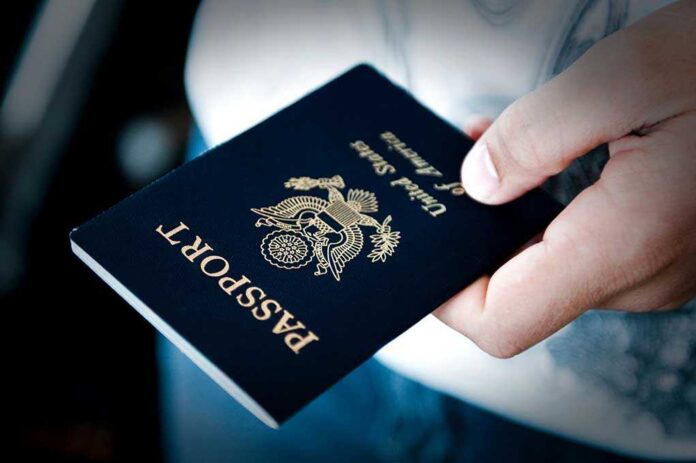
A controversial new federal policy threatens to erase nonbinary gender markers from U.S. passports, igniting debates over identity and compliance.
Story Highlights
- The 2025 policy eliminates “X” gender markers from federal IDs, including passports.
- Airlines face operational chaos due to conflicting data requirements and current passport policies.
- Litigation continues as nonbinary and transgender individuals challenge the policy in court.
- International travel faces complications as U.S. policy diverges from global norms.
Impact of Executive Order 14168
In January 2025, President Trump signed Executive Order 14168, which mandates that all U.S. federal identification documents, including passports, only recognize “male” or “female” as sex designations. This policy, aimed at “restoring biological truth,” directly impacts transgender, nonbinary, and intersex individuals who possess an “X” gender marker on their passports, a provision previously introduced under the Biden administration.
Airlines are now required to comply with the updated Advance Passenger Information System (APIS), which rejects any gender code other than ‘M’ or ‘F.’ This has left airlines in a precarious position, forcing them to either guess a passenger’s gender or risk operational delays and penalties for noncompliance.
Legal Challenges and Court Rulings
The legal landscape surrounding this policy is complex. A federal court issued a preliminary injunction in June 2025, allowing some individuals to temporarily self-select sex markers on their passports. However, the Trump administration has appealed to the Supreme Court to lift this injunction and fully enforce the binary gender policy, creating a patchwork of rights that varies by individual.
Advocacy groups, including the ACLU and Lambda Legal, continue to fight this policy through litigation, seeking to preserve the rights of transgender, nonbinary, and intersex individuals. They argue that the policy constitutes discrimination and violates established international norms regarding gender identity recognition.
International and Operational Implications
The policy has significant international implications, placing the U.S. at odds with countries that recognize nonbinary gender markers. This divergence complicates international travel and diplomatic relations, as travelers with “X” passports may face additional scrutiny or denial of entry in countries adhering to binary gender norms.
The aviation industry struggles with these conflicting requirements, as airlines balance federal compliance with the risk of reputational harm and potential discrimination lawsuits. The lack of comprehensive guidance from Customs and Border Protection (CBP) further exacerbates these challenges, leaving travelers and airlines in legal and logistical limbo.
Sources:
USA Flights New APIS Transmission Rules on Gender Codes and American Passport Number Formats
Lambda Legal: TGNC Checklist Under Trump