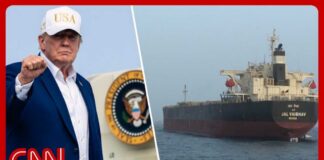

A U.S. Navy destroyer just punched a hole in an Iranian cargo ship’s engine room with a five-inch gun before Marines rappelled from helicopters in darkness to seize the vessel—and the world is holding its breath for Tehran’s response.
Story Snapshot
- USS Spruance disabled Iranian-flagged MV Tuysqab with gunfire after six hours of ignored warnings during blockade run attempt
- Marines from USS Tripoli conducted nighttime helicopter boarding operation on April 19-20, 2026, seizing ship without casualties
- First U.S. boarding involving direct gunfire on merchant vessel since Trump reimposed maximum pressure naval blockade
- Iran denounces seizure as “armed piracy” and threatens drone retaliation while U.S. inspects cargo
- Incident occurred in strategic Strait of Hormuz/Gulf of Oman chokepoint controlling 20% of global oil supply
When Warnings Turn to Weapons Fire
The MV Tuysqab made a fatal miscalculation steaming toward Iran’s Bandar Abbas port. Already sanctioned by the U.S. Treasury for prior illegal activities, the cargo ship’s captain apparently believed he could slip through President Trump’s reimposed naval blockade. He was wrong. After six hours of repeated warnings to halt, the USS Spruance—a guided-missile destroyer bristling with advanced weaponry—opened fire. The MK 45 five-inch gun shredded the engine room with precision shots, leaving the vessel dead in the water and vulnerable to what came next.
CENTCOM released dramatic footage showing Marines fast-roping from helicopters onto the crippled ship’s deck in near-total darkness. The boarding team met no resistance; the crew understood their options had evaporated along with their propulsion system. Trump announced the seizure with characteristic bluntness: “We blew a hole in the engine room… full custody.” The operation marked an escalation in enforcement tactics that echoes 2019 tanker confrontations but crosses new lines with direct weapons employment against a flagged merchant vessel.
Maximum Pressure Meets Naval Superiority
Trump’s post-2024 election Iran strategy revived the hardline approach that characterized his first term, amplified by a comprehensive naval blockade targeting Iranian oil exports and sanctioned trade routes. The Strait of Hormuz, a narrow waterway barely twenty-one miles wide at its chokepoint, became the enforcement zone where American naval power would test Iranian resolve. The USS Spruance and amphibious assault ship USS Tripoli represented just the visible edge of CENTCOM’s deployment—destroyers, cruisers, and carrier strike groups positioned to strangle Tehran’s economic lifelines.
The MV Tuysqab’s attempted run fits a pattern of sanctions evasion that has kept Iranian oil flowing despite Western pressure. Ship owners routinely falsify documents, disable tracking transponders, and conduct ship-to-ship transfers in international waters to mask cargo origins. This vessel’s prior Treasury designation suggests it played that game before. What changed was America’s willingness to employ kinetic force rather than mere interdiction. The decision to fire on the engine room rather than across the bow signals a policy shift from deterrence to destruction of non-compliant vessels’ capability to flee.
Tehran’s Asymmetric Response Calculus
Iran’s immediate denunciation—”armed piracy” violating international law—plays to domestic audiences and regional allies while masking a difficult strategic dilemma. The Islamic Republic cannot match U.S. naval firepower ship-for-ship. Instead, Tehran’s playbook relies on swarm tactics with fast attack craft, mines, drone strikes, and proxy forces. Iranian media claims drone attacks launched in response remain unverified, but the threats carry weight given recent Houthi successes disrupting Red Sea shipping and Iran’s demonstrated drone capabilities against regional targets.
The timing compounds Iran’s challenges. Stalled nuclear negotiations, economic pressure from sanctions, and now direct military confrontation over a sanctioned vessel create a volatile mix. Iranian hardliners gain ammunition to argue that accommodation with Washington yields only humiliation. Yet escalation risks devastating strikes on Iran’s limited naval assets and oil infrastructure. The regime must choose between saving face through retaliation that invites crushing response, or swallowing this defeat while preserving forces for future contingencies. Neither option strengthens their position.
Global Commerce Holds Its Breath
Maritime insurance underwriters started repricing Gulf transit risk the moment CENTCOM footage went viral. When a U.S. warship fires on a merchant vessel—even a sanctioned one attempting blockade breach—shipping companies recalculate whether cargo value justifies transit through contested waters. The Strait of Hormuz funnels nearly one-fifth of global petroleum supply; sustained conflict there ripples through energy markets worldwide. Rerouting tankers around Africa’s Cape of Good Hope adds weeks and massive fuel costs, expenses ultimately passed to consumers already battling inflation.
U.S. Marines storm an Iranian-flagged ship trying to break President Trump's blockade in the Strait of Hormuz after ignoring repeated warnings to stop. pic.twitter.com/GbBb4irUpr
— Alex West (@west_alex1776) April 20, 2026
The broader precedent troubles maritime law experts despite the vessel’s sanctioned status. Disabling a ship’s propulsion with naval gunfire in peacetime—even against a blockade runner—tests international norms governing freedom of navigation and proportional response. If this becomes standard enforcement procedure, other nations enforcing their own maritime claims may cite American precedent. China’s coast guard operating near Taiwan, Russia’s navy in the Black Sea, and regional powers throughout contested waters watch how this incident reshapes acceptable force thresholds. The Trump administration’s willingness to shoot first and inspect later sends unmistakable messages about resolve, but also about risk tolerance in crowded sea lanes.
What Happens After the Cameras Stop Rolling
The MV Tuysqab now sits under U.S. custody while inspectors comb through its cargo holds searching for contraband, sanctioned goods, or evidence of broader smuggling networks. The crew’s fate remains unreported—typical media oversight in military operations emphasizing American action over human consequences. Iran’s threatened retaliation could materialize as drone swarms targeting U.S. naval assets, mine-laying operations in shipping channels, or proxy attacks on Gulf state infrastructure hosting American forces. Each scenario carries escalation potential that could transform this single seizure into sustained combat operations.
Trump’s approach demonstrates consistency with campaign promises to dominate adversaries through strength rather than diplomacy. His base applauds footage of Marines storming an enemy vessel; his critics warn of stumbling into unnecessary war. The blockade’s sustainability depends on maintaining presence and will over months or years while Iran probes for weaknesses and opportunities. History suggests blockades either achieve swift capitulation or devolve into grinding attrition that tests domestic political tolerance for casualties and costs. This seizure established that America will enforce its demands with gunfire when warnings fail. Iran’s next move will reveal whether that reality compels accommodation or hardens resistance into open conflict neither side can easily contain.
Sources:
WATCH: US Marines rappel from chopper to SEIZE Iranian ship – Fox News Video
Trump Marines Custody Seizure Iranian Flagged Cargo Ship Blockade Navy Strait of Hormuz – Fortune